Description


A diary of my mothing activity covering highlights and photos from my moth trapping activities. Mainly Norfolk (UK), occasionally beyond. I may mention other wildlife sightings here, especially insects, but for birds see my birding diary.
Showing posts with label Phyllonorycter kuhlweiniella. Show all posts

Saturday, 20 February 2021

Review of 2019 and 2020 - Moths: Slenders and Midgets (Gracillariidae) (part 4: Phyllonorycter I)

SLENDERS and MIDGETS (GRACILLARIIDAE) (continued)

Despite their striking appearance some Phyllonorycter provide a real identification challenge and in a few cases even checking their genitalia doesn't always lead to a firm answer.  Personally I think they're well worth the effort - being able to put a name to these beautiful little creatures is always enormously satisfying.  2020 was a good year for these, as it was for many other members of this family.


White Oak Midget Phyllonorycter harrisella - One in the garden trap on 12th September 2019 and 18 here between 20th May and 15th August 2020.  This species occurs here quite sporadically, with 6 in 2016, 2 in 2017 but none in 2015 or 2018 - clearly the 2020 total was exceptional (and included a peak count of 4 on 31st July).  Elsewhere 1 at the meadows on 29th April 2019 and one in the adjacent Millenium Wood on 6th May, with a total of 26 found at the meadows between 19th April and 14th August 2020.

White Oak Midget Phyllonorycter harrisella, North Elmham Cathedral Meadows, 29th April 2019


White Oak Midget Phyllonorycter harrisella, North Elmham Cathedral Meadows, 19th April 2020


White Oak Midget Phyllonorycter harrisella, North Elmham, 30th July 2020


Pale Oak Midget Phyllonorycter heegeriella - None.  I've not encountered this species for a few years but it must be a reasonable possibility here in North Elmham (although failing to find any in the good Phyllonorycter year of 2020 isn't a good sign - the last time I saw them was in the similarly good Phyllonorycter year of 2014).  Fresh heegeriella should be easy enough to separate from fresh harrisella, but worn individuals need more care.  Note that the shadow of the antenna (or even the antenna itself) can appear like a dark streak through the forewing base on harrisella so suggesting heegeriella, and (as shown in the last photo above) wear can also create an appearance suggestive of a dark streak.  Although heegeriella tends to have more orange near the apex both species seem to vary in this respect.  Some of the other average differences (like the curvature of the second dorsal strigula) seem variable and the number and form of costal strigulae isn't clear on worn specimens.


Hornbeam Midget Phyllonorycter tenerella - None.  I've never seen this species but now that I've found some Hornbeam at the meadows I shall be looking harder for it.


Scarce Oak Midget Phyllonorycter kuhlweiniella - Singles caught in the garden moth trap on 4 nights between 5th and 15th August 2020 - I've recorded this species at home on just one previous occasion (in 2016).  One at the meadows on 31st May 2019 and 8 found there between 25th April and 23rd June 2020.  Interestingly this species, and to some extent harrisella and several other species too, seem to be more easily found during the day-time in the early part of their flight period and more easily found coming to light towards the end of their flight period (different generation?).

female Scarce Oak Midget Phyllonorycter kuhlweiniella, North Elmham Cathedral Meadows, 31st May 2019


Scarce Oak Midget Phyllonorycter kuhlweiniella, North Elmham Cathedral Meadows, 25th April 2020


Common Oak Midget Phyllonorycter quercifoliella - Just one in the garden moth trap, on 15th September 2020.  This species only occurs sporadically at home (one in 2014 and 3 in 2017).  It's easier to find at the meadows where singles on 6th and 22nd May 2019 and 12 between 5th April and 12th September 2020.  Also one at Swanton Great Wood on in August 2019.  I also found a few mines at the meadows in September 2019.

Common Oak Midget Phyllonorycter quercifoliella, North Elmham Cathedral Meadows, 6th May 2019


leaf-mine of Common Oak Midget Phyllonorycter quercifoliella, North Elmham Cathedral Meadows, 3rd September 2019


Common Oak Midget Phyllonorycter quercifoliella, North Elmham Cathedral Meadows, 5th April 2020


Garden Midget Phyllonorycter messaniella - A total of 12 in my moth trap between 29th July and 25th October 2019, the worst year here since 2015.  I had more than that in a single night in 2018 (17 on 13th October).  2020 was an improvement but still fairly average with 20 between 15th June and 14th November.  Elsewhere just 3 at the meadows in October 2019 and July and August 2020.

Garden Midget Phyllonorycter messaniella, North Elmham, 15th June 2020


London Midget Phyllonorycter platani - None.  I've never seen adults of this species but it seems to be doing well in Norfolk and spreading away from its Norwich stronghold.  Having said that, I'm not sure if there is much (any?) London Plane growing in North Elmham, so my chances of finding it here might not be all that great.


Common Thorn Midget Phyllonorycter oxyacanthae - Singles caught in the garden on 10th August 2019, 24th June and 10th August 2020.  Previously I'd only identified 2 in 2018.  A total of 5 netted at the meadows between 5th April and 13th July 2020, mostly early mornings.  Also what I think was one at the meadows on 4th August 2019, but females are a bit harder to confirm with reference to the genitalia and I wasn't 100% sure I could eliminate sorbi, though its size favoured oxyacanthae.  Another tricky female was caught at home on 6th August 2020 - the genitalia looked close to this species but I didn't feel confident enough especially as there were external differences compared to most examples of this species (e.g. a complete white line through the centre of the thorax).  The genitalia on females are quite delicate and difficult to prepare clearly, so when the differences between species are subtle and the preparation isn't perfect then sometimes you just have to leave them unidentified.  Also a leaf-mine at the meadows on 14th October 2019, sharing a leaf with Phyllonorycter corylifoliella.

male Common Thorn Midget Phyllonorycter oxyacanthae, North Elmham, 10th August 2019


leaf-mine of Common Thorn Midget Phyllonorycter oxyacanthae, North Elmham Cathedral Meadows, 14th October 2019


male Common Thorn Midget Phyllonorycter oxyacanthae, North Elmham Cathedral Meadows, 19th April 2020


male Common Thorn Midget Phyllonorycter oxyacanthae, North Elmham Cathedral Meadows, 3rd May 2020


Rowan Midget Phyllonorycter sorbi - One in my garden moth trap on 31st July 2020 was a new species for the garden.

female Rowan Midget Phyllonorycter oxyacanthae, North Elmham, 31st July 2020


Brown Apple Midget Phyllonorycter blancardella - 3 in my garden trap between 19th May and 23rd July 2019 and 4 between 24th June and 14th August 2020.  These were my first here, or indeed anywhere, since 2015.  An individual on 17th July 2019 showed spines on the tips of the valvae, a genitalic character not normally associated with this species and which initially led to a misidentification as Hornbeam Midget Phyllonorycter tenerella (whose genitalia do have this feature and otherwise look pretty similar to blancardella).  The majority of tenerella show an extensively white base to the forewing, so look quite unlike blancardella externally, but there is one photo of a tenerella on Lepiforum that does show a more extensively orange background colour to the forewings, so I figured mine was an example of this form.  However when I caught a second  individual in 2020 showing the same genitalic feature but looking equally unusual externally for tenerella, my suspicions were really aroused.  Surely if I caught 2 tenerella they wouldn't both look so very much unlike the vast majority of online images of tenerella?  Eventually I discovered a photo of blancardella genitalia on the Dissection Group that showed these spines on the valvae, highlighting this as a "variant form with spine at end of each valva".  More careful examination confirmed that this was indeed the explanation for both moths, the external appearance of which was much more in line with blancardella than tenerella.

male Brown Apple Midget Phyllonorycter blancardella, North Elmham, 19th May 2019


male Brown Apple Midget Phyllonorycter blancardella, North Elmham, 17th July 2019


male Brown Apple Midget Phyllonorycter blancardella, North Elmham, 23rd July 2019


male Brown Apple Midget Phyllonorycter blancardella, North Elmham, 24th June 2020


male Brown Apple Midget Phyllonorycter blancardella, North Elmham, 7th August 2020


Red Apple Midget Phyllonorycter hostis - None.  I've never recorded this species although in my early mothing days I caught a female in Bawdeswell which I was advised couldn't be reliably gen detted but looked like this species.


Next page: more Gracillariidae


Friday, 8 June 2018

Another kuhlweiniella

I found 30 moths of 13 species in a wander round the meadows on Monday 28th May.  Among the better ones was another Corn Moth Nemapogon granella, the first time I've recorded one outside.  Also for comparison a Cork Moth Nemapogon cloacella.

Corn Moth Nemapogon granella, North Elmham Cathedral Meadows, 28th May


Cork Moth Nemapogon cloacella, North Elmham Cathedral Meadows, 28th May


Perhaps even better was a Scarce Oak Midget Phyllonorycter kuhlweiniella.  I've only ever seen these on or around oak trees before so it was a great surprise to net this from the middle of one of the larger fields, at least 200m from the nearest Oak.

Scarce Oak Midget Phyllonorycter kuhlweiniella, North Elmham Cathedral Meadows, 28th May


The other moths were Carrion Moth Monopis weaverella, Daisy Bent-wing Bucculatrix nigricomella, 2 Diamond-backs Plutella xylostella, Common Yellow Conch Agapeta hamana, 4 Common Marbles Celypha lacunana, Rush Marble Bactra lancealana, Sharp-winged Drill Dichrorampha acuminatana, 8 Hook-streak Grass-veneers Crambus lathoniellus, Green Carpet and 7 Straw Dots.

Daisy Bent-wing Bucculatrix nigricomella, North Elmham Cathedral Meadows, 28th May


Common Yellow Conch Agapeta hamana, North Elmham Cathedral Meadows, 28th May


Sharp-winged Drill Dichrorampha acuminatana, North Elmham Cathedral Meadows, 28th May


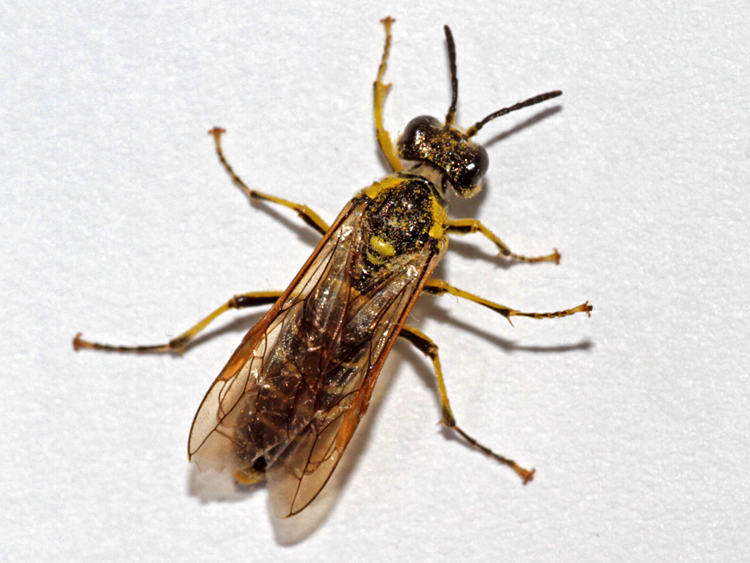
Other insects included my first bush-cricket for the site, a nymph Dark Bush-cricket, two species of Scorpion Fly (Panorpa germanica and Panorpa communis), a Green Drake (mayfly) Ephemera danica, a Dock Bug and a copulating pair of Parent Bugs, the soldier beetles Cantharis livida and Cantharis rustica (the livida appears to be a new one for me, though I think I've tentatively identified them from photos before), a 7-spot Ladybird and a more straightforwardly-identified (compared to the last one) Tenthredo arcuata (sawfly).

Dark Bush-cricket nymph, North Elmham Cathedral Meadows, 28th May


Parent Bugs, North Elmham Cathedral Meadows, 28th May


Cantharis livida, North Elmham Cathedral Meadows, 28th May


Cantharis rustica, North Elmham Cathedral Meadows, 28th May


7-spot Ladybird, North Elmham Cathedral Meadows, 28th May


Tenthredo arcuata, North Elmham Cathedral Meadows, 28th May


I think this leaf-mine on Broad-leaved Dock may belong to the fly Pegomya bicolor, but I'm not sure if other species can be eliminated or not (let me know if you think it can be recorded confidently).

probable Pegomya bicolor leafmine, North Elmham Cathedral Meadows, 28th May


I kept seeing this apparent fungal growth on Cocksfoot grass and was reminded of a photo I'd seen someone post on Twitter just before I came out.  I looked at my Twitter feed to see if anyone had replied to identify it and top of my feed, having tweeted literally seconds before I looked, was a reply from James Emerson confirming that it was a fungus called Choke.  Apparently there may be several species according to the species it grows on, and this one would therefore be Epichloe typhina.  Not a very good example in this photo - others were thicker and more obvious (but evidently harder to photograph!).

Epichlioe typhina, North Elmham Cathedral Meadows, 28th May

Wednesday, 28 September 2016

Phyllonorycter kuhlweiniella at home!

I have a bit of a thing for Scarce Oak Midgets Phyllonorycter kuhlweiniella.  It was known from south Norfolk between 1982 and 1996 and then wasn't seen again in the county until I discovered them at several new sites in different parts of the county, sometimes in good numbers and some on my local patch, in the excellent Phyllonorycter year of 2014.  None were recorded again in 2015 (a much worse year for Phyllonorycter generally) and so far this year the only record in the database is one Paul Cobb found while I was with him, and which I identified.  On 7th August I topped it all off with one in my own garden trap.  Amazing!  It was a bit worn so I gen detted it just to make sure, not that there was really anything else it could have been.


Scarce Oak Midget Phyllonorycter kuhlweiniella (male, gen det), North Elmham, 7th August


Marbled Cosmet Mompha propinquella and Diamond-back Marble Eudemis profundana were both new for the year.  According to various references Mompha propinquella can be separated from the much rarer (at least in Norfolk) Mompha lacteella by its white (not buff) head and thorax.  Why then does every single Mompha propinquella I ever see have a buff head and thorax?  Some, including this one, were gen detted to make sure.

Marbled Cosmet Mompha propinquella (male, gen det), North Elmham, 7th August


Diamond-back Marble Eudemis profundana, North Elmham, 7th August


Other micros were Carrion Moth Monopis weaverella, Daisy Bent-wing Bucculatrix nigricomella, White Oak Midget Phyllonorycter harrisella, Garden Midget Phyllonorycter messaniella, Golden Argent Argyresthia goedartella, 2 Bird-cherry Ermines Yponomeuta evonymella, 2 Little Ermels Swammerdamia pyrella, 5 Diamond-back Moths Plutella xylostella, Golden-brown Tubic Crassa unitella, Small Dingy Tubic Borkhausenia fuscescens, Brown House Moth Hofmannophila pseudospretella, 2 Dingy Dowds Blastobasis adustella, Hook-marked Straw Moth Agapeta hamana, Heather Tortrix Argyrotaenia ljungiana, 2 Light Brown Apple Moths Epiphyas postvittana, Dover Shade Cnephasia genitalana (and another unidentified Cnephasia that may have been the same), Garden Rose Tortrix Acleris variegana, Nut Bud Moth Epinotia tenerana, Holly Tortrix Rhopobota naevana, Common Cloaked Shoot Gypsonoma dealbana, Bud Moth Spilonota ocellana, 28 Pearl Veneers Agriphila straminella, 20 Common Grass-veneers Agriphila tristella, Chequered Grass-veneer Catoptria falsella, Pale Water-veneer Donacaula forficella, 2 Small Greys Eudonia mercurella, Ringed China-mark Parapoynx stratiotata, Beautiful China-mark Nymphula nitidulata, Garden Pebble Evergestis forficalis, 2 Small Magpies Anania hortulata, Pale Straw Pearl Udea lutealis, Rush Veneer Nomophila noctuella, 6 Mother of Pearls Pleuroptya ruralis, 2 Rosy Tabbies Endotricha flammealis, Grey Knot-horn Acrobasis advenella and 2 Common Plumes Emmelina monodactyla.

The best macro was Twin-spotted Waisncot, new for the year here and not one I see many of at home.

Twin-spotted Wainscot, North Elmham, 7th August


Other macros were Large Emerald, 2 Blood-veins, 2 Least Carpets, 10 Single-dotted Waves, 6 Riband Waves, Flame Carpet, Red Twin-spot Carpet, Common Carpet, Lime-speck Pug, Currant Pug, 2 Magpie Moths, Brimstone Moth, 2 Canary-shouldered Thorns, 2 Dusky Thorns, Early Thorn, 2 Scalloped Oaks, 3 Pebble Prominents, Swallow Prominent, Coxcomb Prominent, 4 Pale Prominents, 7 Yellow-tails, 2 Black Arches, 3 Dingy Footmen, 2 Scarce Footmen, 2 Common Footmen, 2 Ruby Tigers, Shuttle-shaped Dart, 2 Flame Shoulders, Large Yellow Underwing, 7 Lesser Broad-bordered Yellow Underwings, Least Yellow Underwing, Square-spot Rustic, 4 Dark Arches, 5 Common Rustics, Lesser Common Rustic, Uncertain, 3 Nut-tree Tussocks and 10 Straw Dots.

Least Yellow Underwing, North Elmham, 7th August


Lacewings included my second Nineta vittata and a Chryoperla carnea agg. (female, presumably carnea).  A Forest Bug (Red-legged Shieldbug) was the only bug noted and Nicrophorus investigator the only beetle identified.

Nineta vittata, North Elmham, 7th August


The following night was much less productive although it did produce one new moth for the house, a Knapweed Conch Agapeta zoegana.

Knapweed Conch Agapeta zoegana, North Elmham, 8th August


The only other micros were 2 Golden Argents Argyresthia goedartella, Little Ermel Swammerdamia pyrella, Diamond-back Moth Plutella xylostella, Brown House Moth Hofmannophila pseudospretella, Light Brown Apple Moth Epiphyas postvittana, 2 Garden Rose Tortrixes Acleris variegana, Common Marble Celypha lacunana, Plum Fruit Moth Grapholita funebrana, 2 Garden Grass-veneers Chrysoteuchia culmella, 15 Pearl Veneers Agriphila straminella, 6 Common Grass-veneers Agriphila tristella, 2 Pale Straw Pearls Udea lutealis and 3 Mother of Pearls Pleuroptya ruralis.

The macros consisted of Orange Swift, 5 Single-dotted Waves, 3 Riband Waves, Dusky Thorn, Scalloped Oak, 3 Willow Beauties, Pebble Prominent, 2 Pale Prominents, 2 Yellow-tails, 2 Black Arches, Dingy Footman, Ruby Tiger, Shuttle-shaped Dart, 4 Flame Shoulders, Large Yellow Underwing, 10 Lesser Broad-bordered Yellow Underwings, 2 Straw Underwings, Dark Arches, 2 Common Rustics, Lesser Common Rustic, 2 Flounced Rustics, Nut-tree Tussock, Spectacle and 3 Straw Dots.

Other insects included by first Oak Bush-cricket of the year here and another Nicrophorus investigator.

Oak Bush-cricket, North Elmham, 8th August


Next day (9th August) was even poorer with just 51 moths of 27 species: a Parornix sp. (lost before I could check the species), Diamond-back Moth Plutella xylostella, Maple Button Acleris forsskaleana, 3 Garden Rose Tortrixes Acleris variegana, Common Marble Celypha lacunana, Red Piercer Lathronympha strigana, Pearl Veneer Agriphila straminella, 8 Common Grass-veneers Agriphila tristella, Small Grey Eudonia mercurella, Single-dotted Wave, Red Twin-spot Carpet, Common Carpet, Tawny Speckled Pug, Yellow-barred Brindle, Scalloped Oak, 2 Willow Beauties, Pebble Prominent, Yellow-tail, Shuttle-shaped Dart, 4 Flame Shoulders, 2 Large Yellow Underwings, 9 Lesser Broad-bordered Yellow Underwings, Setaceous Hebrew Character, Common Rustic, Lesser Common Rustic, 2 Flounced Rustics, Spectacle and Straw Dot.