Description


A diary of my mothing activity covering highlights and photos from my moth trapping activities. Mainly Norfolk (UK), occasionally beyond. I may mention other wildlife sightings here, especially insects, but for birds see my birding diary.
Showing posts with label Phyllonorycter messaniella. Show all posts

Saturday, 20 February 2021

Review of 2019 and 2020 - Moths: Slenders and Midgets (Gracillariidae) (part 4: Phyllonorycter I)

SLENDERS and MIDGETS (GRACILLARIIDAE) (continued)

Despite their striking appearance some Phyllonorycter provide a real identification challenge and in a few cases even checking their genitalia doesn't always lead to a firm answer.  Personally I think they're well worth the effort - being able to put a name to these beautiful little creatures is always enormously satisfying.  2020 was a good year for these, as it was for many other members of this family.


White Oak Midget Phyllonorycter harrisella - One in the garden trap on 12th September 2019 and 18 here between 20th May and 15th August 2020.  This species occurs here quite sporadically, with 6 in 2016, 2 in 2017 but none in 2015 or 2018 - clearly the 2020 total was exceptional (and included a peak count of 4 on 31st July).  Elsewhere 1 at the meadows on 29th April 2019 and one in the adjacent Millenium Wood on 6th May, with a total of 26 found at the meadows between 19th April and 14th August 2020.

White Oak Midget Phyllonorycter harrisella, North Elmham Cathedral Meadows, 29th April 2019


White Oak Midget Phyllonorycter harrisella, North Elmham Cathedral Meadows, 19th April 2020


White Oak Midget Phyllonorycter harrisella, North Elmham, 30th July 2020


Pale Oak Midget Phyllonorycter heegeriella - None.  I've not encountered this species for a few years but it must be a reasonable possibility here in North Elmham (although failing to find any in the good Phyllonorycter year of 2020 isn't a good sign - the last time I saw them was in the similarly good Phyllonorycter year of 2014).  Fresh heegeriella should be easy enough to separate from fresh harrisella, but worn individuals need more care.  Note that the shadow of the antenna (or even the antenna itself) can appear like a dark streak through the forewing base on harrisella so suggesting heegeriella, and (as shown in the last photo above) wear can also create an appearance suggestive of a dark streak.  Although heegeriella tends to have more orange near the apex both species seem to vary in this respect.  Some of the other average differences (like the curvature of the second dorsal strigula) seem variable and the number and form of costal strigulae isn't clear on worn specimens.


Hornbeam Midget Phyllonorycter tenerella - None.  I've never seen this species but now that I've found some Hornbeam at the meadows I shall be looking harder for it.


Scarce Oak Midget Phyllonorycter kuhlweiniella - Singles caught in the garden moth trap on 4 nights between 5th and 15th August 2020 - I've recorded this species at home on just one previous occasion (in 2016).  One at the meadows on 31st May 2019 and 8 found there between 25th April and 23rd June 2020.  Interestingly this species, and to some extent harrisella and several other species too, seem to be more easily found during the day-time in the early part of their flight period and more easily found coming to light towards the end of their flight period (different generation?).

female Scarce Oak Midget Phyllonorycter kuhlweiniella, North Elmham Cathedral Meadows, 31st May 2019


Scarce Oak Midget Phyllonorycter kuhlweiniella, North Elmham Cathedral Meadows, 25th April 2020


Common Oak Midget Phyllonorycter quercifoliella - Just one in the garden moth trap, on 15th September 2020.  This species only occurs sporadically at home (one in 2014 and 3 in 2017).  It's easier to find at the meadows where singles on 6th and 22nd May 2019 and 12 between 5th April and 12th September 2020.  Also one at Swanton Great Wood on in August 2019.  I also found a few mines at the meadows in September 2019.

Common Oak Midget Phyllonorycter quercifoliella, North Elmham Cathedral Meadows, 6th May 2019


leaf-mine of Common Oak Midget Phyllonorycter quercifoliella, North Elmham Cathedral Meadows, 3rd September 2019


Common Oak Midget Phyllonorycter quercifoliella, North Elmham Cathedral Meadows, 5th April 2020


Garden Midget Phyllonorycter messaniella - A total of 12 in my moth trap between 29th July and 25th October 2019, the worst year here since 2015.  I had more than that in a single night in 2018 (17 on 13th October).  2020 was an improvement but still fairly average with 20 between 15th June and 14th November.  Elsewhere just 3 at the meadows in October 2019 and July and August 2020.

Garden Midget Phyllonorycter messaniella, North Elmham, 15th June 2020


London Midget Phyllonorycter platani - None.  I've never seen adults of this species but it seems to be doing well in Norfolk and spreading away from its Norwich stronghold.  Having said that, I'm not sure if there is much (any?) London Plane growing in North Elmham, so my chances of finding it here might not be all that great.


Common Thorn Midget Phyllonorycter oxyacanthae - Singles caught in the garden on 10th August 2019, 24th June and 10th August 2020.  Previously I'd only identified 2 in 2018.  A total of 5 netted at the meadows between 5th April and 13th July 2020, mostly early mornings.  Also what I think was one at the meadows on 4th August 2019, but females are a bit harder to confirm with reference to the genitalia and I wasn't 100% sure I could eliminate sorbi, though its size favoured oxyacanthae.  Another tricky female was caught at home on 6th August 2020 - the genitalia looked close to this species but I didn't feel confident enough especially as there were external differences compared to most examples of this species (e.g. a complete white line through the centre of the thorax).  The genitalia on females are quite delicate and difficult to prepare clearly, so when the differences between species are subtle and the preparation isn't perfect then sometimes you just have to leave them unidentified.  Also a leaf-mine at the meadows on 14th October 2019, sharing a leaf with Phyllonorycter corylifoliella.

male Common Thorn Midget Phyllonorycter oxyacanthae, North Elmham, 10th August 2019


leaf-mine of Common Thorn Midget Phyllonorycter oxyacanthae, North Elmham Cathedral Meadows, 14th October 2019


male Common Thorn Midget Phyllonorycter oxyacanthae, North Elmham Cathedral Meadows, 19th April 2020


male Common Thorn Midget Phyllonorycter oxyacanthae, North Elmham Cathedral Meadows, 3rd May 2020


Rowan Midget Phyllonorycter sorbi - One in my garden moth trap on 31st July 2020 was a new species for the garden.

female Rowan Midget Phyllonorycter oxyacanthae, North Elmham, 31st July 2020


Brown Apple Midget Phyllonorycter blancardella - 3 in my garden trap between 19th May and 23rd July 2019 and 4 between 24th June and 14th August 2020.  These were my first here, or indeed anywhere, since 2015.  An individual on 17th July 2019 showed spines on the tips of the valvae, a genitalic character not normally associated with this species and which initially led to a misidentification as Hornbeam Midget Phyllonorycter tenerella (whose genitalia do have this feature and otherwise look pretty similar to blancardella).  The majority of tenerella show an extensively white base to the forewing, so look quite unlike blancardella externally, but there is one photo of a tenerella on Lepiforum that does show a more extensively orange background colour to the forewings, so I figured mine was an example of this form.  However when I caught a second  individual in 2020 showing the same genitalic feature but looking equally unusual externally for tenerella, my suspicions were really aroused.  Surely if I caught 2 tenerella they wouldn't both look so very much unlike the vast majority of online images of tenerella?  Eventually I discovered a photo of blancardella genitalia on the Dissection Group that showed these spines on the valvae, highlighting this as a "variant form with spine at end of each valva".  More careful examination confirmed that this was indeed the explanation for both moths, the external appearance of which was much more in line with blancardella than tenerella.

male Brown Apple Midget Phyllonorycter blancardella, North Elmham, 19th May 2019


male Brown Apple Midget Phyllonorycter blancardella, North Elmham, 17th July 2019


male Brown Apple Midget Phyllonorycter blancardella, North Elmham, 23rd July 2019


male Brown Apple Midget Phyllonorycter blancardella, North Elmham, 24th June 2020


male Brown Apple Midget Phyllonorycter blancardella, North Elmham, 7th August 2020


Red Apple Midget Phyllonorycter hostis - None.  I've never recorded this species although in my early mothing days I caught a female in Bawdeswell which I was advised couldn't be reliably gen detted but looked like this species.


Next page: more Gracillariidae


Monday, 22 April 2019

Phyllonorycter trifasciella and other mid October moths

An evening stroll round the meadows on 17th October was worthwhile.  I caught a couple of Garden Midgets Phyllonorycter messaniella at dusk but it got more productive after dark.  One of the better moths was another Phyllonorycter, found resting on a leaf by torchlight - a Honeysuckle Midget Phyllonorycter trifasciella.  This is a species I don't encounter very often.

Garden Midget Phyllonorycter messaniella, North Elmham Cathedral Meadows, 17th October


Honeysuckle Midget Phyllonorycter trifasciella, North Elmham Cathedral Meadows, 17th October


Other moths were 3 Long-horned Flat-bodies Carcina quercana, Common Flat-body Agonopterix heracliana, London Dowd Blastobasis lacticolella, 3 Common Plumes Emmelina monodactyla, 2 November Moths, 2 Green-brindled Crescents and Yellow-line Quaker.

Long-borned Flat-body Carcina quercana, North Elmham Cathedral Meadows, 17th October


Green-brindled Crescent, North Elmham Cathedral Meadows, 17th October


There were two of the darker flower bugs on Oak trunks but as I subsequently identified both confusus and nemoralis along here it isn't safe to name these without a specimen.  An easier bug to identify was Pinalitus cervinus.

Pinalitus cervinus, North Elmham Cathedral Meadows, 17th October


A new beetle for me was the rove beetle Ocypus brunnipes.  Also a 7-spot Ladybird.

Ocypus brunnipes, North Elmham Cathedral Meadows, 17th October


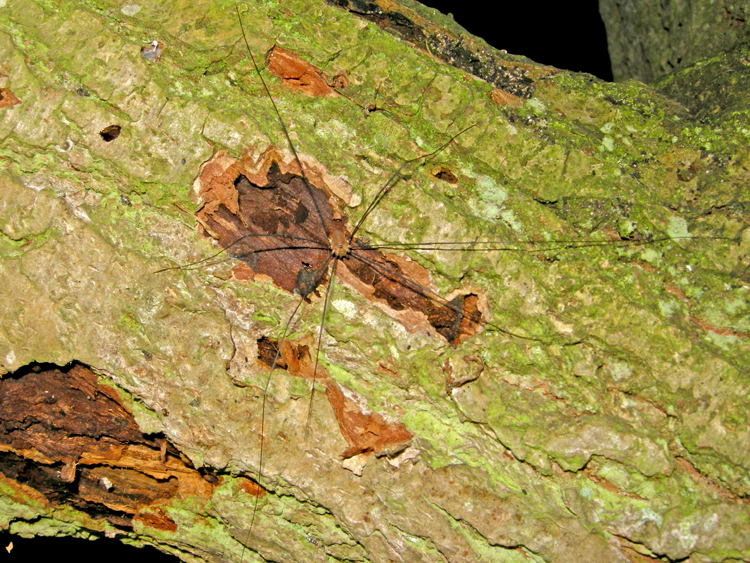
Finally I photographed this harvestman in the hope of working out its ID.  I think I have - Leiobunum rotundum.


Leiobunum rotundum, North Elmham Cathedral Meadows, 17th October


Not a great deal in the moth trap at home that night: 3 Narrow-winged Greys Eudonia angustea, 2 November Moths, 2 Feathered Thorns, Shuttle-shaped Dart, 2 Large Yellow Underwings, 3 Green-brindled Crescents, Red-line Quaker, Yellow-line Quaker, Beaded Chestnut and Lunar Underwing.

The following night was very poor with Narrow-winged Grey Eudonia angustea, November Moth, Green-brindled Crescent, Chestnut and the caddisfly Halesus radiatus. The 19th was even worse with just November Moth, 2 Green-brindled Crescents and Beaded Chestnut.

A fungus foray at Beeston Common on 20th October was extremely interesting, the first I've ever been on.  A Brown Rat was above head height in the hedge by the entrance to the common - I don't ever recall seeing one so high up before.  We also saw an Adder, but of course these delights weren't what we were there for.  Expertly led by Tony Leech I learnt an enormous amout about fungi.  I took a lot of photos but quickly and badly, so they really aren't worth sharing here.  I did it mainly with the intention of helping me learn what I was seeing, recording the names as I did so.

A couple I think are worth mentioning were the Gorse Cramp Ball Daldinia fissa, a species that only occurs on gorse that has been burnt. and the Ergot Claviceps purpurea, which was once a very problematic contaminant of rye used in bread-making.

Gorse Cramp Ball Daldinia fissa, Beeston Common, 20th October


Ergot Claviceps purpurea, Beeston Common, 20th October


I am very grateful to Tony and the others who helped find and identify fungi - a very educational event that will not be my last fungus foray.

Afterwards I went to Beeston Priory for a drink with the Mrs.  There was Common Darter here, and this thing.  It's quite aphid-like but lacks obvious siphuncular cones shown by most aphids.  I think some lack them though, so maybe an aphid, or perhaps a nymph of a bug of some sort.


unidentified bug, Beeston Priory, 20th October


A small selection of moths in the garden trap that night included the first Mottled Umber of the autumn, and Garden Rose Tortrix Acleris variegana, 8 Narrow-winged Greys Eudonia angustea, 5 November Moths, 7 Feathered Thorns, Sprawler, 3 Green-brindled Crescents, 2 Bricks and Snout.   There were also the caddisflies Limnephilus lunatus and 2 Halesus radiatus, and the beetle Lagria hirta.


Mottled Umber, North Elmham, 20th October


Sprawler, North Elmham, 20th October


Brick, North Elmham, 20th October


There was a bigger and better selection of moths the following night: London Dowd Blastobasis lacticolella, 2 Privet Tortrixes Clepsis consimilana, 2 Light Brown Apple-moths Epiphyas postvittana, Rhomboid Tortrix Acleris rhombana, 9 Narrow-winged Greys Eudonia angustea, Spruce Carpet, 13 November Moths, 3 Pale November Moths (and 1 other Epirrita sp.), 4 Feathered Thorns, White-point, Sprawler, 3 Green-brindled Crescents, 2 Bricks, Red-line Quaker, 5 Yellow-line Quakers and Vine's Rustic.  Caddisflies were Brown Sedge Anabolia nervosa, 3 Limnephilus auricula and Limnephilus lunatus.  There was also one bug, Pinalitus cervinus and the barkfly Ectopsocus briggsi.

Ectopsocus briggsi (male), North Elmham, 21st October


There was much less again the following night with Narrow-winged Grey Eudonia angustea, Pale November Moth, Feathered Thorn, Red-line Quaker and 4 Yellow-line Quakers.

The following night's selection was 2 Garden Midgets Phyllonorycter messaniella, 7 Narrow-winged Greys Eudonia angustea, November Moth, 4 Pale November Moths, 2 Feathered Thorns, Turnip Moth, 2 Sprawlers, 6 Green-brindled Crescents, Red-line Quaker and 2 Yellow-line Quakers. Caddisflies were Limnephilus auricula, 3 Limnephilus lunatus and Halesus radiatus, and there was a Tarnished Plant Bug Lygus rugulipennis.

Next day a Hornet was the only insect noted at the Cathedral Meadows.  Fungi included this Jelly Ear.

Jelly Ear, North Elmham Cathedral Meadows, 24th October


That night the garden moth trap produced Garden Midget Phyllonorycter messaniella, Light Brown Apple-moth Epiphyas postvittana, 5 Narrow-winged Greys Eudonia angustea, Double-striped Tabby Hypsopygia glaucinalis, 3 Pale November Moths, 4 Feathered Thorns, 2 Sprawlers, Red-line Quaker, Yellow-line Quaker and the caddisfly Halesus radiatus.

Saturday, 15 December 2018

Chestnut Pigmy and Oak Eggar

After a poor night on 13th July things got back on track on 14th with 93 species of moth.  One of these was a new one for me, Chestnut Pigmy Stigmella samiatella.


Chestnut Pigmy Stigmella samiatella (female, gen det), North Elmham, 14th July


Another was new for the house: Pistol Case-bearer Coleophora anatipennella.

Pistol Case-bearer Coleophora anatipennella (male, gen det), North Elmham, 14th July


A Grey Alder Case-bearer Coleophora binderella was only my second ever, following one here in 2016.

Grey Alder Case-bearer Coleophora binderella (female, gen det), North Elmham, 14th July


A Plum Fruit Moth Grapholita funebrana was another species I had only previously seen in 2016, though I did catch 6 of them that year.

Plum Fruit Moth Grapholita funebrana (male, gen det), North Elmham, 14th July


A White-bodied Conch Cochylis hybridella was also only my second here.

White-bodied Conch Cochylis hybridella, North Elmham, 14th July


A further 5 were new for the year here: Garden Midget Phyllonorycter messaniella, Apple & Plum Case-bearer Coleophora spinella, Grey Rush Case-bearer Coleophora glaucicolella, Oak Eggar and Maple Pug.

Garden Midget Phyllonorycter messaniella, North Elmham, 14th July


Apple & Plum Case-bearer Coleophora spinella (male, gen det), North Elmham, 14th July


Oak Eggar, North Elmham, 14th July


Maple Pug (male, gen det), North Elmham, 14th July


A Wood Groundling Parachronistis albiceps was my third here this year, surprisingly for a species I had not seen in my garden until this year.

The rest of the moths were Hazel Slender Parornix devoniella, 2 Beech Midgets Phyllonorycter maestingella, 9 Bird-cherry Ermines Yponomeuta evonymella, Hawthorn Ermine Paraswammerdamia nebulella, 2 Meadow Case-bearers Coleophora mayrella, Golden-brown Tubic Crassa unitella, 3 Brown House Moths Hofmannophila pseudospretella, 3 Long-horned Flat-bodies Carcina quercana, Burdock Neb Metzneria lappella, 2 Cinerous Nebs Bryotropha terrella, Dingy Dowd Blastobasis adustella, Plain Conch Phtheochroa inopiana, Common Yellow Conch Agapeta hamana, Privet Tortrix Clepsis consimilana, 2 Red-barred Tortrixes Ditula angustiorana, Grey Tortrix Cnephasia stephensiana, Flax Tortrix Cnephasia asseclana, Dover Shade Cnephasia genitalana, Garden Rose Tortrix Acleris variegana, 5 Barred Marbles Celypha striana, 2 Common Marbles Celypha lacunana, Marbled Orchard Tortrix Hedya nubiferana, 2 Nut-bud Moths Epinotia tenerana, Holly Tortrix Rhopobota naevana, 2 Common Cloaked Shoots Gypsonoma dealbana, 3 Hoary Bells Eucosma cana, 3 Many-plume Moths Alucita hexadactyla, 12 Garden Grass-veneers Chrysoteuchia culmella, 2 Inlaid Grass-veneers Crambus pascuella, 48 Straw Grass-veneers Agriphila straminella, 3 Common Grass-veneers Agriphila tristella, Pearl Grass-veneer Catoptria pinella, 2 Small Greys Eudonia mercurella, Small Magpie Anania hortulata, 18 Mother of Pearls Pleuroptya ruralis, 3 Grey Knot-horns Acrobasis advenella, 2 Common Plumes Emmelina monodactyla, Buff Arches, 4 Least Carpets, 11 Small Fan-footed Waves, 3 Dwarf Cream Waves, 12 Single-dotted Waves, Treble Brown Spot, 8 Riband Waves, Dark-barred Twin-spot Carpet, Shaded Broad-bar, Common Carpet, V-Pug, 2 Double-striped Pugs, Clouded Border, Brimstone Moth, 4 Early Thorns, 2 Willow Beauties, Mottled Beauty, Elephant Hawk-moth, 2 Yellow-tails, Round-winged Muslin, Rosy Footman, 16 Dingy Footmen, 19 Common Footmen, 3 Buff Ermines, Cinnabar, Heart and Club, 2 Flame Shoulders, 4 Double Square-spots, Dot Moth, 2 Bright-line Brown-eyes, Clay, 3 Smoky Wainscots, 2 Dun-bars, 2 Dark Arches, Slender Brindle, 2 Common Rustics, 4 Lesser Common Rustics (and another Common Rustic agg.), 3 Dusky Sallows, 18 Uncertains, 3 Rustics, 3 Mottled Rustics, 3 Nut-tree Tussocks, Straw Dot, Snout and Fan-foot.

There was a good range of other insects too.  Mayflies consisted of Pond Olive Cloeon dipterum, Green Drake Ephemera danica and 4 Blue-winged Olives Serratella ignita.  The brown lacewing Hemerobius micans was only my second here and there was a good selection of caddisflies: Oxyethira flavicornis, 2 Hydropsyche siltalai, Mottled Sedge Glyphotaelius pellucidus, Limnephilus auricula, Limnephilus flavicornis, 2 Leptocerus tineiformis and Grouse Wing Mystacides longicornis. Mirid bugs were Phylus palliceps and Stenotus binotatus, the latter new for the year, and beetles comprised 2 Hydrobius fuscipes, 2 Nicrophorus investigator, Rhagonycha fulva and Lagria hirta.


Friday, 3 June 2016

The end of a good day's insecting

After a good day insecting at Burnham Overy, New Costessey and Queen's Hill I decided to have a quick look on the patch for birds and moths.  Not many of either seen, indeed the only moth was a probable Skin Moth Monopis laevigella that got away before I could confirm the ID.  But there were some interesting insects inlcuding a new Hoverfly for me, Xylota segnis, and a new Bee for me, Chocolate Mining Bee Andrena scotica.

Xylota segnis, near Bittering, 28th May


Chocolate Mining Bee Andrena scotica, near Bittering, 28th May


Beetles included a pair of Common Leaf Weevils Phyllobius pyri and at least 2 Cantharis nigricans.

Common Leaf Weevils Phyllobius pyri, near Bittering, 28th May


Cantharis nigricans, near Bittering, 28th May


A Scorpion Fly turned out to be my first confirmed Panorpa communis, so that's both common Scorpion Fly species seen at the same site recently.

Panorpa communis, near Bittering, 28th May


This young Shieldbug appears to be a mid instar (I think, or possibly early instar?) Forest Bug (aka Red-legged Shieldbug).

Forest Bug (aka Red-legged Shieldbug), near Bittering, 28th May


I thought this fly might be distinctive enough to allow me to identify it, but I'm not sure.  Possibly Anopheles maculipennis...?


unidentified fly, possibly Anopheles maculipennis, near Bittering, 28th May


Harlequin Ladybird, near Bittering, 28th May


With only 17 species of moth in the trap that night I did well to notch up 8 new for the year: Garden Midget Phyllonorycter messaniella, Garden Cosmet Mompha subbistrigella, Yellow-spot Tortrix Pseudargyrotoza conwagana, Hook-streaked Grass-veneer Crambus lathoniellus, Oak Hook-tip, Blood-vein, Common Marbled Carpet and Brown Rustic.

Blood-vein, North Elmham, 28th May


Oak Hook-tip, North Elmham, 28th May


Common Marbled Carpet, North Elmham, 28th May


Brown Rustic, North Elmham, 28th May


Yellow-spot Tortrix Pseudargyrotoza conwagana, North Elmham, 28th May


Garden Cosmet Mompha subbistrigella, North Elmham, 28th May


Garden Midget Phyllonorycter messaniella, North Elmham, 28th May


The other 9 species were Little Dwarf Elachista canapennella, Common Swift, Silver-ground Carpet, Yellow-barred Brindle, Pale Tussock, 3 White Ermines, 2 Cinnabars, 2 Rustic Shoulder-knots and 6 Treble Lines. Caddisflies were represented by Glyphotaelius pellucidus and Limnephilus sparsus.