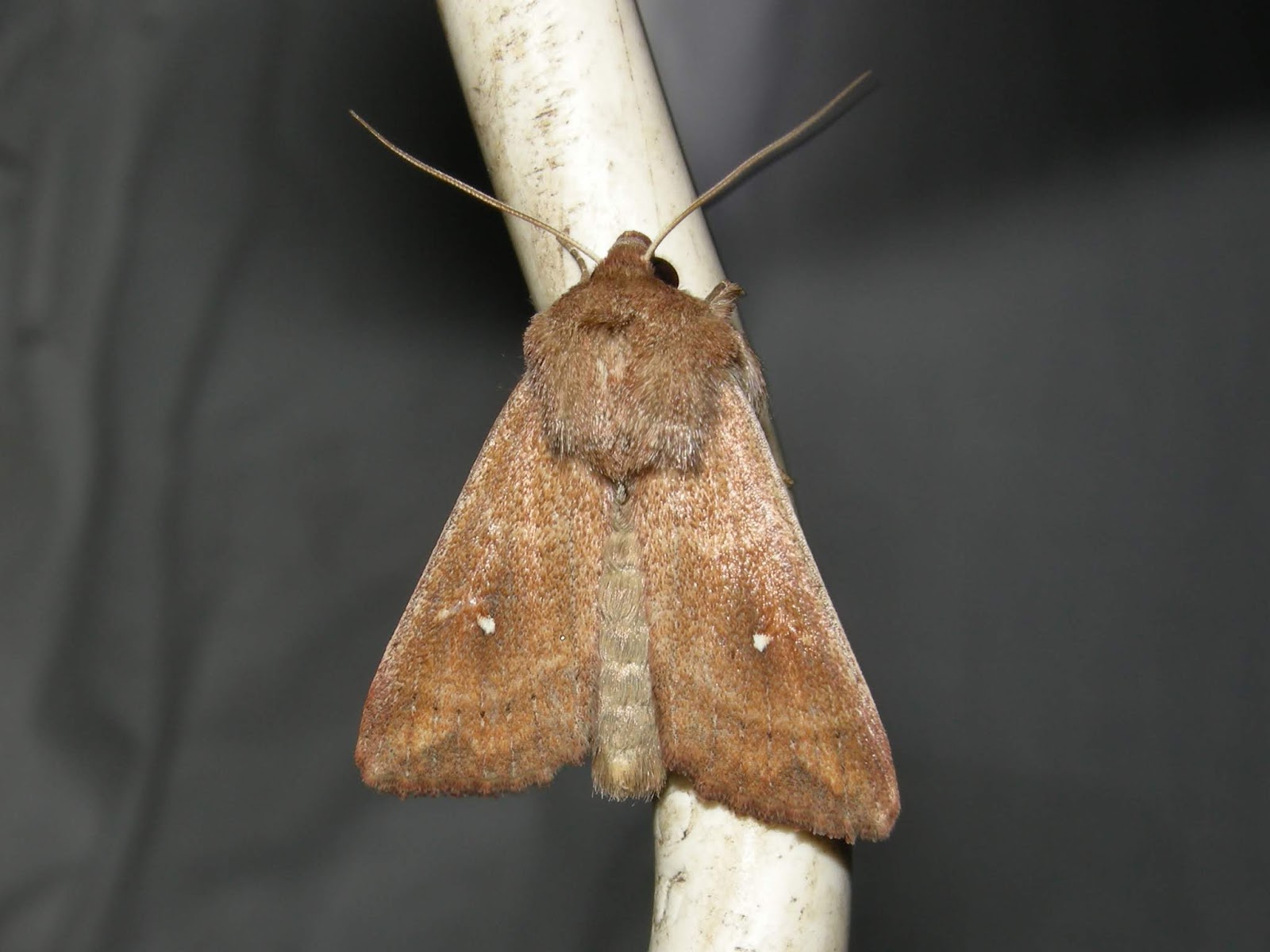
Description


A diary of my mothing activity covering highlights and photos from my moth trapping activities. Mainly Norfolk (UK), occasionally beyond. I may mention other wildlife sightings here, especially insects, but for birds see my birding diary.
Showing posts with label Ectopsocus briggsi. Show all posts

Monday, 29 April 2019

Not-so-Scarce Umbers

A quick wander along the railway at the bottom of the meadows after dark on 8th November turned up a few interesting things.  There wasn't much flying but the eye-shine drew my attendtion to this Satellite.

Satellite, North Elmham Cathedral Meadows, 8th November


The only other moth I found was a London Dowd Blastobasis lacticolella resting in some Gorse.  The Broom wasn't as productive as it can be, but there was a Broom Psyllid Arytaina genistae. As is often the case, the Oak trunks produced a better variety including the springtail Orchesella cincta, Great Four-spot Treerunner Dromius quadrimaculatus (a beetle), Harlequin Ladybird Harmonia axyridis and White-legged Snake Millipede Tachypodoiulus niger.

Orchesella cincta, North Elmham Cathedral Meadows, 8th November


Great Four-spot Treerunner Dromius quadrimaculatus, North Elmham Cathedral Meadows, 8th November


I also found a bug which at the time I identified as my first Anthocoris confusus.  However I subsequently recorded more Anthocoris along here and when I was figuring out the next one that I realised I was mis-reading the description of one of the features, and it turned out to be nemoralis.  Now there's no reason to assume I made the same mistake when examining the confusus, but as none of the subsequent examples so far have been confusus I'm left feeling less than 100% sure that I didn't make a mistake.  So I am deleting this record until such time as I find another.

There was one lifer for which I'm still ok with the ID though, not that it's a group that I have much experience with - a Variegated Oak Aphild Lachnus roboris.


Variegated Oak Aphid Lachnus roboris, North Elmham Cathedral Meadows, 8th November


The moths in the garden trap that night were 3 Narrow-winged Greys Eudonia angustea, White-point, 2 Sprawlers, 2 Green-brindled Crescents, 2 Chestnuts and Yellow-line Quaker.

The following night there was Garden Rose Tortrix Acleris variegana, 2 Pale November Moths, a female November Moth agg., 2 Feathered Thorns, 2 Mottled Umbers, Sprawler, Chestnut, 3 Yellow-line Quakers and the caddisflies 4 Limnephilus lunatus and Limnephilus flavicornis.

Mottled Umber, North Elmham, 9th November


Just 4 Feathered Thorns and a Setaceous Hebrew Character the following night.  Next day there was a Common Mompha Mompha epilobiella in my hall, and in the trap Diamond-back Plutella xylostella, Rusty Oak Button Acleris ferrugana, Sprawler, Chestnut and 2 Yellow-line Quakers.

Rusty Oak Button Acleris ferrugana (male, gen det), North Elmham, 11th November


The Mottled Umber shown above was, I would say, at the Scarce Umber end of the scale - the sort that could reasonably be confused with Scarce Umber.  In fact I checked the genitalia just to make sure.  Three nights later there were some real Scarce Umbers - 3 no less.  I've never caught 3 in one night before and with a blank year in 2017 these were my first since 2016.


Scarce Umbers, North Elmham, 12th November


Other things that night were 2 Light Brown Apple-moths Epiphyas postvittana, December Moth, November Moth, Pale November Moth and Satellite.

The following night there was November Moth, Yellow-line Quaker, the caddisfly Limnephilus lunatus and a Common Wasp.

The 14th was another quiet night for moths with just 2 December Moths, 3 Feathered Thorns and Setaceous Hebrew Character. There were also 2 caddisflies Limnephilus lunatus and, for the first time in a while, a fresh emergence of leafhoppers.  All were similar yellow leafhoppers which normally prove to be either one of the two Fagocyba species (usually cruenta) or one of the several Edwardsiana species.  A couple of these had cloudier apexes of their wings compared to the others so I wondered if two species might be involved, but in fact although two species were involved, the variation in the cloudiness of the wing tips was all within a single species.  They consisted of 1 Fagacyba carri and 6 Fagocyba cruenta.

Fagocyba carri (male, gen det), North Elmham, 12th November


Fagocyba cruenta (3 males, gen det), North Elmham, 12th November


Next day there were 2 Light Brown Apple-moths Epiphyas postvittana, Ashy Button Acleris sparsana, 3 December Moths, probable November Moth, Mottled Umber, White-point, Sprawler, the caddisfly Limnephilus lunatus, Black Sexton Beetle Nicrophorus humator and 2 more Fagocyba cruenta.

On 16th I had another after-dark look round the meadows with the head-torch.  This leafmine appears to belong to Common Oak Pigmy Stigmella roborella.  The larva was in there but motionless and I'm not convinced it was alive.

leafmine of Common Oak Pigmy Stigmella roborella, North Elmham Cathedral Meadows, 16th November


The only adult moth I could find was a Winter Moth, my fisrt of the winter.

Winter Moth, North Elmham Cathedral Meadows, 16th November


There were also 3 of the barkflies Ectopsocus briggsi, the beetle Great Four-spot Treerunner Dromius quadrimaculatus, 3 7-spot Ladybirds Coccinella septempunctata, and a Common Rough Woodlouse Porcellio scaber.

Ectopsocus briggsi, North Elmham Cathedral Meadows, 16th November


Two different Oak trunks had these odd ant-like insects on.  It was clear enough that they weren't actually ants but apart from assuming they were some kind of hymenoptera I couldn't figure out what they were.  I tweeted some photos and received a response from Simon Knott who confirmed they were gall wasps of the family Cynipidae, likely to be Biorhiza pallida agamic female.  Looking into that and comparing with the specimens it looks bang-on, so my first Oak Apple Gall Wasps Biorhiza pallida.


Oak Apple Gall Wasps Biorhiza pallida, North Elmham Cathedral Meadows, 16th November


A particularly fine set of fungi was this Sulphur Knight.  I had a pretty good idea about what these were already but James Emerson has been brilliant helping me with fungus IDs lately - always very much appreciated.  These looked a little more lemony-yellow in life (albeit only in torchlight) than they do in the photos.

Sulphur Knight, North Elmham Cathedral Meadows, 16th November

Monday, 22 April 2019

Phyllonorycter trifasciella and other mid October moths

An evening stroll round the meadows on 17th October was worthwhile.  I caught a couple of Garden Midgets Phyllonorycter messaniella at dusk but it got more productive after dark.  One of the better moths was another Phyllonorycter, found resting on a leaf by torchlight - a Honeysuckle Midget Phyllonorycter trifasciella.  This is a species I don't encounter very often.

Garden Midget Phyllonorycter messaniella, North Elmham Cathedral Meadows, 17th October


Honeysuckle Midget Phyllonorycter trifasciella, North Elmham Cathedral Meadows, 17th October


Other moths were 3 Long-horned Flat-bodies Carcina quercana, Common Flat-body Agonopterix heracliana, London Dowd Blastobasis lacticolella, 3 Common Plumes Emmelina monodactyla, 2 November Moths, 2 Green-brindled Crescents and Yellow-line Quaker.

Long-borned Flat-body Carcina quercana, North Elmham Cathedral Meadows, 17th October


Green-brindled Crescent, North Elmham Cathedral Meadows, 17th October


There were two of the darker flower bugs on Oak trunks but as I subsequently identified both confusus and nemoralis along here it isn't safe to name these without a specimen.  An easier bug to identify was Pinalitus cervinus.

Pinalitus cervinus, North Elmham Cathedral Meadows, 17th October


A new beetle for me was the rove beetle Ocypus brunnipes.  Also a 7-spot Ladybird.

Ocypus brunnipes, North Elmham Cathedral Meadows, 17th October


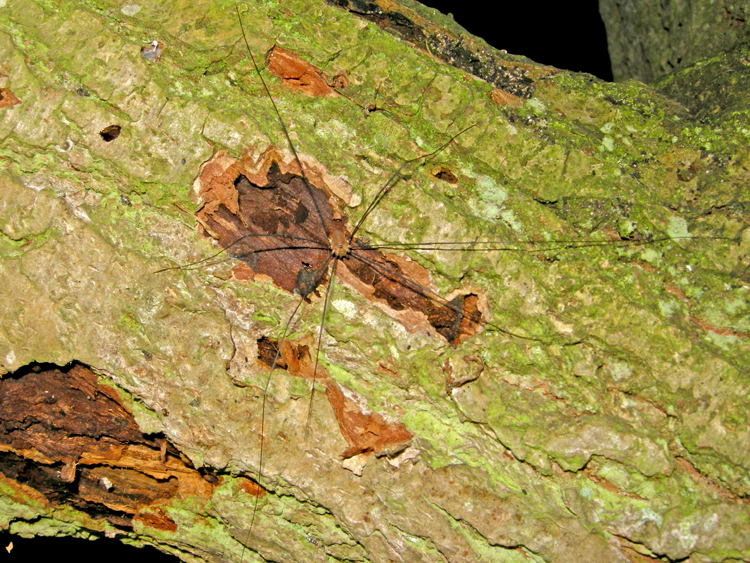
Finally I photographed this harvestman in the hope of working out its ID.  I think I have - Leiobunum rotundum.


Leiobunum rotundum, North Elmham Cathedral Meadows, 17th October


Not a great deal in the moth trap at home that night: 3 Narrow-winged Greys Eudonia angustea, 2 November Moths, 2 Feathered Thorns, Shuttle-shaped Dart, 2 Large Yellow Underwings, 3 Green-brindled Crescents, Red-line Quaker, Yellow-line Quaker, Beaded Chestnut and Lunar Underwing.

The following night was very poor with Narrow-winged Grey Eudonia angustea, November Moth, Green-brindled Crescent, Chestnut and the caddisfly Halesus radiatus. The 19th was even worse with just November Moth, 2 Green-brindled Crescents and Beaded Chestnut.

A fungus foray at Beeston Common on 20th October was extremely interesting, the first I've ever been on.  A Brown Rat was above head height in the hedge by the entrance to the common - I don't ever recall seeing one so high up before.  We also saw an Adder, but of course these delights weren't what we were there for.  Expertly led by Tony Leech I learnt an enormous amout about fungi.  I took a lot of photos but quickly and badly, so they really aren't worth sharing here.  I did it mainly with the intention of helping me learn what I was seeing, recording the names as I did so.

A couple I think are worth mentioning were the Gorse Cramp Ball Daldinia fissa, a species that only occurs on gorse that has been burnt. and the Ergot Claviceps purpurea, which was once a very problematic contaminant of rye used in bread-making.

Gorse Cramp Ball Daldinia fissa, Beeston Common, 20th October


Ergot Claviceps purpurea, Beeston Common, 20th October


I am very grateful to Tony and the others who helped find and identify fungi - a very educational event that will not be my last fungus foray.

Afterwards I went to Beeston Priory for a drink with the Mrs.  There was Common Darter here, and this thing.  It's quite aphid-like but lacks obvious siphuncular cones shown by most aphids.  I think some lack them though, so maybe an aphid, or perhaps a nymph of a bug of some sort.


unidentified bug, Beeston Priory, 20th October


A small selection of moths in the garden trap that night included the first Mottled Umber of the autumn, and Garden Rose Tortrix Acleris variegana, 8 Narrow-winged Greys Eudonia angustea, 5 November Moths, 7 Feathered Thorns, Sprawler, 3 Green-brindled Crescents, 2 Bricks and Snout.   There were also the caddisflies Limnephilus lunatus and 2 Halesus radiatus, and the beetle Lagria hirta.


Mottled Umber, North Elmham, 20th October


Sprawler, North Elmham, 20th October


Brick, North Elmham, 20th October


There was a bigger and better selection of moths the following night: London Dowd Blastobasis lacticolella, 2 Privet Tortrixes Clepsis consimilana, 2 Light Brown Apple-moths Epiphyas postvittana, Rhomboid Tortrix Acleris rhombana, 9 Narrow-winged Greys Eudonia angustea, Spruce Carpet, 13 November Moths, 3 Pale November Moths (and 1 other Epirrita sp.), 4 Feathered Thorns, White-point, Sprawler, 3 Green-brindled Crescents, 2 Bricks, Red-line Quaker, 5 Yellow-line Quakers and Vine's Rustic.  Caddisflies were Brown Sedge Anabolia nervosa, 3 Limnephilus auricula and Limnephilus lunatus.  There was also one bug, Pinalitus cervinus and the barkfly Ectopsocus briggsi.
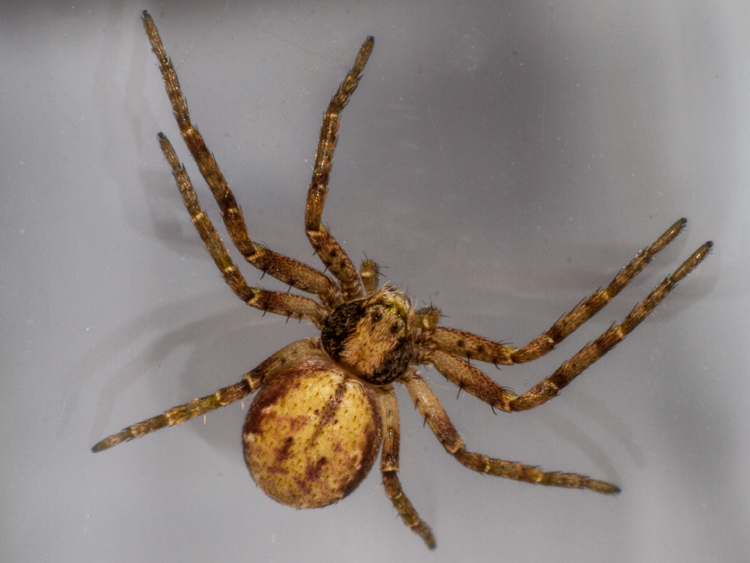
Ectopsocus briggsi (male), North Elmham, 21st October


There was much less again the following night with Narrow-winged Grey Eudonia angustea, Pale November Moth, Feathered Thorn, Red-line Quaker and 4 Yellow-line Quakers.

The following night's selection was 2 Garden Midgets Phyllonorycter messaniella, 7 Narrow-winged Greys Eudonia angustea, November Moth, 4 Pale November Moths, 2 Feathered Thorns, Turnip Moth, 2 Sprawlers, 6 Green-brindled Crescents, Red-line Quaker and 2 Yellow-line Quakers. Caddisflies were Limnephilus auricula, 3 Limnephilus lunatus and Halesus radiatus, and there was a Tarnished Plant Bug Lygus rugulipennis.

Next day a Hornet was the only insect noted at the Cathedral Meadows.  Fungi included this Jelly Ear.

Jelly Ear, North Elmham Cathedral Meadows, 24th October


That night the garden moth trap produced Garden Midget Phyllonorycter messaniella, Light Brown Apple-moth Epiphyas postvittana, 5 Narrow-winged Greys Eudonia angustea, Double-striped Tabby Hypsopygia glaucinalis, 3 Pale November Moths, 4 Feathered Thorns, 2 Sprawlers, Red-line Quaker, Yellow-line Quaker and the caddisfly Halesus radiatus.

Thursday, 28 February 2019

Eyed Hawk, a new froghopper and other bits and pieces

There were no stand-out highlights in the moth trap on 3rd September, though an Eyed Hawk-moth is always nice, especially after things have slowed down in the autumn.  The others were Light Brown Apple-moth Epiphyas postvittana, Garden Rose Tortrix Acleris variegana, 3 Common Marbles Celypha lacunana, 4 Common Grass-veneers Agriphila tristella, Elbow-stripe Grass-veneer Agriphila geniculea, Common Plume Emmelina monodactyla, 2 Brimstone Moths, 2 Light Emeralds, 12 Large Yellow Underwings, Lesser Yellow Underwing, 3 Setaceous Hebrew Characters, Square-spot Rustic, Nutmeg, 3 Common Wainscots, 5 Flounced Rustics, Rosy Rustic and Straw Dot.


Eyed Hawk-moth, North Elmham, 3rd September


There was also a Hornet and the following caddisflies: Hydropsyche pellucidula, Hydropsyche siltalai, Limnephilus auricula and 7 Limnephilus lunatus.

Moth trapping at the meadows the following night produced a reasonable variety for this late in the  season: Brown Rowan Argent Argyresthia semifusca, White-shouldered Smudge Ypsolopha parenthesella, 2 Common Marbles Celypha lacunana, Bramble Shoot Notocelia uddmanniana, Water Veneer Acentria ephemerella, 2 Ringed China-marks Parapoynx stratiotata, 2 Chinese Characters, Blood-vein, Dark-barred Twin-spot Carpet, Common Carpet, Yellow Shell, Sharp-angled Carpet, 3 Brimstone Moths, Dusky Thorn, Common Wave, Light Emerald, 4 Flame Shoulders, 3 Large Yellow Underwings, Lesser Yellow Underwing, Broad-bordered Yellow Underwing, 2 Lesser Broad-bordered Yellow Underwings, 2 Setaceous Hebrew Characters, 35 Square-spot Rustics, White-point, Brown-spot Pinion, 4 Centre-barred Sallows, Vine's Rustic, Spectacle, Straw Dot and 2 Snouts.

White-point, North Elmham Cathedral Meadows, 4th September


Brown-spot Pinion, North Elmham Cathedral Meadows, 4th September


Just one mayfly noticed, a Blue-winged Olive Serratella ignita.  A good variety of caddisflies though: Polycentropus flavomaculatus, Hydropsyche pellucidula, 2 Small Silver Sedges Lepidostoma hirtum, Mottled Sedge Glyphotaelius pellucidus, 3 Limnephilus auricula, 30 Limnephilus lunatus, Limnephilus marmoratus and Limnephilus sparsus.

Leafhoppers included a probable female Macrosteles sexnotatus and a new species for me, Aphrodes makarovi.


Aphrodes makarovi, North Elmham Cathedral Meadows, 4th September


Beetles included Strawberry Seed Beetle Harpalus rufipes, Pea-leaf Weevil Sitona lineatus and, feeding on Burdock flowers, Curtonotus aulicus.

Curtonotus aulicus, North Elmham Cathedral Meadows, 4th September


At home that night Pine Carpet was new for the year.  Other highlights were Beech Pigmy Stigmella hemargyrella and Thatch Neb Bryotropha basaltinella. The former was my third this year of a species I hadn't previously recorded here and the latter was my fourth this year of a species that until this year hadn't been recorded anywhere else in Norfolk.

Beech Pigmy Stigmella hemargyrella (male, gen det), North Elmham, 4th September


Thatch Neb Bryotropha basaltinella (male, gen det), North Elmham, 4th September


By recent standards 32 species in a night was excellent - the rest were Garden Midget Phyllonorycter messaniella, Beech Midget Phyllonorycter maestingella, Clover Case-bearer Coleophora alcyonipennella, 2 Little Dwarfs Elachista canapennella, Barred Fruit-tree Tortrix Pandemis cerasana, Light Brown Apple-moth Epiphyas postvittana, 7 Common Marbles Celypha lacunana, 4 Common Grass-veneers Agriphila tristella, 6 Elbow-stripe Grass-veneers Agriphila geniculea, Chequered Grass-veneer Catoptria falsella, 2 Ringed China-marks Parapoynx stratiotata, Common Plume Emmelina monodactyla, 4 Blood-veins, Grey Pine Carpet, Green Carpet, 5 Brimstone Moths, Dusky Thorn, 3 Light Emeralds, 13 Large Yellow Underwings, 2 Lesser Yellow Underwings, Setaceous Hebrew Character, 4 Square-spot Rustics, Nutmeg, Angle Shades, Flounced Rustic, 4 Vine's Rustics, Burnished Brass, Straw Dot and 4 Snouts.

Mayflies and lacewings were 3 Pond Olives Cloeon dipterum, Cunctochrysa albolineata and Hemerobius humulinus.

There were very large numbers of caddisflies in the trap, though no unusual species among them: 10 Hydropsyche pellucidula, 3 Mottled Sedges Glyphotaelius pellucidus, 13 Limnephilus auricula, 3 Limnephilus flavicornis, 46 Limnephilus lunatus, 2 Limnephilus marmoratus and 3 Limnephilus sparsus.

Not much else noted - Forest Bug, the sexton beetle Nicrophorus investigator, 5 Hornets and a Common Frog.

The following night the leafhopper Kybos betulicola appeared in my study

In the moth trap there were two new moths for the garden year-list, Brown-spot Pinion and Lunar Underwing.

Brown-spot Pinion, North Elmham, 5th September


Lunar Underwing, North Elmham, 5th September


Other moths were Dark-triangle Button Acleris laterana, Garden Rose Tortrix Acleris variegana, Barred Marble Celypha striana, 3 Common Marbles Celypha lacunana, Grey Poplar Bell Epinotia nisella, 4 Elbow-stripe Grass-veneers Agriphila geniculea, Garden Carpet, 2 Brimstone Moths, Dusky Thorn, Engrailed, Light Emerald, Flame Shoulder, 6 Large Yellow Underwings, 5 Lesser Yellow Underwings, Setaceous Hebrew Character, 2 Square-spot Rustics, Common Wainscot, Frosted Orange, Vine's Rustic and 3 Snouts.

Other insects included the mayfly Blue-winged Olive Serratella ignita, the brown lacewing Hemerobius lutescens, the caddisflies 3 Hydropsyche pellucidula, Mottled Sedge Glyphotaelius pellucidus, 4 Limnephilus auricula, 3 Limnephilus flavicornis, 16 Limnephilus lunatus, 3 Limnephilus marmoratus and 2 Limnephilus sparsus, a Harlequin Ladybird and 2 Hornets.

Moth numbers continued to dwindle with the following on 6th: Garden Rose Tortrix Acleris variegana, Barred Marble Celypha striana, Common Marble Celypha lacunana, 2 Elbow-stripe Grass-veneers Agriphila geniculea, Ringed China-mark Parapoynx stratiotata, Single-dotted Wave, Brimstone Moth, 5 Large Yellow Underwings, 5 Lesser Yellow Underwings and Setaceous Hebrew Character.  There was one mayfly (Pond Olive Cloeon dipterum), one beetle (Bradycellus verbasci) and these caddisflies: Hydropsyche pellucidula, Mottled Sedge Glyphotaelius pellucidus, Limnephilus flavicornis, 6 Limnephilus lunatus and Limnephilus sparsus.

Next day a walk round the meadows produced a few insects including Migrant Hawker, Common Darter, Small Copper and Comma.


Small Copper, North Elmham Cathedral Meadows, 7th September


A White-shouldered Smudge Ypsolopha parenthesella was the only adult moth found but vacated leaf-mines of Scrubland Pigmy Stigmella plagicolella and 2 Apple Leaf-miners Lyonetia clerkella were also seen.

vacated leaf-mine of Scrubland Pigmy Stigmella plagicolella in Blackthorn, North Elmham Cathedral Meadows, 7th September


vacated leaf-mines of Apple Leaf-miners Lyonetia clerkella in Wild Cherry, North Elmham Cathedral Meadows, 7th September


Other insects included 2 7-spot Ladybirds, the hoverfly Myathropa florea, a Turnip Sawfly and lots of wasps feeding on ivy.  They included lots of Common Wasps, at least one German Wasp and 2 Hornets, but among them I had brief views of a Colletes bee which was very probably an Ivy Bee.  Ivy Bee was new to science as recently as 1993 and arrived in the UK in 2001, reaching Norfolk by 2014.  It is now common in many places but as hard as I tried to find one at the meadows this autumn this brief sighting was the nearest I got.  Sadly it wasn't quite good enough to be 100% sure - I believe there are one or two other Colletes species that can visit ivy at this time of year and my views were not sufficient to rule out one of them.

Turnip Sawfly, North Elmham Cathedral Meadows, 7th September


Shaking some Field Maple keys produced the barkfly Ectopsocus briggsi, a harvestman and 2 spiders.  The latter were I think immature, or at least I could not see enough detail in their epigyne to be able to match them to any species, but I think they were an Araniella sp. and a Philodromus sp.  My references on harvestmen are sparse but from searching the internet I'm pretty sure this one was Paroligolophus agrestis, a species I hadn't previously identified.

Ectopsocus briggsi (female), North Elmham Cathedral Meadows, 7th September


Philodromus sp., North Elmham Cathedral Meadows, 7th September


Paroligolophus agrestis, North Elmham Cathedral Meadows, 7th September


At home that night a small selection of moths consisted of Garden Rose Tortrix Acleris variegana, Blood-vein, Double-striped Pug, Lilac Beauty, Early Thorn, Light Emerald, Heart and Dart, Flame Shoulder, Large Yellow Underwing, 6 Lesser Yellow Underwings, Square-spot Rustic and 2 Common Wainscots.  There were 2 Hornets and the only other insects noted were caddisflies: 2 Mottled Sedges Glyphotaelius pellucidus, 10 Limnephilus lunatus and 2 Limnephilus marmoratus.

2 Sallows were new for the year the following night.

Sallow, North Elmham, 8th September


Other moths were 2 Beech Midgets Phyllonorycter maestingella, Brown Rowan Argent Argyresthia semifusca, 2 Light Brown Apple-moths Epiphyas postvittana, Rhomboid Tortrix Acleris rhombana, 3 Garden Rose Tortrixes Acleris variegana, Barred Marble Celypha striana, 9 Common Marbles Celypha lacunana, Small Birch Bell Epinotia ramella, Common Grass-veneer Agriphila tristella, Elbow-stripe Grass-veneer Agriphila geniculea, Chinese Character, Maiden's Blush, Blood-vein, 2 Garden Carpets, Treble-bar, 2 Brimstone Moths, 2 Dusky Thorns, Early Thorn, 2 Light Emeralds, Flame, Flame Shoulder, 2 Large Yellow Underwings, 5 Lesser Yellow Underwings, 2 Square-spot Rustics, 2 Common Wainscots, Brown-spot Pinion, Lunar Underwing and Snout.

Other insects included 3 mayflies, all Pond Olives Cloeon dipterum, 2 green lacewings, both Cunctochrysa albolineata, 4 Forest Bugs and 2 beeetles, both Aphodius rufipes.  Caddisflies were Hydropsyche siltalai, 5 Limnephilus auricula, Limnephilus flavicornis, 15 Limnephilus lunatus, Limnephilus marmoratus and Limnephilus sparsus.