Description


A diary of my mothing activity covering highlights and photos from my moth trapping activities. Mainly Norfolk (UK), occasionally beyond. I may mention other wildlife sightings here, especially insects, but for birds see my birding diary.
Showing posts with label Nemapogon granella. Show all posts

Wednesday, 17 February 2021

Review of 2019 and 2020 - Moths: Clothes Moths (Tineidae) (part 1: Morophaga, Nemopogon and Tineola)

CLOTHES MOTHS (TINEIDAE)


Silver-barred Clothes Moth Infurcitinea argentimaculella - None.  I've never found this species but it's reasonably widespread and there's enough lichen at the meadows that I should be in with a shout for it there.


Large Clothes Moth Morophaga choragella - 3 in my garden moth trap between 17th July and 21st August 2019, which is as many as I had caught here since I moved in in 2014 (one in 2016 and 2 in 2017).  Also one at Weybourne on 5th July but none recorded in 2020.

Large Clothes Moth Morophaga choragella, North Elmham, 17th July 2019


Large Clothes Moth Morophaga choragella, North Elmham, 21st August 2019


Large Brindled Clothes Moth Triaxomera parasitella - None.  This is one of a handful of species I used to see more at my last house than this one - only one here so far (in 2018) compared to 4 in fewer years (and without a proper moth trap) at Bawdeswell.


Corn Moth Nemapogon granella - Although never in the moth trap I have seen this species here annually since 2016 and recorded 5 in 2019/20.  In 2019 one in my bathroom on 8th April, one to Red-belted Clearwing pheremone lure on 6th June and one came into my study on 8th July.  In 2020 one netted in the garden on 15th May and one on the outside of the patio door on 1st June.

male Corn Moth Nemapogon granella, North Elmham, 8th April 2019


Cork Moth Nemapogon cloacella - 5 here between 24th June and 24th July 2019, my equal best year here but bettered in 2020 when 6 between 20th May and 6th August.  Also 3 caught at the meadows and one at Hills and Holes.  I used to get more of these at Bawdeswell than I do here.

Cork Moth Nemapogon cloacella, North Elmham, 24th June 2019


Cork Moth Nemapogon cloacella, North Elmham, 25th June 2020


male Cork Moth Nemapogon cloacella, North Elmham Cathedral Meadows, 9th September 2020 (I'm not sure the aedeagus is to scale with the rest of the genitalia)


White-speckled Clothes Moth Nemapogon koenigi - One at the meadows on 15th June 2019 and one at home on 23rd August, then in 2020 an impressive total of 6 in the garden between 19th May and 6th August (the first to Yellow-legged Clearwing pheremone lure, the second netted and the rest in the moth trap).  This species is nearly annual in the garden though I missed catching one here 2016.  It was also regular at Bawdeswell where I recorded the second for Norfolk back in 2011 - the species seems to have only become common in the last decade.

White-speckled Clothes Moth Nemapogon koenigi, North Elmham Cathedral Meadows, 15th June 2019


male White-speckled Clothes Moth Nemapogon koenigi, North Elmham, 12th June 2020 (I'm not sure the aedeagus is to scale with the rest of the genitalia


Gold-sheen Clothes Moth Nemapogon ruricolella - Attracted to the Yellow-legged Clearwing pheremone lure in my garden on 1st and 23rd June 2019 but none in 2020.  This species seems to have a strong attraction to these pheremones with at least 2 of my previous records being found the same way.  On the second occasion this year I had taken the bung with the pheremone lure on it out of its packet to put in its trap, leaving the empty packet on the dining room table.  I went outside, put the trap up, came back in and found that the moth had come in through the patio doors and crawled inside the empty packet, presumably having sniffed out the traces of chemical left on the packet.

Gold-sheen Clothes Moth Nemapogon ruricolella, North Elmham, 1st June 2019


Barred White Clothes Moth Nemapogon clematella - None in 2019 but one in my garden moth trap on 29th July 2020.  I've recorded 1-2 in 4 of the 6 years I've been trapping at North Elmham but this is another species that I found more often at my old house in Bawdeswell (16 in 5 years without a proper moth trap).


Common Clothes Moth Tineola bisselliella - One of the few Clothes Moths that really deserve to be called Clothes Moths, though it isn't as common as it apparently once was.  Having said that it seems to be having something of a comeback - at least it is in my house!  Since my first here in 2016 I recorded 2 in 2017, 4 in 2018 and 3 in 2019 (23rd April, 21st June and 18th September, all indoors).  Then in 2020 they suddenly reached proper infestation levels, with a monstrous 230 found in the house between 14th March and 22nd December, peaking with 24 on 2nd August.  Relatively few instances of holes found in clothes and I suspect most are eating the edges of the carpets.  Each one found has been destroyed as we don't particularly want all of our soft-furnishings destroyed, but with a few already recorded in 2021 I fear we will be fighting a losing battle!

Common Clothes Moth Tineola bisselliella, North Elmham, 23rd April 2019


male Common Clothes Moth Tineola bisselliella, North Elmham, 5th June 2020 - a darker browner individual than usual leading me to hope it would prove to be something more interesting (sadly not)


Common Clothes Moth Tineola bisselliella, North Elmham, 8th September 2020


Next page: more Tineidae


Wednesday, 13 March 2019

A new flower and a new hoverfly

It was another very quiet night for moths on 13th September with just 8 species, all macro: Blood-vein, Common Marbled Carpet, Brimstone Moth, 2 Large Yellow Underwings, 3 Lesser Yellow Underwings, 2 Lunar Underwings, 2 Flounced Rustics and 3 Frosted Oranges.  But there was some interest among the other insects, including this Devil's Coach-horse beetle, a new species for the garden.  Perhaps the mites on it were new too, but I've no idea how to identify them...


Devil's Coach-horse Ocypus olens, North Elmham, 13th September


Among the caddisflies Limnephilus ignavus was my second ever and Halesus radiatus was new for the year.  Others were Limnephilus flavicornis, 10 Limnephilus lunatus and Limnephilus sparsus.

Limnephilus ignavus (male), North Elmham, 13th September


Halesus radiatus (male), North Elmham, 13th September


Next day an early wander round the meadows produced this fine Roe Deer, one of the first I've seen actually on the meadows themselves (usually too much disturbance from dog-walkers).


Roe Deer, North Elmham Cathedral Meadows, 14th September


Butterflies included Small Copper and Comma.

Small Copper, North Elmham Cathedral Meadows, 14th September


Comma, North Elmham Cathedral Meadows, 14th September


There were 7-spot Ladybirds, a Hornet and this hoverfly which proved to be my first Epistrophe grossulariae.

Epistrophe grossulariae, North Elmham Cathedral Meadows, 14th September


I didn't get round to identifying this umbellifer until recently - turns out it was Burnet-Saxifrage.  By no means an unusual plant but apparently the first time I've identified it.

Burnet-Saxifrage, North Elmham Cathedral Meadows, 14th September


That night at home moths included my first Pink-barred Sallow of the year.

Pink-barred Sallow, North Elmham, 14th September


This Ash-bud Moth Prays fraxinella wasn't new for the year but was a good deal rarer here - only my third record.

Ash-bud Moth Prays fraxinella, North Elmham, 14th September


Other moths were Wainscot Smudge Ypsolopha scabrella, Long-horned Flat-body Carcina quercana, Garden Rose Tortrix Acleris variegana, 2 Narrow-winged Greys Eudonia angustea, Chinese Character, Single-dotted Wave, 2 Common Marbled Carpets, Sharp-angled Carpet, 2 Brimstone Moths, 2 Dusky Thorns, 2 Light Emeralds, Buff Ermine, 3 Large Yellow Underwings, 5 Lesser Yellow Underwings, Broad-bordered Yellow Underwing, Square-spot Rustic, Common Wainscot, 3 Lunar Underwings, Sallow, 2 Flounced Rustics, Frosted Orange, Straw Dot and 7 Snouts.

There was one mayfly, one green lacewing: Pond Olive Cloeon dipterum and Chrysoperla carnea.  The caddisflies were 4 Mottled Sedges Glyphotaelius pellucidus, 6 Limnephilus auricula, 14 Limnephilus lunatus and Limnephilus marmoratus. An Aphodius rufipes was the only beetle and a bug was probably Lygus pratensis but I seem to have lost the specimen to confirm it.  This hoverfly was Melangyna cincta, new for the year.

Melangyna cincta, North Elmham, 14th September


Next day I found a Corn Moth Nemapogon granella on the outside of my window of the front door, my fifth here since 2016.  Not bad for a moth that's only had six other records in Norfolk this millenium.  I don't think we have any stored grain or vegetable products here that are likely to hold a population of these so can only presume they are originating from somewhere else.  They do also breed on fungus, which was presumably the source of one that I netted up the road at the meadows earlier this year.

Corn Moth Nemapogon granella (female, gen det), North Elmham, 15th September

Friday, 8 June 2018

Another kuhlweiniella

I found 30 moths of 13 species in a wander round the meadows on Monday 28th May.  Among the better ones was another Corn Moth Nemapogon granella, the first time I've recorded one outside.  Also for comparison a Cork Moth Nemapogon cloacella.

Corn Moth Nemapogon granella, North Elmham Cathedral Meadows, 28th May


Cork Moth Nemapogon cloacella, North Elmham Cathedral Meadows, 28th May


Perhaps even better was a Scarce Oak Midget Phyllonorycter kuhlweiniella.  I've only ever seen these on or around oak trees before so it was a great surprise to net this from the middle of one of the larger fields, at least 200m from the nearest Oak.

Scarce Oak Midget Phyllonorycter kuhlweiniella, North Elmham Cathedral Meadows, 28th May


The other moths were Carrion Moth Monopis weaverella, Daisy Bent-wing Bucculatrix nigricomella, 2 Diamond-backs Plutella xylostella, Common Yellow Conch Agapeta hamana, 4 Common Marbles Celypha lacunana, Rush Marble Bactra lancealana, Sharp-winged Drill Dichrorampha acuminatana, 8 Hook-streak Grass-veneers Crambus lathoniellus, Green Carpet and 7 Straw Dots.

Daisy Bent-wing Bucculatrix nigricomella, North Elmham Cathedral Meadows, 28th May


Common Yellow Conch Agapeta hamana, North Elmham Cathedral Meadows, 28th May


Sharp-winged Drill Dichrorampha acuminatana, North Elmham Cathedral Meadows, 28th May


Other insects included my first bush-cricket for the site, a nymph Dark Bush-cricket, two species of Scorpion Fly (Panorpa germanica and Panorpa communis), a Green Drake (mayfly) Ephemera danica, a Dock Bug and a copulating pair of Parent Bugs, the soldier beetles Cantharis livida and Cantharis rustica (the livida appears to be a new one for me, though I think I've tentatively identified them from photos before), a 7-spot Ladybird and a more straightforwardly-identified (compared to the last one) Tenthredo arcuata (sawfly).

Dark Bush-cricket nymph, North Elmham Cathedral Meadows, 28th May


Parent Bugs, North Elmham Cathedral Meadows, 28th May


Cantharis livida, North Elmham Cathedral Meadows, 28th May


Cantharis rustica, North Elmham Cathedral Meadows, 28th May


7-spot Ladybird, North Elmham Cathedral Meadows, 28th May


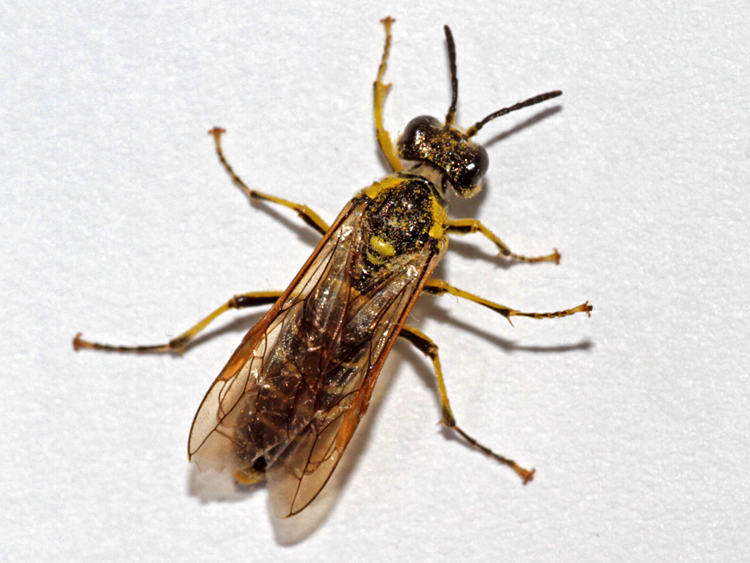
Tenthredo arcuata, North Elmham Cathedral Meadows, 28th May


I think this leaf-mine on Broad-leaved Dock may belong to the fly Pegomya bicolor, but I'm not sure if other species can be eliminated or not (let me know if you think it can be recorded confidently).

probable Pegomya bicolor leafmine, North Elmham Cathedral Meadows, 28th May


I kept seeing this apparent fungal growth on Cocksfoot grass and was reminded of a photo I'd seen someone post on Twitter just before I came out.  I looked at my Twitter feed to see if anyone had replied to identify it and top of my feed, having tweeted literally seconds before I looked, was a reply from James Emerson confirming that it was a fungus called Choke.  Apparently there may be several species according to the species it grows on, and this one would therefore be Epichloe typhina.  Not a very good example in this photo - others were thicker and more obvious (but evidently harder to photograph!).

Epichlioe typhina, North Elmham Cathedral Meadows, 28th May

Monday, 7 August 2017

Cacao and Corn Moths

After a good night's mothing at Holt Country Park I returned home to find a reasonable selection of moths in the garden trap.  There were no real stand-out highlights but new for the garden year list were Pine Cosmet Batrachedra pinicolella, Burdock Conch Aethes rubigana, Water Veneer Acentria ephemerella, Double-striped Tabby Hypsopygia glaucinalis, Yellow Shell, 2 Scalloped Oaks, Pine Hawk-moth and Purple Clay.

Scalloped Oak, North Elmham, 1st July


Purple Clay, North Elmham, 1st July


This Viburnum Button Acleris schalleriana was arguably better than any of those, judged by the number of county records, but it seems to be getting commoner with quite a few records in very recent years.  That's certainly my experience with my first ever last year and now three so far this year.  I need to improve my detection of them though as I passed off both of the last two (at least) as Acleris laterana/comariana agg. until I looked at their genitalia.  Some schalleriana can look quite distinctively broad-shouldered to my eyes (recalling sparsana to me) but this one didn't.  Nor were the dark triangles on the costa particularly extensive (they didn't reach the apex as they're supposed to on schalleriana for starters).  Apparently schalleriana has rougher scales along the leading edge of the forewing - I'm not sure about that - I think I could possibly make out this feature when I looked under the microscope but will need to look for this critically on future insects to test it.

Viburnum Button Acleris schalleriana (male, gen det), North Elmham, 1st July


The other moths were 2 Bird-cherry Ermines Yponomeuta evonymella, Hawthorn Ermel Paraswammerdamia nebulella, Little Dwarf Elachista canapennella, Brown House Moth Hofmannophila pseudospretella, Gorse Crest Brachmia blandella, Buff Cosmet Mompha ochraceella, 3 Hook-marked Straw Moths Agapeta hamana, 2 Large Fruit-tree Tortrixes Archips podana, 2 Privet Tortrixes Clepsis consimilana, 2 Grey Tortrixes Cnephasia stephensiana, Flax Tortrix Cnephasia asseclana, Garden Rose Tortrix Acleris variegana, 4 Barred Marbles Celypha striana, 6 Common Marbles Celypha lacunana, Pine Marble Piniphila bifasciana, 2 Marbled Orchard Tortrixes Hedya nubiferana, Hoary Bell Eucosma cana, 17 Garden Grass-veneers Chrysoteuchia culmella, 3 Grass-veneers Crambus pascuella, Pearl Veneer Agriphila straminella, 5 Common Greys Scoparia ambigualis, Small Magpie Anania hortulata, Mother of Pearl Pleuroptya ruralis, Rosy Tabby Endotricha flammealis, Bee Moth Aphomia sociella, 2 White Plumes Pterophorus pentadactyla, Ghost Moth, Drinker, Buff Arches, Large Emerald, Small Emerald, 2 Small Blood-veins, 7 Small Fan-footed Waves, 3 Dwarf Cream Waves, 9 Single-dotted Waves, 4 Treble Brown Spots, 2 Riband Waves, Common Carpet, 4 Barred Straws, Green Pug, Double-striped Pug, 3 Clouded Borders, 3 Early Thorns, Swallow-tailed Moth, 3 Willow Beauties, 14 Clouded Silvers, 3 Elephant Hawk-moths, Buff-tip, 5 Rosy Footmen, 2 Dingy Footmen, 22 Common Footmen, Cinnabar, 4 Flames, 2 Flame Shoulders, 4 Double Square-spots, 2 Bright-line Brown-eyes, 2 Clays, 7 Smoky Wainscots, Small Angle Shades, 2 Dark Arches, 37 Uncertains, Rustic, 3 Mottled Rustics, 2 Beautiful Hook-tips, 2 Straw Dots, 6 Snouts, 6 Fan-foots and 2 Small Fan-foots.

Beetles were represented by Summer Chafer (new for the year) and Brown Chafer.

The following day I put the Yellow-legged Clearwing lure out again, hoping for another Orange-tailed that comes to the same lure rather than more Yellow-legged.  I didn't get either, but it did attract an entirely different moth - and a good one at that - a Gold-sheen Clothes Moth Nemapogon ruricolella.  If you read my account of the previous night's event at Holt you'll know we had one there too, only the night before.  Two in two nights at different locations is rather good given there had only been four records in Norfolk since 1874 - and the last of those in 2013 was me too, at my old house.

Gold-sheen Clothes Moth Nemapogon ruricolella (male, gen det), North Elmham, 2nd July


A very mediocre catch in the light trap that night produced just one addition to the garden year list, Chequered Straw Evergestis pallidata.  Other moths caught were 3 Bird-cherry Ermines Yponomeuta evonymella, Cinereous Groundling Bryotropha terrella, Gorse Crest Brachmia blandella, 2 Hook-marked Straw Moths Agapeta hamana, Large Fruit-tree Tortrix Archips podana, 2 Grey Tortrixes Cnephasia stephensiana, Green Oak Tortrix Tortrix viridana, 2 Barred Marbles Celypha striana, 5 Common Marbles Celypha lacunana, 2 Marbled Orchard Tortrixes Hedya nubiferana, 6 Garden Grass-veneers Chrysoteuchia culmella, 2 Grass-veneers Crambus pascuella, Pearl Veneer Agriphila straminella, Common Grey Scoparia ambigualis, 2 Small Magpies Anania hortulata, 2 Elder Pearls Anania coronata, Mother of Pearl Pleuroptya ruralis, 4 Rosy Tabbies Endotricha flammealis, Common Plume Emmelina monodactyla, Small Blood-vein, 3 Small Fan-footed Waves, 3 Dwarf Cream Waves, 15 Single-dotted Waves, 4 Riband Waves, 2 Barred Straws, Wormwood Pug, 3 Clouded Borders, Lilac Beauty, 2 Early Thorns, Scalloped Oak, Peppered Moth, Willow Beauty, Engrailed, Common White Wave, Elephant Hawk-moth, Pale Prominent, 2 Buff-tips, 2 Rosy Footmen, 4 Dingy Footmen, 26 Common Footmen, 8 Buff Ermines, Cinnabar, Flame, Double Square-spot, Bright-line Brown-eye, 2 Clays, 13 Smoky Wainscots, Dark Arches, 28 Uncertains, 4 Mottled Rustics and Burnished Brass.

The following afternoon and evening I discovered four moths which entered my study through the open window, two of them very interesting.  At least one of them arrived during the afternoon well before dark, my third Corn Moth Nemapogon granella and my second this year - these three being the only records in the county since 2013. Larvae of this species feed indoors on stored grain or other vegetable products and the first of mine was a mystery being found during a cold spell in February last year suggesting it might have hatched indoors.  But I didn't have any stored grain or anything where I could imagine it was likely to have emerged from so I speculated that I might have accidentally transported it home from a recent visit to a farm shop specialising in bird food.  With two subsequent records this year perhaps a more local origin is a better explanation.  There used to be a bakery next door to me - it closed down and was converted to houses several years ago (before I moved in) but I wonder if there may have been a population there that now still survives in the area outside (they can breed outside on fungus, apparently).  It will be interesting to see if records continue.

Corn Moth Nemapogon granella (female, gen det), North Elmham, 3rd July


The other three moths in the study were found after dark: Small Dingy Tubic Borkhausenia fuscescens, Brown House Moth Hofmannophila pseudospretella and another really good one: Cacao Moth Ephestia elutella.  The Cacao Moth was a lifer and like the Corn Moth is a species that feeds indoors on stored vegetable products, in this case mainly nuts and especially cocoa and tobacco, however it is sometimes recorded outside.  There are only six previous county records, so a very pleasing addition to the garden list.  Identification requires examination of the genitalia to be certain but I had a very strong suspicion that this one would prove to be elutella - compared to the much commoner Falso Cacao Moth Ephestia unicolorella it looked smaller, greyer and smoother - all quite subtle though and I certainly wouldn't have identified it confidently from these photos...


Cacao Moth Ephestia elutella (female, gen det), North Elmham, 3rd July


Moths I caught that night using the more traditional light trap included my first Summer Rose Bell Notocelia roborana of the year.

Summer Rose Bell Notocelia roborana, North Elmham, 3rd July


Others were Clover Case-bearer Coleophora alcyonipennella, 2 Hook-marked Straw Moths Agapeta hamana, 3 Large Fruit-tree Tortrixes Archips podana, 3 Grey Tortrixes Cnephasia stephensiana, 9 Common Marbles Celypha lacunana, Pine Marble Piniphila bifasciana, Hoary Bell Eucosma cana, Two-coloured Bell Eucosma obumbratana, 5 Garden Grass-veneers Chrysoteuchia culmella, 2 Grass-veneers Crambus pascuella, 4 Small Magpies Anania hortulata, Mother of Pearl Pleuroptya ruralis, White Plume Pterophorus pentadactyla, 2 Common Plumes Emmelina monodactyla, Small Emerald, 2 Small Fan-footed Waves, 2 Dwarf Cream Waves, 10 Single-dotted Waves, Treble Brown Spot, 3 Riband Waves, 2 Large Twin-spot Carpets, Shaded Broad-bar, 2 Barred Straws, Currant Pug, 3 Clouded Borders, Brimstone Moth, 6 Early Thorns, Peppered Moth, Willow Beauty, Common White Wave, 2 Clouded Silvers, Elephant Hawk-moth, Coxcomb Prominent, 2 Buff-tips, 2 Dingy Footmen, 20 Common Footmen, 7 Buff Ermines, Cinnabar, Short-cloaked Moth, 2 Large Yellow Underwings, 5 Double Square-spots, Bright-line Brown-eye, Brown-line Bright Eye, 11 Smoky Wainscots, Dark Arches, 36 Uncertains, Rustic, 2 Mottled Rustics, 2 Beautiful Hook-tips, Snout and Fan-foot.

I'm pretty sure I've seen these at home before but the beetle Lagria hirta was the first I've actually identified here.  There was also a Brown Chafer.

Lagria hirta, North Elmham, 3rd July


The only caddisfly was a Leptocerus tineiformis.

I recently acquired the new spiders book (Britain's Spiders by Bee, Oxford & Smith) and put it to the test for the first time on 4th July when I found this spider in my house.  Turns out it's one of two species that can't be identified on externally visible features but if I understand it correctly the fact that it was inside my house pretty much rules out one of them leaving Amaurobius similis as the ID without recourse to dissection (which I wouldn't want to do with a spider - I find them horrible enough to look at without a microscope and am certainly not ready to start handling them).

Amaurobius similis, North Elmham, 4th July