
Description


A diary of my mothing activity covering highlights and photos from my moth trapping activities. Mainly Norfolk (UK), occasionally beyond. I may mention other wildlife sightings here, especially insects, but for birds see my birding diary.
Showing posts with label Pantilius tunicatus. Show all posts

Saturday, 13 April 2019

Cornwall part 2 - other insects at Tresidder

I've just posted a separate page about the moths I caught while staying at Tresidder last autumn between 1st and 6th October.  Here's a post about the other insects I found there.

There were a few caddisflies, the best of which was Hydropsyche instabilis on 4th, a species I've only seen once before.  The other caddis were Limnephilus auricula (41 over the first 4 nights, max 23 on 2nd), Limnephilus lunatus (10 over the first 4 nights, max 5 on 2nd), Limnephilus sparsus (4 on 3 of the first 4 nights), Limnephilus vittatus (singles on each of the first 3 nights) and Halesus raidatus (4 on 3rd followed by up to 4 on each of the final 3 nights).

Hydropsyche instabilis, Tresidder, 4th October


Halesus radiatus, Tresidder, 3rd October


The only true bug to appear in the moth trap was this Pantilus tunicatus on 4th.

Pantilus tunicatus, Tresidder, 4th October


The best leafhopper I caught was a Ribautiana tenerrima (on 4th), a new species for me.

Ribautiana tenerrima, Tresidder, 4th October


Other leafhoppers were Empoasca vitis (1 on 3rd), Empoasca decipiens (2 on 4th), Fagocyba cruenta (different single males on 2nd and 4th) and Edwardsiana rosae (different single males on 2nd, 3rd and 4th; also a female Edwardsiana sp. on 3rd).

This striking barkfly (or booklouse) turned out to be Atlantopsocus adustus, a lifer for me.

Atlantopsocus adustus, Tresidder, 4th October


The only beetle I identified while I was in Cornwall was this one, a new species for me, Chrysolina banksii.

Chrysolina banksii, Tresidder, 4th October


This bee turned out to be a Common Furrow Bee Lasioglossum calceatum, a species I'd not identified before.

Common Furrow Bee, Tresidder, 3rd October


This Wall Brown butterfly was roosting in the garden near the trap on 2nd.


Wall Brown, Tresidder, 2nd October


There was a lot of grasshopper chirping going on in the garden but they always fell silent when I started pointing a torch in their direction so it was very hard to find them, and the sound didn't seem to quite match the sounds on the iRecord Grasshoppers app.  Eventually I identified them as Meadow Grasshoppers, but I also found a single Field Grasshopper.

Meadow Grasshopper, Tresidder, 4th October


Field Grasshopper, Tresidder, 4th October


While trying to catch the grasshoppers I swept a couple of bugs, Stenodema laevigata and my first ever Ant Damsel Bug Himacerus mirmicoides, both on 2nd. Also 2 Common Shiny Woodlice on 2nd.

Stenodema laevigata, Tresidder, 2nd October


Ant Damsel Bug Himacerus mirmicoides, Tresidder, 2nd October


Well that's just what I found at the place we were staying.  There were a few things to note from elsewhere too, though mainly my focus was on birds for the rest of the trip.

On 3rd October we walked down the Penberth Valley from our cottage and along the cliffs to Porthgwarra.  Here there were lots of Ivy Bees, a new species for me although it has now colonised Norfolk.  Butterflies at Porthgwarra included 2 Red Admirals, Speckled Wood and Wall Brown, and there were also 5 Common Nettle-taps Anthophila fabriciana and a Common Plume Emmelina monodactyla.

Common Plume Emmelina monodactyla, Rosketal, Porthgwarra, 3rd October


This thick caterpillar was on those huge-leaved plants (Gunnera I think?).  I can't figure out what species it is - let me know if you can please!

unidentified caterpillar, Rosketal, Porthgwarra, 3rd October


As we walked back across the fields at Polgigga I found another caterpillar I can't identify.  This was on the crop growing in the field - Oil Seed Rape or something similar.

unidentified caterpillar, Polgigga, 3rd October


I think I can identify two caterpillars I found on the moor at Porthgwarra the next morning - Fox Moths.

Fox Moth caterpillar, Porthgwarra Moor, 4th October


I also found a couple of Ivy Bees at Tresidder that day too.

Next day at Porthgwarra I found a few butterflies: Small Copper, 5 Red Admirals and 2 Speckled Woods.  There were also a few moths including a Grey Pine Carpet and 5 Common Nettle-taps Anthophila fabriciana.  I spent some time looking for migrant birds at Trevean Pool and didn't find any, but I did find 3 migrant moths on the adjacent bit of moor: Diamond-back Plutella xylostella, Rush Veneer Nomophila noctuella and Silver Y.

Rush Veneer Nomophila noctuella, Trevean Pool/Porthgwarra Moor, 5th October


The only other migrant I found there was a Migrant Hawker.  Also Common Darter.

Migrant Hawker, Trevean Pool, 5th October


I have seen mayflies doing what I took to be a display flight where they fly up and down in the air like a yo-yo, and imagined they would be males displaying.  But I saw a mayfly doing this at Kenidjack and caught it in order to identify it.  It turned out to be a female ready to lay eggs, a Blue-winged Olive Serratella ignita.
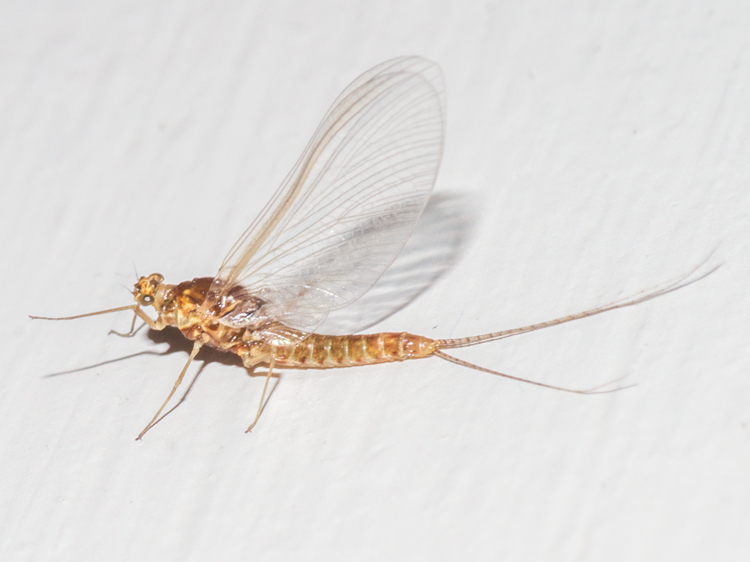
Blue-winged Olive Serratella ignita, Kenidjack Valley, 5th October


I didn't have much else to add after this, except for a few butterflies at Porthgwarra on the final morning (7th): Small Copper, 4 Red Admirals and Wall Brown.

Saturday, 16 March 2019

A 'Notable' leafhopper: Eurhadina ribauti

There was a good selection of moths on the night of 15th September, though nothing as good as the Corn Moth Nemapogon granella that I'd found on the front door earlier on.  They were Beech Midget Phyllonorycter maestingella, Diamond-back Plutella xylostella, Vetch Sober Aproaerema anthyllidella, Large Fruit-tree Tortrix Archips podana, Light Brown Apple-moth Epiphyas postvittana, 2 Garden Rose Tortrixes Acleris variegana, 4 Common Marbles Celypha lacunana, Elbow-stripe Grass-veneer Agriphila geniculea, 4 Narrow-winged Greys Eudonia angustea, 3 Blood-veins, 3 Small Dusty Waves, Common Marbled Carpet, Green Carpet, 2 Brimstone Moths, 2 Dusky Thorns, 2 Light Emeralds, 4 Large Yellow Underwings, 3 Lesser Yellow Underwings, Broad-bordered Yellow Underwing, Square-spot Rustic, White-point, Common Wainscot, Centre-barred Sallow, 12 Lunar Underwings, Pink-barred Sallow, 3 Sallows, Mouse Moth, Flounced Rustic, Frosted Orange, Straw Dot and 3 Snouts.

Vetch Sober Aproaerema anthyllidella, North Elmham, 15th September


The caddisflies were Polycentropus flavomaculatus, Mottled Sedge Glyphotaelius pellucidus, Grammotaulius nigropunctatus, 2 Limnephilus affinis, 3 Limnephilus auricula, 3 Limnephilus flavicornis, 6 Limnephilus lunatus and 2 Limnephilus sparsus.

Bugs were represented by Black-kneed Capsid Blepharidopterus angulatus, barkflies by Ectopsocus briggsi and beetles by Aphodius rufipes.

The following day I found another Thatch Neb Bryotropha basaltinella, inside the house this time.  It was my fifth here this year and my 10th here since I moved in in 2014.  It was clearly a good year for this species as not only did I have as many as had been recorded in the county before, but two other recorders also found the species, the first county records from anywhere other than my garden (East Harling and Stoke Holy Cross, the latter involving two individuals and new for VC27).

Thatch Neb Bryotropha basaltinella (female, gen det), North Elmham, 16th September


That night was good.  The best moth was a Dark Smudge Ypsolopha horridella, my second and only about the 14th for the county.

Dark Smudge Ypsolopha horridella, North Elmham, 16th September


Other moths were a Bucculatrix sp. (think this must have escaped as I didn't photograph it and have no specimen), Garden Midget Phyllonorycter messaniella, Little Dwarf Elachista canapennella, Brown House Moth Hofmannophila pseudospretella, Brindled Flat-body Agonopterix arenella, Barred Fruit-tree Tortrix Pandemis cerasana, 6 Light Brown Apple-moths Epiphyas postvittana, 4 Garden Rose Tortrixes Acleris variegana, 2 Common Marbles Celypha lacunana, Nut-bud Moth Epinotia tenerana, 2 Narrow-winged Greys Eudonia angustea, Gold Triangle Hypsopygia costalis, White Plume Pterophorus pentadactyla, Common Plume Emmelina monodactyla, Small Dusty Wave, Green Carpet, 3 Brimstone Moths, Dusky Thorn, 4 Light Emeralds, Ruby Tiger, 4 Large Yellow Underwings, 2 Lesser Yellow Underwings, Broad-bordered Yellow Underwing, Setaceous Hebrew Character, Square-spot Rustic, Common Wainscot, 9 Lunar Underwings, Sallow, Mouse Moth, 2 Vine's Rustics and 6 Snouts.

A Pond Olive Cloeon dipterum represented the mayflies and neither green nor brown lacewing were fully identified.  The green was a female Chrysoperla carnea agg., almost certainly carnea but females can't be separated from the non-Norfolk pallida.  The brown was a Hemerobius lutescens or humulinus.  Normally these can be separated easily enough but this one, a female, wasn't clear.

Caddisflies were 3 Mottled Sedges Glyphotaelius pellucidus, 7 Limnephilus auricula, 2 Limnephilus flavicornis, 3 Limnephilus lunatus, 2 Limnephilus sparsus and Grouse Wing Mystacides longicornis.

It was the bugs that held the most interest with a very decent selection.  The highlight was a dark Phytocoris which I had to look pretty hard at to be sure it wasn't just a dark Phytocoris tiliae (one of which was also trapped).  In the end I resorted to checking the genitalia to confirm the ID - it was a new one for me, Phytocoris dimidiatus.

Phytocoris dimidiatus (male, gen det), North Elmham, 16th September


Phytocoris tiliae, North Elmham, 16th September


A Pantilius tunicatus was new for the year.

Pantilius tunicatus, North Elmham, 16th September


Other bugs were Birch Shieldbug Elasmostethus interstinctus, 3 Forest Bugs Pentatoma rufipes, Black-kneed Capsid Blepharidopterus angulatus, Lygus pratensis, Tarnished Plant Bug Lygus rugulipennis, Psallus varians and the leafhoppers 3 Kybos betulicola and 2 Fagocyba cruenta.  Barkflies (or barklice) consisted of a Graphopsocus cruciatus (new for the year) and 5 Ectopsocus of which at least 2 were Ectopsocus petersi.

Graphopsocus cruciatus, North Elmham, 16th September


Beetles were Amara apricaria, Nicrophorus investigator and Curculio venosus.  There was also a Hornet.

There were 3 new macro moths for the year the following night: Mallow, Green-brindled Crescent and Beaded Chestnut.  There were 35 species of moths in all, a good total for this time of year.  The others were Diamond-back Plutella xylostella, Little Dwarf Elachista canapennella, Brown House Moth Hofmannophila pseudospretella, Vetch Sober Aproaerema anthyllidella, 2 Light Brown Apple-moths Epiphyas postvittana, 3 Garden Rose Tortrixes Acleris variegana, Common Marble Celypha lacunana, Rush Marble Bactra lancealana, 3 Blood-veins, Small Blood-vein, Small Dusty Wave, Riband Wave, Garden Carpet, Common Marbled Carpet, Green Carpet, 2 Brimstone Moths, Dusky Thorn, Light Emerald, Ruby Tiger, 6 Large Yellow Underwings, 7 Lesser Yellow Underwings, Setaceous Hebrew Character, 2 Square-spot Rustics, White-point, 3 Common Wainscots, 18 Lunar Underwings, Pink-barred Sallow, Sallow, Mouse Moth, Flounced Rustic, Vine's Rustic and 4 Snouts.

Mallow, North Elmham, 17th September


Green-brindled Crescent, North Elmham, 17th September


A selection of lacewings consisted of 1-2 Chrysoperla carnea, Cunctochrysa albolineata (both green lacewings), the waxfly Conwentzia psociformis and the brown lacewing Hemerobius lutescens.  Also a Common Earwig.

There were 7 species of caddisfly: 2 Lype phaeopa, 3 Mottled Sedges Glyphotaelius pellucidus, 4 Limnephilus auricula, Limnephilus flavicornis, 9 Limnephilus lunatus and Limnephilus sparsus.

Bugs consisted of Lygus pratensis, 2 Kybos betulicola and the highlight of the nght, a decent new leafhopper.  It was easy to establish that it belonged to the genus Eurhadina, and a more careful look narrowed it down to one of two species, Eurhadina concinna or Eurhadina ribauti.  It was bound to be concinna as that's a widespread and common species on Oak rather than ribauti which is apparently much rarer, but to be sure you have to dissect them.  Well I like to be sure, and good job I do as it was in fact the rarer one, Eurhadina ribauti.  It's hard to get up to date information about the status of the various leafhopper species in Norfolk, but nationally it is listed as Notable B and there are only 12 records across the whole of the UK showing on NBN.  Apart from one in London these are all in the West Midlands or Wales, but this doesn't necessarily mean it is rare or unrecorded in Norfolk.


Eurhadina ribauti (male, aedeagus shown), North Elmham, 17th September


There were also 8 Ectopsocus barkflies.  I suspect they were all the same but I only checked one, an Ectopsocus petersi.  A Nicrophorus investigator was the only beetle and there was a Hornet.

Wednesday, 25 October 2017

A few new moths for the year, a new leafhopper & a new caddis

The night of Tuesday 26th September delivered 3 new moths for the year: Turnip Moth, Red-line Quaker and Beaded Chestnut.

Turnip Moth, North Elmham, 26th September


Red-line Quaker, North Elmham, 26th September


Beaded Chestnut, North Elmham, 26th September


Also recorded that night were Diamond-back Moth Plutella xylostella, 2 Garden Rose Tortrixes Acleris variegana, Narrow-winged Grey Eudonia angustea, Small Dusty Wave, 2 Mallows, Common Marbled Carpet, Feathered Thorn, Lesser Yellow Underwing, Square-spot Rustic, Black Rustic, Brown-spot Pinion, 15 Lunar Underwings, 2 Frosted Oranges, Snout, 9 Limnephilus lunatus (caddisflies) and Aphodius rufipes (beetle).

The following day I was birding in the Brancaster area and saw 2 Common Nettle-taps Anthophilia fabriciana east of Brancaster, at least 20 Red Admirals and a Comma along Broad Lane and 2 Small Coppers on the golf course.  I also found a pale yellow leafhopper on the golf-course which I subsequently identified as Edwardsiana rosae, a new one for me.

Comma, Brancaster, 27th September


Edwardsiana rosae (male, gen det), Brancaster, 27th September


That night Ashy Button Acleris sparsana and Green-brindled Crescent were new for the year.

Ashy Button Acleris sparsana, North Elmham, 27th September


Green-brindled Crescent, North Elmham, 27th September


Other moths were 2 Light Brown Apple Moths Epiphyas postvittana, Common Marble Celypha lacunana, 2 Narrow-winged Greys Eudonia angustea, 3 Double-striped Tabbies Hypsopygia glaucinalis (a record count!), Blood-vein, 2 Common Marbled Carpets, 2 Dusky Thorns, 2 Large Yellow Underwings, 2 Lesser Yellow Underwings, White-point, 5 Black Rustics, 2 Beaded Chestnuts, 5 Lunar Underwings, Pink-barred Sallow, 2 Sallows, Frosted Orange, Burnished Brass and 5 Snouts.

There lots of lacewings and caddisflies.  Predictably at this time of year most of the caddisflies were Chrysoperla carnea (10 confirmed males plus a couple of unconfirmed females) but there was also a late Dichochrysa flavifrons among them.  I recorded this species well into September last year but this year although I had lots (53) over the summer this was my first since 2nd August.  The caddisflies were 2 Hydropsyche pellucidula, 8 Limnephilus auricula, 4 Limnephilus flavicornis, 2 Limnephilus marmoratus and 2 Limnephilus vittatus.

Other insects included another Pantilius tunicatus (bug), a Kybos sp. (leafhopper; probably betulicola but female smaragdula is indistinguishable) and an Aphodius rufipes (beetle).

Pantilius tunicatus, North Elmham, 27th September


The following night the moths were Little Dwarf Elachista canapennella, Rhomboid Tortrix Acleris rhombana, 5 Narrow-winged Greys Eudonia angustea, Blood-vein, Common Marbled Carpet, 2 Brimstone Moths, 2 Feathered Thorns, Willow Beauty, Setaceous Hebrew Character, Black Rustic, Red-line Quaker, 4 Lunar Underwings and Frosted Orange.

The caddisflies were better, including one new for the year, Halesus radiatus, and one that was completely new to me, Limnophelus ignavus.  The others were 2 Mottled Sedges Glyphotaelius pellucidus, 3 Limnephilus affinis, 2 Limnephilus auricula and 4 Limnephilus lunatus.

Halesus radiatus (male), North Elmham, 28th September


Limnephilus ignavus (male), North Elmham, 28th September


No bugs or lacewings that night and Aphodius rufipes was the only beetle.

Next day this Brick was the only addition to the year list:

Brick, North Elmham, 29th September


There wasn't so much else that night: Light Brown Apple Moth Epiphyas postvittana, Garden Rose Tortrix Acleris variegana, 3 Narrow-winged Greys Eudonia angustea, Blood-vein, 2 Mallows, Black Rustic, Lunar Underwing, Pink-barred Sallow, Straw Dot and the caddisflies Limnephilus flavicornis and 5 Limnephilus lunatus.

On the final night in September I caught 2 Narrow-winged Greys Eudonia angustea, a late Small Fan-footed Wave, Feathered Thorn, Willow Beauty, 2 Beaded Chestnuts, Lunar Underwing, Sallow, Straw Dot, Snout, the caddisflies Mottled Sedge Glyphotaelius pellucidus, Grammotaulius nigropunctatus and 7 Limnephilus lunatus and the beetle Aphodius rufipes.

Small Fan-footed Wave, North Elmham, 30th September


October kicked of with Light Brown Apple Moth Epiphyas postvittana, Garden Rose Tortrix Acleris variegana, Narrow-winged Grey Eudonia angustea, 2 Large Yellow Underwings, Lesser Yellow Underwing, Setaceous Hebrew Character, 4 Black Rustics, 2 Beaded Chestnuts, Lunar Underwing, Frosted Orange, Burnished Brass, 2 Straw Dots, Snout, 1-2 Chrysoperla carnea (green lacewings) and Limnephilus affinis, 2 Limnephilus auricula, 4 Limnephilus lunatus and Limnephilus vittatus (caddisflies).

Tuesday, 24 October 2017

Amazing aberrant Small Copper

Sunday 23rd September saw both Pine Carpet and Grey Pine Carpet added to the garden year list.  Pine isn't very common here but I was surrpised when I realised the Grey Pine was my first this year.  Also new for the year was the wonderful Pink-barred Sallow.

Pine Carpet, North Elmham, 23rd September


Grey Pine Carpet, North Elmham, 23rd September


Pink-barred Sallow, North Elmham, 23rd September


Other moths were Golden Argent Argyresthia goedartella, Large Fruit-tree Tortrix Archips podana, 2 Light Brown Apple Moths Epiphyas postvittana, Garden Rose Tortrix Acleris variegana, 7 Narrow-winged Greys Eudonia angustea, 2 Double-striped Tabbies Hypsopygia glaucinalis, 3 Common Marbled Carpets, Brimstone Moth, Dusky Thorn, 4 Light Emeralds, 3 Large Yellow Underwings, 4 Lesser Yellow Underwings, 2 Setaceous Hebrew Characters, 2 Square-spot Rustics, 12 Lunar Underwings, 2 Frosted Oranges, Burnished Brass, Straw Dot and 10 Snouts.

Double-striped Tabby Hypsopygia glaucinalis, North Elmham, 23rd September


Caddisflies consisted of 2 Hydropsyche pellucidula, Mottled Sedge Glyphotaelius pellucidus, Limnephilus affinis, Limnephilus auricula, 7 Limnephilus lunatus and Limnephilus sparsus.  Beetles were represented by Nicrophorus investigator and Aphodius rufipes.

The following night Brown-spot Pinion was new for the year.

Brown-spot Pinion, North Elmham, 24th September


Other moths were Little Dwarf Elachista canapennella, Brindled Flat-body Agonopterix arenella, Light Brown Apple Moth Epiphyas postvittana, 2 Garden Rose Tortrixes Acleris variegana, 5 Narrow-winged Greys Eudonia angustea, Double-striped Tabby Hypsopygia glaucinalis, Riband Wave, Mallow, 5 Common Marbled Carpets, Willow Beauty, 2 Light Emeralds, 3 Large Yellow Underwings, Lesser Yellow Underwing, Square-spot Rustic, Centre-barred Sallow, 12 Lunar Underwings, Pink-barred Sallow, 2 Sallows, Frosted Orange, Silver Y and 4 Snouts.

Two other insects were new for the year and also my second ever: the mayfly Small Dark Olive Baetis scambus and the mirid bug Pantilius tunicatus.  The following caddisflies were also recorded: Hydropsyche siltalai, 2 Limnephilus auricula, 7 Limnephilus lunatus, 2 Limnephilus sparsus and Limnephilus affinis.

Small Dark Olive Baetis scambus, North Elmham, 24th September


Pantilius tunicatus, North Elmham, 24th September


Next day I headed up to Burnham Overy where I found this extraordinary Small Copper (flying with an ordinary one).  There are lots of named aberrations of Small Copper but this isn't one of them.  I presume it's a form of leucism with normally dark areas looking pale and whitish.


Small Copper ab. nov., Burnham Overy, 25th September


Also here a very worn Beautiful Groundling Caryocolum marmorea and the caddisfly Limnephilus auricula.  Later on a Common Nettle-tap Anthophila fabriciana at Ryburgh.

A good night for moths that night included my second ever Orange Sallow following one in my first autumn here in 2014.

Orange Sallow, North Elmham, 25th September


Also new for the year were 2 Black Rustics.

Black Rustic, North Elmham, 25th September


This Fenland Pearl Anania perlucidalis was a surprise - as the species is supposed to finish flying in July.  It was reasonably fresh so presumably an unusual second generation.

Fenland Pearl Anania perlucidalis, North Elmham, 25th September


Other moths were Garden Midget Phyllonorycter messaniella, Rhomboid Tortrix Acleris rhombana, 2 Narrow-winged Greys Eudonia angustea, Small Blood-vein, Garden Carpet, Mallow, 2 Common Marbled Carpets, 4 Dusky Thorns, Willow Beauty, Shuttle-shaped Dart, Large Yellow Underwing, 2 Lesser Yellow Underwings, Common Wainscot, Brown-spot Pinion, 10 Lunar Underwings, 2 Sallows, Frosted Orange and 2 Snouts.

There was also a Chrysoperla carnea agg. (green lacewing), the caddisflies Ithytrichia lamellaris, Hydropsyche pellucidula, 2 Limnephilus auricula, 8 Limnephilus lunatus and Limnephilus marmoratus, the leafhopper Empoasca vitis and the sexton beetle Nicrophorus investigator.

I had taken the aberrant Small Copper home with me just in case it was necessary to properly document the unusual appearance and the specimen would be required - and also to get decent photos as it hadn't played ball in the field.  I was planning to return to Burnham Overy in the morning so if I didn't need to keep the specimen I would return it.  The feedback I received overnight suggested that there was no need to keep it so I duly released it back where I found it.  This time it settled in the marram grass and in the sunshine allowing a more natural photo than I'd managed yesterday.  I didn't find much else of non-avian interest in the dunes this time.

Small Copper ab. nov., Burnham Overy, 26th September


My wife has recently taken on an allotment in the village and I visited it in the afternoon.  I don't intend to get my hands dirty there but I might have a mooch around looking for insects from time to time!  Not much this time - just a Liocoris tripustulatus (bug) on some nettles and a Common Rough Woodlouse in the compost heap.