
Description


A diary of my mothing activity covering highlights and photos from my moth trapping activities. Mainly Norfolk (UK), occasionally beyond. I may mention other wildlife sightings here, especially insects, but for birds see my birding diary.
Showing posts with label Rush Veneer. Show all posts

Saturday, 13 April 2019

Cornwall part 2 - other insects at Tresidder

I've just posted a separate page about the moths I caught while staying at Tresidder last autumn between 1st and 6th October.  Here's a post about the other insects I found there.

There were a few caddisflies, the best of which was Hydropsyche instabilis on 4th, a species I've only seen once before.  The other caddis were Limnephilus auricula (41 over the first 4 nights, max 23 on 2nd), Limnephilus lunatus (10 over the first 4 nights, max 5 on 2nd), Limnephilus sparsus (4 on 3 of the first 4 nights), Limnephilus vittatus (singles on each of the first 3 nights) and Halesus raidatus (4 on 3rd followed by up to 4 on each of the final 3 nights).

Hydropsyche instabilis, Tresidder, 4th October


Halesus radiatus, Tresidder, 3rd October


The only true bug to appear in the moth trap was this Pantilus tunicatus on 4th.

Pantilus tunicatus, Tresidder, 4th October


The best leafhopper I caught was a Ribautiana tenerrima (on 4th), a new species for me.

Ribautiana tenerrima, Tresidder, 4th October


Other leafhoppers were Empoasca vitis (1 on 3rd), Empoasca decipiens (2 on 4th), Fagocyba cruenta (different single males on 2nd and 4th) and Edwardsiana rosae (different single males on 2nd, 3rd and 4th; also a female Edwardsiana sp. on 3rd).

This striking barkfly (or booklouse) turned out to be Atlantopsocus adustus, a lifer for me.

Atlantopsocus adustus, Tresidder, 4th October


The only beetle I identified while I was in Cornwall was this one, a new species for me, Chrysolina banksii.

Chrysolina banksii, Tresidder, 4th October


This bee turned out to be a Common Furrow Bee Lasioglossum calceatum, a species I'd not identified before.

Common Furrow Bee, Tresidder, 3rd October


This Wall Brown butterfly was roosting in the garden near the trap on 2nd.


Wall Brown, Tresidder, 2nd October


There was a lot of grasshopper chirping going on in the garden but they always fell silent when I started pointing a torch in their direction so it was very hard to find them, and the sound didn't seem to quite match the sounds on the iRecord Grasshoppers app.  Eventually I identified them as Meadow Grasshoppers, but I also found a single Field Grasshopper.

Meadow Grasshopper, Tresidder, 4th October


Field Grasshopper, Tresidder, 4th October


While trying to catch the grasshoppers I swept a couple of bugs, Stenodema laevigata and my first ever Ant Damsel Bug Himacerus mirmicoides, both on 2nd. Also 2 Common Shiny Woodlice on 2nd.

Stenodema laevigata, Tresidder, 2nd October


Ant Damsel Bug Himacerus mirmicoides, Tresidder, 2nd October


Well that's just what I found at the place we were staying.  There were a few things to note from elsewhere too, though mainly my focus was on birds for the rest of the trip.

On 3rd October we walked down the Penberth Valley from our cottage and along the cliffs to Porthgwarra.  Here there were lots of Ivy Bees, a new species for me although it has now colonised Norfolk.  Butterflies at Porthgwarra included 2 Red Admirals, Speckled Wood and Wall Brown, and there were also 5 Common Nettle-taps Anthophila fabriciana and a Common Plume Emmelina monodactyla.

Common Plume Emmelina monodactyla, Rosketal, Porthgwarra, 3rd October


This thick caterpillar was on those huge-leaved plants (Gunnera I think?).  I can't figure out what species it is - let me know if you can please!

unidentified caterpillar, Rosketal, Porthgwarra, 3rd October


As we walked back across the fields at Polgigga I found another caterpillar I can't identify.  This was on the crop growing in the field - Oil Seed Rape or something similar.

unidentified caterpillar, Polgigga, 3rd October


I think I can identify two caterpillars I found on the moor at Porthgwarra the next morning - Fox Moths.

Fox Moth caterpillar, Porthgwarra Moor, 4th October


I also found a couple of Ivy Bees at Tresidder that day too.

Next day at Porthgwarra I found a few butterflies: Small Copper, 5 Red Admirals and 2 Speckled Woods.  There were also a few moths including a Grey Pine Carpet and 5 Common Nettle-taps Anthophila fabriciana.  I spent some time looking for migrant birds at Trevean Pool and didn't find any, but I did find 3 migrant moths on the adjacent bit of moor: Diamond-back Plutella xylostella, Rush Veneer Nomophila noctuella and Silver Y.

Rush Veneer Nomophila noctuella, Trevean Pool/Porthgwarra Moor, 5th October


The only other migrant I found there was a Migrant Hawker.  Also Common Darter.

Migrant Hawker, Trevean Pool, 5th October


I have seen mayflies doing what I took to be a display flight where they fly up and down in the air like a yo-yo, and imagined they would be males displaying.  But I saw a mayfly doing this at Kenidjack and caught it in order to identify it.  It turned out to be a female ready to lay eggs, a Blue-winged Olive Serratella ignita.
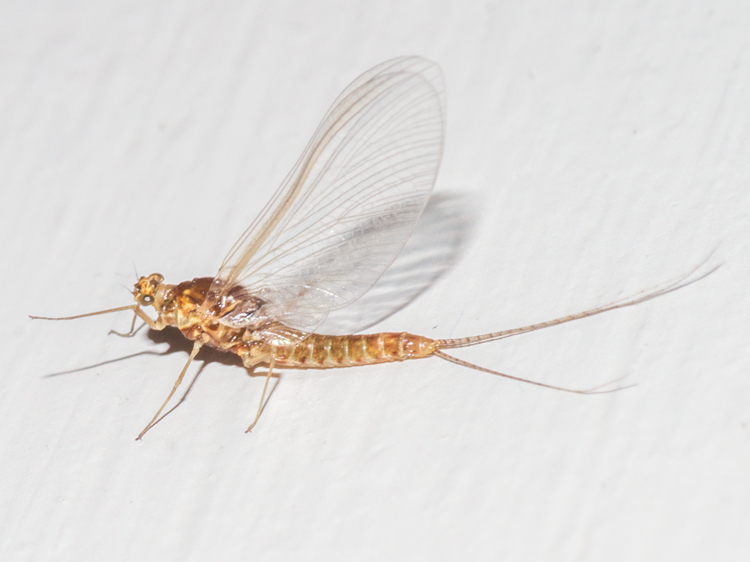
Blue-winged Olive Serratella ignita, Kenidjack Valley, 5th October


I didn't have much else to add after this, except for a few butterflies at Porthgwarra on the final morning (7th): Small Copper, 4 Red Admirals and Wall Brown.

Friday, 23 September 2016

Another Clouded Magpie and a couple of new hoppers

Among the moths trapped on the night of 2nd August were four new species of the year: 2 Chequered Fruit-tree Tortrixes Pandemis corylana, Rush Veneer Nomophila noctuella, Beautiful Plume Amblyptilia acanthadactyla and White-spotted Pug.

Chequered Fruit-tree Tortrix Pandemis corylana, North Elmham, 2nd August


Rush Veneer Nomophila nocutella, North Elmham, 2nd August


White-spotted Pug, North Elmham, 2nd August


As well as the Rush Veneer, migrants included 13 Diamond-back Moths Plutella xylostella26 Mother of Pearls (or should that be Mothers of Pearl?) Pleuroptya ruralis was the highest count of the year. 

There were two more unidentifiable Ermines Yponomeuta sp. (Orchard padella, Apple malinellus or Spindle cagnagella) - frustrating not to be able to name these but they can't even be done by checking their genitalia.

Orchard/Apple/Spindle Ermine Yponomeuta padella/malinellus/cagnagella, North Elmham, 2nd August


Another species I don't see here very often was Giant Water-veneer Schoenobius gigantella.

Giant Water-veneer Schoenobius gigantella, North Elmham, 2nd August


A reasonable selection of other micros too: Carrion Moth Monopis weaverella, Ribwort Slender Aspilapteryx tringipennella, Hawthorn Slender Parornix anglicella, Golden Argent Argyresthia goedartella, 4 Bird-cherry Ermines Yponomeuta evonymella, Little Ermel Swammerdamia pyrella, Brown House Moth Hofmannophila pseudospretella, Orange Crest Helcystogramma rufescens, 3 Dingy Dowds Blastobasis adustella, 3 Hook-marked Straw Moths Agapeta hamana, 3 Dark Fruit-tree Tortrixes Pandemis heparana, Large Fruit-tree Tortrix Archips podana, 2 Privet Tortrixes Clepsis consimilana, Light Brown Apple Moth Epiphyas postvittana, Flax Tortrix Cnephasia asseclana, Cereal Tortrix Cnephasia pumicana, 2 Dover Shades Cnephasia genitalana, Garden Rose Tortrix Acleris variegana, 3 Barred Marbles Celypha striana, Common Marble Celypha lacunana, Marbled Orchard Tortrix Hedya nubiferana, Holly Tortrix Rhopobota naevana, Two-coloured Bell Eucosma obumbratana, 38 Pearl Veneers Agriphila straminella, 7 Common Grass-veneers Agriphila tristella, 2 Pearl Grass-veneers Catoptria pinella, Chequered Grass-veneer Catoptria falsella, 4 Little Greys Eudonia lacustrata, 4 Ringed China-marks Parapoynx stratiotata, Beautiful China-mark Nymphula nitidulata, Garden Pebble Evergestis forficalis, Elder Pearl Anania coronata, Dusky Pearl Udea prunalis, 2 Double-striped Tabbies Hypsopygia glaucinalis, 2 Rosy Tabbies Endotricha flammealis, Bee Moth Aphomia sociella and Grey Knot-horn Acrobasis advenella.

Common Grass-veneer Agriphila tristella, North Elmham, 2nd August


Another Clouded Magpie was the best macro.

Clouded Magpie, North Elmham, 2nd August


Unusually all the Common Rustic aggs. that were dissected proved to be Lesser Common Rustics (3 - a fourth got away without being determined).

Lesser Common Rustic (male, gen det), North Elmham, 2nd August


Other macros were 4 Pebble Hook-tips, Chinese Character, Blood-vein, 5 Small Fan-footed Waves, 4 Riband Waves, 4 Red Twin-spot Carpets, Dark-barred Twin-spot Carpet, 4 Shaded Broad-bars, 3 Common Carpets, 2 Small Rivulets, Tawny Speckled Pug, Yellow-barred Brindle, 2 Magpie Moths, Scalloped Oak, Mottled Beauty, Engrailed, Clouded Silver, Pebble Prominent, Swallow Prominent, Yellow-tail, 2 Rosy Footmen, 4 Dingy Footmen, 7 Scarce Footmen, 3 Buff Footmen, 12 Common Footmen, 3 Shuttle-shaped Darts, 2 Flame Shoulders, Lesser Yellow Underwing, 2 Lesser Broad-bordered Yellow Underwings, Double Square-spot, 3 Nutmegs, 3 Clays, Grey Dagger, 3 Dun-bars, 7 Dark Arches, Dusky Sallow, 11 Uncertains, Rustic, 2 Nut-tree Tussocks, Spectacle, 7 Straw Dots and 2 Fan-foots.

Among the Green Lacewings, Dichochrysa ventralis was new for the house (though I'd seen one next door when I trapped there recently).  Also Dichochrysa flavifrons and Chrysoperla carnea agg.

Dichochrysa ventralis, North Elmham, 2nd August


I'm not doing the caddisflies while I'm so far behind with the moths but a Glyphotaelius pellucidus was readily identified in the field.  Among the bugs there were 3 Forest Bugs (aka Red-legged Shieldbugs) and my first Phytocoris varipes of the year.

Phytocoris varipes, North Elmham, 2nd August


Also a couple of new hoppers that I'd not identified before (I thought I had seen the first one before but don't have any records) - Common Froghopper Philaenus spumarius and the leafhopper Eupteryx florida.

Common Froghopper Philaenus spumarius, North Elmham, 2nd August


Eupteryx florida, North Elmham, 2nd August


I haven't yet managed to work out what this Ichneumon was:

unidentified Ichneumon wasp, North Elmham, 2nd August

Saturday, 22 August 2015

Small Mottled Willow at last

(Apologies for last night's incomplete post if you saw it... I posted the wrong one!) 
 
The night of 21st July was one of the best in 2015.  This year has been an excellent one nationally and in Norfolk for migrant moths and nearly everyone seems to have been seeing Small Mottled Willows.  Not just coastal watchers either, some of the guys at inland locations have been getting multiples.  Not here though.  Diddly squat here.  Hardly any migrants at all - even Silver Ys have been decidedly scarce.  So it was with a sense of relief and "at last"-ness that I located a smallish noctuid with a distinctive posture under the sheet on which the moth trap was sitting.  Close inspection confirmed my suspicions - it was a Small Mottled Willow.  Not the finest specimen mind - in fact a pretty grotty one, but at least it was one!


Small Mottled Willow, North Elmham, 21st July


It wasn't the only migrant either - a Rush Veneer Nomophila noctuella also turned up.

Rush Veneer Nomophila noctuella, North Elmham, 21st July


As for everything else that turned up that night - that will have to wait for another post.  Suffice for now to say that the Small Mottled Willow was just one of three new moths.


Wednesday, 19 August 2015

Pammene fasciana

An Acorn Piercer Pammene fasciana was among 76 species of moths at home on 17th July.  Although not listed as a confusion species they look a lot like Cydia splendana to my eyes and I nearly passed it off as such.  Pammene fasciana wasn't on my radar so when I put this to one side thinking it looked a little odd I was still pretty sure it would turn out to be splendana.  Even after taking a closer look I nearly let it go as such but there was just enough niggling doubt to keep hold of it until I'd checked references.  Glad I did as although it seems to be a fairly common and widespread species it was my first Pammene fasciana - assuming I've haven't passed others off as splendana in the past.

Acorn Piercer Pammene fasciana, North Elmham, 17th July


I was intrigued by a couple of large plainly marked Cnephasia and on dissecting them they turned out to be Cereal Tortrix Cnephasia pumicana.  Well actually one of them alone I would have struggled to confidently rule out Cnephasia pasiuana which, although requiring gen detting for confirmation, is actually pretty tough to separate even then - or at least it seems to be from the information I have access to.  In the end I settled on pumicana for both, which was a pleasing enough result as there are no previous records from this part of the county.

Cereal Tortrix Cnephasia pumicana (male, gen det), North Elmham, 17th July


Also new for the year for the house was Round-winged Drill Dichrorampha simpliciana.

Round-winged Drill Dicrhorampha simpliciana, North Elmham, 17th July


Nice to see a migrant - everyone else has been getting lots but I've had very few this summer.  But a Rush Veneer Nomophila noctuella was a start.

Rush Veneer Nomophila noctuella, North Elmham, 17th July


The other micros were 8 Bird-cherry Ermines Yponomeuta evonymella, Small Dingy Tubic Borkhausenia fuscescens, Burdock Neb Metzneria lappella, 2 Cinereous Groundlings Bryotropha terrella, Dark Fruit-tree Tortrix Pandemis heparana, Large Fruit-tree Tortrix Archips podana, Privet Tortrix Clepsis consimilana, 2 Red-barred Tortrices Ditula angustiorana, Flax Tortrix Cnephasia asseclana, Dover Shade Cnephasia genitalana, 2 Barred Marbles Celypha striana, 6 Common Marbles Celypha lacunana, Marbled Orchard Tortrix Hedya nubiferana, 2 Triangle-marked Rollers Ancylis achatana, Common Cloaked Shoot Gypsonoma dealbana, Hoary Bell Eucosma cana, Codling Moth Cydia pomonella, 6 Garden Grass-veneers Chrysoteuchia culmella, Grass-veneer Crambus pascuella, 11 Pearl Veneers Agriphila straminella, Common Grey Scoparia ambigualis, 3 Little Greys Eudonia lacustrata, Small Grey Eudonia mercurella, 2 Small Magpies Eurrhypara hortulata, Mother of Pearl Pleuroptya ruralis, Rosy Tabby Endotricha flammealis, Bee Moth Aphomia sociella, Ermine Knot-horn Phycitodes binaevella and 2 Common Plumes Emmelina monodactyla.

Dover Shade Cnephasia genitalana (male, gen det), North Elmham, 17th July


Flax Tortrix Cnephasia asseclana (male, gen det), North Elmham, 17th July


Among the macros Small Emerald was the only addition to the year list. The other macros were 3 Small Fan-footed Waves, Single-dotted Wave, 8 Riband Waves, Red Twin-spot Carpet, Large Twin-spot Carpet, Shaded Broad-bar, Barred Yellow, July Highflyer, Double-striped Pug, 3 Scalloped Oaks, Willow Beauty, Poplar Hawkmoth, Elephant Hawkmoth, 4 Buff-tips, 3 Yellow-tails, 6 Rosy Footmen, 3 Dingy Footmen, 3 Scarce Footmen, Buff Footman, 51 Common Footmen, 7 Buff Ermines, 5 Heart and Darts, 3 Double Square-spots, 2 Nutmegs, 2 Dot Moths, 3 Bright-line Brown-eyes, Brown-line Bright-eye, 6 Clays, 5 Smoky Wainscots, Brown Rustic, Dun-bar, 12 Dark Arches, 5 Common Rustics, Lesser Common Rustic, Ear Moth, 18 Uncertains, 2 Rustics, Nut-tree Tussock, 2 Burnished Brasses, 2 Spectacles, 2 Snouts and 6 Fan-foots. 

Dot Moth, North Elmham, 17th July


Dun-bar, North Elmham, 17th July


Lesser Common Rustic (male, gen det), North Elmham, 17th July

Monday, 15 June 2015

Breckland specials

Saturday afternoon before last Dave and I headed off to Narborough, primarily to see one day-flying moth that is usually only recorded at this one site in Norfolk.  We succeeded, seeing 2 Lace Borders.


Lace Borders, Narborough, 6th June


A Common Purple & Gold Pyrausta purpuralis was a UK first for me.  Despite its common name it is far less common (at least in gardens) than Small Purple & Gold Pyrausta aurata.  Sadly it got away before I could get a decent look or photos - the one shot I came away with being only just sufficient to confirm the ID.  Other moths here were Common Marble Celypha lacunana, 3 Hook-streaked Grass-Veneers Crambus lathoniellus and 3 Silver Ys.

Next stop was Cranwich Heath, a new site for me though I have done Cranwich Camp just across the road a couple of times.  A few moths were disturbed from the Broom by the gate most of which escaped during bungled attempts at getting them in a net, but the one that mattered wasn't so lucky - a dark tortrix which proved to be Black Piercer Pammene germmana.  Amazingly there is only one previous record of this species on the Norfolk Moths database, a single in 1992.  That said, old references show the species as occurring in both of Norfolk's vice-counties so presumably recent recorders just haven't been looking hard enough!


Black Piercer Pammene germmana, Cranwich Heath, 6th June


As we started to wander through the grassland we quickly started to notch up some interesting moths.  One of the best was the Breckland special, Tawny Wave, a new species for both of us.

Tawny Wave, Cranwich Heath, 6th June


Other macros included Latticed Heath and the first of at least 6 Yellow Shells.  Common Blue and 2 Small Heaths were among the butterflies and micro moths included at least 1 (probably 2) migrant Rush Veneers Nomophila noctuella.

Rush Veneer Nomophila noctuella, Cranwich Heath, 6th June


Another Breckland special was abundant here - we counted at least 30 Little Grass-veneers Platytes cerussella.  Among them were 2 Plain Fanners Glyphipterix fuscoviridella, 2 Gorse Case-bearers Coleophora albicosta, 2 Hedge Case-bearers Coleophora striatipennella and the first of 3 Common Marbles Celypha lacunana.

Plain Fanner Glyphipterix fuscoviridella, Cranwich Heath, 6th June


Gorse Case-bearer Coleophora albicosta, Cranwich Heath, 6th June


Hedge Case-bearer Coleophora striatipennella (female, gen det), Cranwich Heath, 6th June


As we got nearer a patch of gorse, 3 Grey Gorse Piercers Cydia ulicetana appeared.  Heading over to the other side we started to see Plume Moths.  Some got away but the ones we nailed were 2 Breckland Plumes Oxyptilus distans and a Citron Plume Euleioptilus carphodactyla.

Breckland Plume Oxyptilus distans, Cranwich Heath, 6th June


Citron Plume Euleioptilus carphodactyla, Cranwich Heath, 6th June


Some nice wildflowers here too, including this one which I think is Viper's Bugloss.

Viper's Bugloss, Cranwich Heath, 6th June


Over in the longer grass the grass-moths changed - Platytes became scarcer and Hook-streaked Grass-veneers Crambus lathoniellus dominated with at least 60 counted.  The edges of the woodland produced some excellent dusking with moths everywhere.  Best of the bunch was a spectacular moth, a new moth for us, and in some ways more exciting than the Pammene germmana and Tawny Wave.  It was a Small Barred Long-horn Adela croesella - simply stunning!

Small Barred Long-horn Adela croesella, Cranwich Heath, 6th June


Another Long-horn was also a lifer, although perhaps not quite so spectacular: Little Long-horn Cauchas fibulella.


Little Long-horn Cauchas fibulella, Cranwich Heath, 6th June


Other moths recorded at this point included a wealth of goodies such as Hawthorn Bent-wing Bucculatrix bechsteinella, Meadow Dwarf Elachista triatomea, Pine Bell Epinotia rubiginosana, Lead-coloured Drill Dichrorampha plumbana and Shaded Pug

Hawthorn Bent-wing Bucculatrix bechsteiniella (male, gen det), Cranwich Heath, 6th June


Meadow Dwarf Elachista triatomea, Cranwich Heath, 6th June


Pine Bell Epinotia rubiginosana, Cranwich Heath, 6th June


Lead-coloured Drill Dichrorampha plumbana (male, gen det), Cranwich Heath, 6th June


Shaded Pug, Cranwich Heath, 6th June


Perhaps less exciting but still nice to see were Diamond-back Moth Plutella xylostella, Swan-feather Dwarf Elachista argentella, Cinereous Groundling Bryotropha terrella, 2 Light Grey Tortrices Cnephasia incertana, Yellow-faced Bell Notocelia cynosbatella, Meadow Grey Scoparia pyralella, 2 Common Greys Scoparia ambigualis and Red Twin-spot Carpet.

Cinereous Groundling Bryotropha terrella (female, gen det), Cranwich Heath, 6th June


Meadow Grey Scoparia pyralella, Cranwich Heath, 6th June


No idea what species they are but noticed these two very striking Snails.


unidentified Snails, Cranwich Heath, 6th June


Dave spotted this beauty on the ground: a Small Elephant Hawkmoth.


Small Elephant Hawkmoth, Cranwich Heath, 6th June


As darkness gathered at least 15 Green Carpets were recorded along with Oak-tree Pug and Foxglove Pug.

At home the clear skies kept numbers down, though 2 Common Wainscots and Shoulder-striped Wainscot were both new for the year.  The latter is likely to prove the better moth locally - I only ever saw one at Bawdeswell.


Shoulder-striped Wasincot, North Elmham, 6th June


Common Wasincots, North Elmham, 6th June


Also White-shouldered House-moth Endrosis sarcitrella, 2 Common Marbles Celypha lacunana, Yellow-faced Bell Notocelia cynosbatella, Light Brown Apple Moth Epiphyas postvittana, Small Magpie Eurrhypara hortulata, Blood-vein, Silver-ground Carpet, Green Carpet, Peppered Moth, Poplar Hawkmoth, Buff-tip, 3 White Ermines, Buff Ermine, 2 Heart and Darts, Flame Shoulder, 2 Shears and 10 Treble Lines.


Peppered Moth, North Elmham, 6th June