Description


A diary of my mothing activity covering highlights and photos from my moth trapping activities. Mainly Norfolk (UK), occasionally beyond. I may mention other wildlife sightings here, especially insects, but for birds see my birding diary.
Showing posts with label Liocoris tripustulatus. Show all posts

Friday, 23 April 2021

Review of 2019 and 2020 - Bugs: Plant bugs - part 2: Mirini I (Agnocoris to Orthops)

PLANT BUGS (MIRIDAE) (continued)


Tribe MIRINI


Lucerne Bug Adelphocoris lineolatus - None.  I caught this species here in 2016 but not since.


Agnocoris reclairei - My first example of this species was beaten from the White Willow at the Cathedral Meadows on 3rd August 2019.

Agnocoris reclairei, North Elmham Cathedral Meadows, 3rd August 2019


Apolygus lucorum - None.  I found this species at the meadows in 2018.


Apolygus spinolae - Found in the garden moth trap on 16th and 19th August 2020, the first times I've recorded this species.

Apolygus spinolae, North Elmham, 16th August 2020


Apolygus spinolae, North Elmham, 19th August 2020


Potato Capsid Closterotomus norwegicus - One found at the Cathedral Meadows on 13th July 2019.  Nymphs found there on Ox-eye Daisy flowers on 1st and 3rd June 2020 look very much like online photos of nymphs of this species but I'm not clear if other similar species might be similar at this stage.  Advice welcome, but in the meantime I won't record these in case there's a possibility they could be something else.

Closterotomus norwegicus, North Elmham Cathedral Meadows, 13th July 2019


possible/probable Closterotomus norwegicus nymph, North Elmham Cathedral Meadows, 3rd June 2020


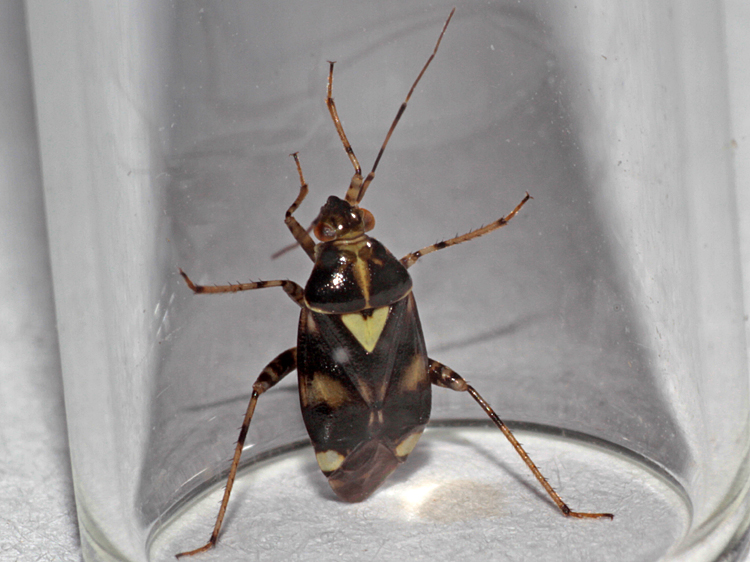
Liocoris tripustulatus - Recorded at the meadows on 8th April and 29th July 2019 and 5th September 2020.  One found at home (indoors) on 29th August 2020 was the first I've identified here since 2017.

Liocoris tripustulatus, North Elmham Cathedral Meadows, 8th April 2019


Liocoris tripustulatus, North Elmham Cathedral Meadows, 29th July 2019


Liocoris tripustulatus, North Elmham, 29th August 2020


Liocoris tripustulatus, North Elmham Cathedral Meadows, 5th September 2020


Common Green Capsid Lygocoris pabulinus - One caught in the garden moth trap on 21st August 2020, my first here since 2017.  I found these at the meadows a couple of times in 2018.

Common Green Capsid Lygocoris pabulinus, North Elmham, 21st August 2020


Lygus pratensis - Recorded at the meadows on 29th March and 21st April 2019 then 4 caught in the garden moth trap between 14th October and 1st November.  In 2020 5 at the meadows between 18th July and 5th September, caught in the garden moth trap on 23rd July and 19th August, one at Hoe on 20th September and one indoors here on 16th November.  Also 2 nymphs believed to be this species (but confirmation would be welcome) at the meadows on Imperforate St John's Wort on 30th August 2020 (swept with an adult pratensis on the same plant).  Even after looking at quite a lot of specimens and even more of rugulipennis I still find it rather difficult to see the differences in corium hair spacing.

Lygus pratensis, North Elmham, 25th October 2019


Lygus pratensis, North Elmham, 19th August 2020


adult and 2 nymphs (presumed) Lygus pratensis, North Elmham Cathedral Meadows, 30th August 2020


Lygus pratensis, North Elmham Cathedral Meadows, 5th September 2020


Tarnished Plant Bug Lygus rugulipennis - Caught in the garden moth trap on just 4 nights between 23rd July and 1st November 2019.  This was considerably fewer nights than in most years but included a count of 20 (all checked) on 25th October, the largest count of any bug I've had in my garden moth trap.  Much more frequently recorded in 2020, though with a lower total number - 5 between 7th and 30th January and 14 between 16th July and 21st December.  Although this species is typically darker than pratensis there is a fair amount of overlap.  Usually the darker examples of pratensis somehow look cleaner and smarter while rugulipennis usually looks quite dirty regardless of how light or dark they are.  I wouldn't rely on that though, and likewise the dark edge to the cuneus is a good indicator but not reliable.  I always check the hairs on the corium though the difference here is quite subtle and if I'm honest I'm not 100% sure that I've never made an error judging the hair detail.  A couple of records at the meadows in 2020 including one on 2nd May - the only one out of 74 that I've now identified that was in April, May or June.


Tarnished Plant Bugs Lygus rugulipennis, North Elmham, 25th October 2019


Tarnished Plant Bug Lygus rugulipennis, North Elmham Cathedral Meadows, 2nd May 2020


Tarnished Plant Bug Lygus rugulipennis, North Elmham, 19th August 2020


Tarnished Plant Bug Lygus rugulipennis, North Elmham Cathedral Meadows, 5th September 2020


Megacoelum infusum - One caught in the garden moth trap on 15th August 2020 initially appeared to be Megacoelum beckeri based on its tibial characters, however my suspicions were aroused when I beat another out of an Oak tree at the meadows 4 days later and this showed similar tibial characters.  M. beckeri is a pine feeder whereas infusum is an Oak feeder - surely this individual in an Oak tree with no pines in the vicinity must have been infusum.  Eventually, after a Twitter exchange with help from Tristan Bantock and CiarĂ¡n Byrne and an examination of their claspers (helpfully both were males), we established that they were indeed both infusum.


Megacoelum infusum, North Elmham, 15th August 2020 - showing hind tibia


Megacoelum infusum, North Elmham Cathedral Meadows, 19th August 2020 - showing hind tibia


abdomens of Megacoelum infusum, North Elmham, 15th August 2020 (left) and North Elmham Cathedral Meadows, 19th August 2020 (right) - showing claspers


Neolygus contaminatus - None.  I caught this species here at home in 2017 and 2018.


Neolygus viridis - One found on Sycamore at the meadows on 13th June 2020, a new species for me.


Neolygus viridis, North Elmham Cathedral Meadows, 13th June 2020


Orthops basalis - 2 Orthops swept from Wild Carrot at the meadows on 12th August 2020 turned out to be one basalis and one campestris (left claspers checked to confirm).  Both were new for me.


Orthops basalis, North Elmham Cathedral Meadows, 12th August 2020


Orthops campestris - One swept from Wild Carrot at the meadows on 12th August 2020 - a first for me but I've already seen several already in 2021.

Orthops campestris, North Elmham Cathedral Meadows, 12th August 2020


Next page: more Miridae

Tuesday, 12 September 2017

Frost's Common in the rain and a Small Waved Umber

Saturday 29th July was the date of the Norfolk Moth Survey event at Frost's Common, a site I was very much looking forward to trapping at.  Sadly the forecast was abysmal and it looked like it would be raining for most of the night, but incredibly quite a few people actually bothered to turn up in the wet.  There wasn't any chance of trapping in the weather but we had a wander round with torches hoping to pick up a few interesting moths.  We pretty much failed, or at least none of the moths I saw were very remarkable.  The best was a Waste Grass-veneer Pediasia contaminella which I'd only seen once before.  I missed out on the Pale Lettuce Bell Eucosma conterminana which others apparently saw - must have been somewhere else when that was passed round which is a shame as it would have been a lifer for me.  Not too rare though - I'll get one sometime.


Waste Grass-veneer Pediasia contaminella, Frost's Common, 29th August


The other moths I saw were 2 Hook-marked Straw Moths Agapeta hamana, Rush Marble Bactra lancealana, 80 Pearl Veneers Agriphila straminella, 2 Barred Grass-veneers Agriphila inquinatella, 5 Mother of Pearls Pleuroptya ruralis, Rosy Tabby Endotricha flammealis, Brown Plume Stenoptilia pterodactyla, Blood-vein, 2 Large Twin-spot Carpets, 8 Shaded Broad-bars, Flame Shoulder, Lesser Common Rustic and 10 Straw Dots.

I'm not certain about the identity of this grasshopper - unless I'm missing something it doesn't seem to be any species that is normally so short-winged.  Based on the pattern of the pronotum I'm guessing it's either Mottled Grasshopper or, and I favour this, Field Grasshopper.  Is it a species that sometimes has a short-winged form, or is it not fully mature?  Let me know if you have any ideas...


possible Field Grasshopper, Frost's Common, 29th August


The best of the moths trapped at home that night was a Small Waved Umber - only my second ever and my first here.

Small Waved Umber, North Elmham, 29th August


A Pale-streak Grass-veneer Agriphila selasella was my first at home this year.

Pale-streak Grass-veneer Agriphila selasella, North Elmham, 29th August


Other moths at home were Ribwort Slender Aspilapteryx tringipennella, 2 Little Ermels Swammerdamia pyrella, Dingy Dowd Blastobasis adustella, 2 Light Brown Apple Moths Epiphyas postvittana, Maple Button Acleris forsskaleana, Rush Marble Bactra lancealana, Two-coloured Bell Eucosma obumbratana, 3 Marbled Piercers Cydia splendana, 4 Garden Grass-veneers Chrysoteuchia culmella, 34 Pearl Veneers Agriphila straminella, 2 Common Grass-veneers Agriphila tristella, Ringed China-mark Parapoynx stratiotata, Garden Pebble Evergestis forficalis, 21 Mother of Pearls Pleuroptya ruralis, Lesser Cream Wave, Least Carpet, Single-dotted Wave, 8 Riband Waves, Dark-barred Twin-spot Carpet, Early Thorn, 3 Willow Beauties, Lesser Swallow Prominent, 4 Dingy Footmen, Common Footman, Large Yellow Underwing, Lesser Broad-bordered Yellow Underwing, Dark Arches, Rustic and 3 Straw Dots.

Other insects I recorded were Pond Olive Cloeon dipterum (mayfly), Chrysoperla carnea (and a Chrysoperla carnea agg.) (green lacewings), 2 Hemerobius humulinus (brown lacewings) and the caddisflies 2 Hydropsyche pellucidula, 2 Limnephilus lunatus and Limnephilus rhombicus, the latter new for the year.

Limnephilus rhombicus (male), North Elmham, 29th August


New for the year the following night were Ash-coloured Sober Acompsia cinerella and Heather Tortrix Argyrotaenia ljungiana, the former regular here but fairly scarce across the county.


Ash-coloured Sober Acompsia cinerella, North Elmham, 30th August


Other moths on what was a busier night than most recent nights were Brindled Flat-body Agonopterix arenella, 2 Cinereous Groundlings Bryotropha terrella, 4 Dingy Dowds Blastobasis adustella, Dark Fruit-tree Tortrix Pandemis heparana, Light Brown Apple Moth Epiphyas postvittana, Garden Rose Tortrix Acleris variegana, Barred Marble Celypha striana, Common Cloaked Shoot Gypsonoma dealbana, Hoary Bell Eucosma cana, Marbled Piercer Cydia splendana, 2 Garden Grass-veneers Chrysoteuchia culmella, 28 Pearl Veneers Agriphila straminella, 2 Common Grass-veneers Agriphila tristella, Ringed China-mark Parapoynx stratiotata, 2 Garden Pebbles Evergestis forficalis, 9 Mother of Pearls Pleuroptya ruralis, Grey Knot-horn Acrobasis advenella, Least Carpet, 2 Single-dotted Waves, 4 Riband Waves, Flame Carpet, Dark-barred Twin-spot Carpet, Common Carpet, Yellow Shell, 2 Currant Pugs, Early Thorn, Scalloped Oak, 4 Willow Beauties, Poplar Hawk-moth, 2 Lesser Swallow Prominents, 2 Pale Prominents, Yellow-tail, Black Arches, 2 Dingy Footmen, Scarce Footman, Buff Footman, Shuttle-shaped Dart, Lesser Broad-bordered Yellow Underwing, Setaceous Hebrew Character, Dark Arches, 2 Common Rustics (plus a Common Rustic agg.), Rustic, Spectacle and 3 Straw Dots.

A Chrysoperla carnea was the only lacewing but there were 4 species of caddisfly: Hydropsyche siltalai, Hydropsyche pellucidula, Limnephilus lunatus and Limnephilus flavicornis.  There was also a Buff-tailed Bumblebee in the grass next to the trap.

Numerically the next night wasn't very far behind the previous night but there were no standout highlights: Bird-cherry Ermine Yponomeuta evonymella, Long-horned Flat-body Carcina quercana, Brindled Flat-body Agonopterix arenella, Light Brown Apple Moth Epiphyas postvittana, Barred Marble Celypha striana, Holly Tortrix Rhopobota naevana, Garden Grass-veneer Chrysoteuchia culmella, 31 Pearl Veneers Agriphila straminella, 4 Common Grass-veneers Agriphila tristella, Pearl Grass-veneer Catoptria pinella, Garden Pebble Evergestis forficalis, Chequered Straw Evergestis pallidata, Pale Straw Pearl Udea lutealis, 7 Mother of Pearls Pleuroptya ruralis, Common Plume Emmelina monodactyla, 3 Single-dotted Waves, Riband Wave, Dark-barred Twin-spot Carpet, Double-striped Pug, Willow Beauty, Poplar Hawk-moth, Elephant Hawk-moth, 2 Swallow Prominents, Pale Prominent, Black Arches, Rosy Footman, 2 Dingy Footmen, Buff Ermine, Shuttle-shaped Dart, Lesser Yellow Underwing, 2 Lesser Broad-bordered Yellow Underwings, Setaceous Hebrew Character, Dun-bar, Common Rustic and 5 Straw Dots.  Not much in the way of other insects either - the sexton beetle Nicrophorus investigator was the only other thing noted.

Brimstone and Holly Blue were among the butterflies in the garden the following day.

Brimstone, North Elmham, 1st August


That night the only new moth for the year was an Orchard/Apple/Spindle Ermine sp. Yponomeuta padella/malinellus/cagnagella - a shame that this aggregate species group cannot be identified to species level even with examination of the genitalia (you need to see what foodplant the larvae fed on, and even then it isn't always entirely reliable).

Orchard, Apple or Spindle Ermine Yponomeuta padella/malinellus/cagnagella, North Elmham, 1st August


Other moths that night were Bird’s-nest Moth Tinea trinotella, Ribwort Slender Aspilapteryx tringipennella, 2 Bird-cherry Ermines Yponomeuta evonymella, Clover Case-bearer Coleophora alcyonipennella, Woundwort Case-bearer Coleophora lineolea, Little Dwarf Elachista canapennella, Long-horned Flat-body Carcina quercana, House Groundling Bryotropha domestica, Buff Cosmet Mompha ochraceella, 2 Dark Fruit-tree Tortrixes Pandemis heparana, Dark-triangle Button Acleris laterana, Barred Marble Celypha striana, Marbled Piercer Cydia splendana, Garden Grass-veneer Chrysoteuchia culmella, 57 Pearl Veneers Agriphila straminella, 2 Common Grass-veneers Agriphila tristella, Chequered Grass-veneer Catoptria falsella, Small Grey Eudonia mercurella, 3 Garden Pebbles Evergestis forficalis, 2 Pale Straw Pearls Udea lutealis, 9 Mother of Pearls Pleuroptya ruralis, Grey Knot-horn Acrobasis advenella, White Plume Pterophorus pentadactyla, Common Plume Emmelina monodactyla, 4 Single-dotted Waves, Riband Wave, Dark-barred Twin-spot Carpet, Common Carpet, Phoenix, Magpie Moth, 2 Canary-shouldered Thorns, Early Thorn, 3 Willow Beauties, Coxcomb Prominent, 2 Pale Prominents, Rosy Footman, Dingy Footman, Common Footman, Flame Shoulder, 4 Large Yellow Underwings, Lesser Broad-bordered Yellow Underwing, 2 Setaceous Hebrew Characters, Dark Arches, 2 Common Rustics, Spectacle and 6 Straw Dots.

House Groundling Bryotropha domestica, North Elmham, 1st August


A Ginger Button Acleris aspersana was new for the year on Wednesday 2nd August.

Ginger Button Acleris aspersana, North Elmham, 2nd August


Other moths that night were 4 Bird-cherry Ermines Yponomeuta evonymella, Common Flat-body Agonopterix heracliana, Cinereous Groundling Bryotropha terrella, 7 Dingy Dowds Blastobasis adustella, 2 Hook-marked Straw Moths Agapeta hamana, 2 Dark Fruit-tree Tortrixes Pandemis heparana, 3 Light Brown Apple Moths Epiphyas postvittana, Maple Button Acleris forsskaleana, Barred Marble Celypha striana, Rush Marble Bactra lancealana, Common Birch Bell Epinotia immundana, Marbled Piercer Cydia splendana, 17 Pearl Veneers Agriphila straminella, 6 Common Grass-veneers Agriphila tristella, 3 Small Greys Eudonia mercurella, Pale Straw Pearl Udea lutealis, 4 Mother of Pearls Pleuroptya ruralis, Grey Knot-horn Acrobasis advenella, Maiden's Blush, Blood-vein, 3 Single-dotted Waves, 2 Riband Waves, 2 Red Twin-spot Carpets, Magpie Moth, 2 Brimstone Moths, Early Thorn, 2 Willow Beauties, Lesser Swallow Prominent, Dingy Footman, Scarce Footman, Common Footman, Shuttle-shaped Dart, Flame Shoulder, 4 Large Yellow Underwings, Lesser Broad-bordered Yellow Underwing, Dark Arches, Common Rustic, Rustic and 6 Straw Dots.

There was a good number of green lacewings but apart from one Dichochrysa flavifrons all were Chrysoperla sp.  The latter are almost invariably Chrysoperla carnea but only the males can be separated (with a good look at the tips of their abdomen) from pallida, a species relatively recently recognised and which has not yet been recorded in Norfolk.  Of tonight's haul 5 were male carnea and 13 were females.  There was one more male which for a second I thought might be pallida as the abdomen looked interesting, but then I remembered that there is a third species of Chrysoperla which is supposed to be common, although I'd not seen it before.  Chrysoperla lucasina, as this turned out to be, has a slight point on the tip of the wing, distinct from the more rounded wing tip of carnea (and pallida).  It's quite subtle - I overlooked it at first - it was only when I noticed the abdomen tip was wrong for carnea that I looked hard enough at the wing shape to detect the difference.  They can show more brown along the side of the base of the abdomen too, but that was virtually undetectable on this individual.

Chrysoperla lucasina, North Elmham, 2nd August


Other insects included 3 Pond Olives Cloeon dipterum, Hydropsyche pellucidula, Limnephilus lunatus, Harlequin Ladybird and the following bugs: Liocoris tripustulatus (which was new for the house), Alebra albostriella (a leafhopper which I identified for the first time this July) and Empoasca vitis (a very common tiny green leafhopper).

Liocrois tripustulatus, North Elmham, 2nd August


Alebra albostriella, North Elmham, 2nd August

Wednesday, 7 June 2017

Alabonia geoffrella and Dichrorampha sequana

A quick birding visit to the patch on Wednesday 24th May produced a few moths (2 Cocksfoot Moths Glyphipterix simpliciella, Common Marble Celypha lacunana and Brown Silver-line) but a bug was the highlight - my first Liocoris tripustulatus.


Liocoris tripustulatus, Bittering, 24th May


On to Ryburgh where I found this Square-spot Drill Dichrorampha sequana - a scarce moth in Norfolk with only about 20 records.


 Square-spoot Drill Dichrorampha sequana, Ryburgh, 24th May


Although striking it wasn't the best-looking moth, but then how could it be when there was a Common Tubic Alabonia geoffrella there.  Another moth where its name seems inappropriate as there is nothing common about it - uncommonly seen (by me at least, only my second ever) and anything but common in appearance.

Common Tubic Alabonia geoffrella, Ryburgh, 24th May


There were also 12 Plain Golds Micropterix calthella, 6 Common Nettle-taps Anthophila fabriciana, 3 Silver-ground Carpets, Green Carpet and Common Pug, as well as a variety of other common insects like this 22-spot Ladybird.

22-spot Ladybird, Ryburgh, 24th May


That evening Dave and I headed up to Gypsy Lane, Brancaster for some more mothing.  A good time was had but I'll save that for my next post.

Among the moths at home that night the following were new for the year at home: Little Ermel Swammerdamia pyrella, Hook-marked Straw Moth Agapeta hamana, Chalk Knot-horn Phycitodes maritima, Treble-bar, Scorched Wing, Light Brocade and Burnished Brass.

Little Ermel Swammerdamia pyrella, North Elmham, 24th May


Hook-marked Straw Moth Agapeta hamana, North Elmham, 24th May


Chalk Knot-horn Phycitodes maritima (male, gen det), North Elmham, 24th May


Treble-bar, North Elmham, 24th May


Scorched Wing, North Elmham, 24th May


Light Brocade, North Elmham, 24th May


Burnished Brass, North Elmham, 24th May


A Hawthorn Bent-wing Bucculatrix bechsteinella was arguably better than any of those following on from my first here last week.

Hawthorn Bent-wing Bucculatrix bechsteinella (male, gen det), North Elmham, 24th May


The others were 2 Light Brown Apple Moths Epiphyas postvittana, Common Marble Celypha lacunana, 3 Yellow-faced Bells Notocelia cynosbatella, Common Grey Scoparia ambigualis, Bee Moth Aphomia sociella, Common Swift, Chinese Character, 2 Silver-ground Carpets, Green Carpet, 3 Common Pugs, Light Emerald, Eyed Hawk-moth, Pale Prominent, Pale Tussock, 2 Orange Footmen, 4 White Ermines, Shears, Hebrew Character, Brown Rustic and 8 Treble Lines.

Common Grey Scoparia ambigualis, North Elmham, 24th May


I'd parked this beetle earlier as I'd failed to key it out accurately.  Having since had another one elsewhere which I eventually managed to name I went back to this one suspecting it was the same.  Indeed it was, a Black Clock Beetle Pterostichus madidus, and another new one for me.

Black Clock Beetle Pterostichus madidus, North Elmham, 22nd May