
Description


A diary of my mothing activity covering highlights and photos from my moth trapping activities. Mainly Norfolk (UK), occasionally beyond. I may mention other wildlife sightings here, especially insects, but for birds see my birding diary.
Showing posts with label Hydropsyche instabilis. Show all posts

Saturday, 13 April 2019

Cornwall part 2 - other insects at Tresidder

I've just posted a separate page about the moths I caught while staying at Tresidder last autumn between 1st and 6th October.  Here's a post about the other insects I found there.

There were a few caddisflies, the best of which was Hydropsyche instabilis on 4th, a species I've only seen once before.  The other caddis were Limnephilus auricula (41 over the first 4 nights, max 23 on 2nd), Limnephilus lunatus (10 over the first 4 nights, max 5 on 2nd), Limnephilus sparsus (4 on 3 of the first 4 nights), Limnephilus vittatus (singles on each of the first 3 nights) and Halesus raidatus (4 on 3rd followed by up to 4 on each of the final 3 nights).

Hydropsyche instabilis, Tresidder, 4th October


Halesus radiatus, Tresidder, 3rd October


The only true bug to appear in the moth trap was this Pantilus tunicatus on 4th.

Pantilus tunicatus, Tresidder, 4th October


The best leafhopper I caught was a Ribautiana tenerrima (on 4th), a new species for me.

Ribautiana tenerrima, Tresidder, 4th October


Other leafhoppers were Empoasca vitis (1 on 3rd), Empoasca decipiens (2 on 4th), Fagocyba cruenta (different single males on 2nd and 4th) and Edwardsiana rosae (different single males on 2nd, 3rd and 4th; also a female Edwardsiana sp. on 3rd).

This striking barkfly (or booklouse) turned out to be Atlantopsocus adustus, a lifer for me.

Atlantopsocus adustus, Tresidder, 4th October


The only beetle I identified while I was in Cornwall was this one, a new species for me, Chrysolina banksii.

Chrysolina banksii, Tresidder, 4th October


This bee turned out to be a Common Furrow Bee Lasioglossum calceatum, a species I'd not identified before.

Common Furrow Bee, Tresidder, 3rd October


This Wall Brown butterfly was roosting in the garden near the trap on 2nd.


Wall Brown, Tresidder, 2nd October


There was a lot of grasshopper chirping going on in the garden but they always fell silent when I started pointing a torch in their direction so it was very hard to find them, and the sound didn't seem to quite match the sounds on the iRecord Grasshoppers app.  Eventually I identified them as Meadow Grasshoppers, but I also found a single Field Grasshopper.

Meadow Grasshopper, Tresidder, 4th October


Field Grasshopper, Tresidder, 4th October


While trying to catch the grasshoppers I swept a couple of bugs, Stenodema laevigata and my first ever Ant Damsel Bug Himacerus mirmicoides, both on 2nd. Also 2 Common Shiny Woodlice on 2nd.

Stenodema laevigata, Tresidder, 2nd October


Ant Damsel Bug Himacerus mirmicoides, Tresidder, 2nd October


Well that's just what I found at the place we were staying.  There were a few things to note from elsewhere too, though mainly my focus was on birds for the rest of the trip.

On 3rd October we walked down the Penberth Valley from our cottage and along the cliffs to Porthgwarra.  Here there were lots of Ivy Bees, a new species for me although it has now colonised Norfolk.  Butterflies at Porthgwarra included 2 Red Admirals, Speckled Wood and Wall Brown, and there were also 5 Common Nettle-taps Anthophila fabriciana and a Common Plume Emmelina monodactyla.

Common Plume Emmelina monodactyla, Rosketal, Porthgwarra, 3rd October


This thick caterpillar was on those huge-leaved plants (Gunnera I think?).  I can't figure out what species it is - let me know if you can please!

unidentified caterpillar, Rosketal, Porthgwarra, 3rd October


As we walked back across the fields at Polgigga I found another caterpillar I can't identify.  This was on the crop growing in the field - Oil Seed Rape or something similar.

unidentified caterpillar, Polgigga, 3rd October


I think I can identify two caterpillars I found on the moor at Porthgwarra the next morning - Fox Moths.

Fox Moth caterpillar, Porthgwarra Moor, 4th October


I also found a couple of Ivy Bees at Tresidder that day too.

Next day at Porthgwarra I found a few butterflies: Small Copper, 5 Red Admirals and 2 Speckled Woods.  There were also a few moths including a Grey Pine Carpet and 5 Common Nettle-taps Anthophila fabriciana.  I spent some time looking for migrant birds at Trevean Pool and didn't find any, but I did find 3 migrant moths on the adjacent bit of moor: Diamond-back Plutella xylostella, Rush Veneer Nomophila noctuella and Silver Y.

Rush Veneer Nomophila noctuella, Trevean Pool/Porthgwarra Moor, 5th October


The only other migrant I found there was a Migrant Hawker.  Also Common Darter.

Migrant Hawker, Trevean Pool, 5th October


I have seen mayflies doing what I took to be a display flight where they fly up and down in the air like a yo-yo, and imagined they would be males displaying.  But I saw a mayfly doing this at Kenidjack and caught it in order to identify it.  It turned out to be a female ready to lay eggs, a Blue-winged Olive Serratella ignita.
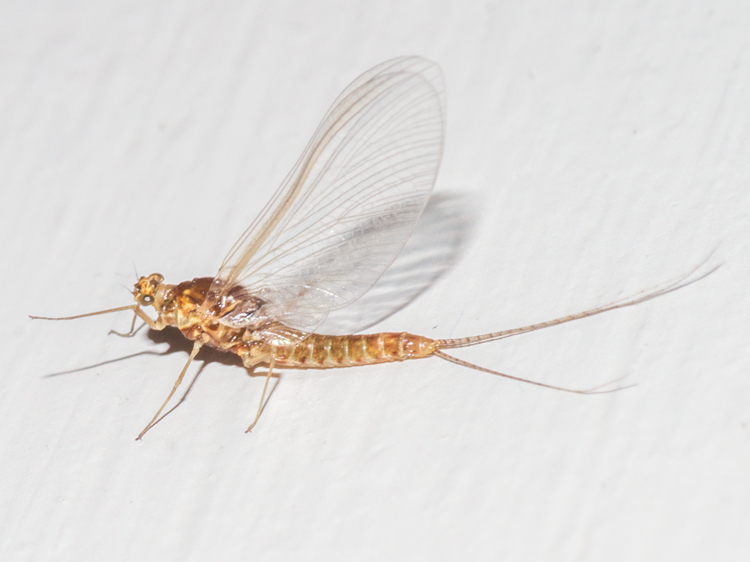
Blue-winged Olive Serratella ignita, Kenidjack Valley, 5th October


I didn't have much else to add after this, except for a few butterflies at Porthgwarra on the final morning (7th): Small Copper, 4 Red Admirals and Wall Brown.

Wednesday, 19 December 2018

Lacewing larvae and other interesting insects

On 18th July I spent the evening at the meadows where I found a few insects worth noting.  Butterflies included 2 Purple Hairstreaks.  Bugs included Hairy Shieldbug, a couple of Potato Capsids Closterotomus norwegicus and my first Field Damsel Bug Nabis ferus.  Also the leafhopper Alebra albostriella.


Hairy Shieldbug, North Elmham Cathedral Meadows, 18th July


Potato Capsid Bugs Clostertomus norwegicus, North Elmham Cathedral Meadows, 18th July


Field Damsel Bug Nabis ferus, North Elmham Cathedral Meadows, 18th July


Alebra albostriella, North Elmham Cathedral Meadows, 18th July


There were a couple more Broom Leaf Beetles on the Broom:

Broom Leaf Beetle, North Elmham Cathedral Meadows, 18th July


I took home a couple of lacewings to check their ID - the green one was Dichrochrysa flavifrons and the brown one was Hemerobius micans.  I didn't get to them straight away and by the time I did the Dichochrysa must have laid egss and these had already hatched, as there were one or two larvae running around in the pot with it.  Interesting to see these without a covering of debris as they would have if they were in the wild.

Dichochrysa flavifrons, North Elmham Cathedral Meadows, 18th July


Dichochrysa flavifrons larva, 30th July (from above adult caught North Elmham Cathedral Meadows on 18th July)


Hemerobius micans, North Elmham Cathedral Meadows, 18th July


I stayed at the meadows until dark fell and looked for moths with my torch around dusk, finding 2 Clover Case-bearers Coleophora alcyonipennella, Orange Crest Helcystogramma rufescens, Knapweed Conch Agapeta zoegana, Common Marble Celypha lacunana, White-foot Bell Epiblema foenella, Garden Grass-veneer Chrysoteuchia culmella, 40 Straw Grass-veneers Agriphila straminella, Common Grass-veneer Agriphila tristella, Pearl Grass-veneer Catoptria pinella, 2 Pale Straw Pearls Udea lutealis, 9 Six-spot Burnets, Least Carpet, 2 Small Fan-footed Waves, 2 Yellow Shells, Dingy Footman and Silver Y. Also a Common Blue butterfly roosting.

Least Carpet, North Elmham Cathedral Meadows, 18th July


Six-spot Burnet, North Elmham Cathedral Meadows, 18th July


Common Blue, North Elmham Cathedral Meadows, 18th July


I'd also found a leaf-mine on an Apple that I suspect belonged to Pear-leaf Blister Moth Leucoptera malifoliella.  My photo didn't come out very well though and I'm not entirely sure, and couldn't find it again when I returned later on.  That's a species of moth I've not seen before so I'll have to look out for these again next year.

Quite a few moths at home that night too, with over 400 moths of 98 species, 7 of which were new for the year: Spotted Black Pigmy Ectoedemia subbimaculella*, Bordered Carl Coptotriche marginea, Sloe Midget Phyllonorycter spinicolella, Obscure Neb Bryotropha similis, Brown Elm Bell Epinotia abbreviana, 2 Ear Moths and Fen Wainscot. 

*I won't formally record the Ectoedemia subbimaculella because heringi and hannoverella can be very similar on external and internal features, so I do not consider the identification to be 100% positive.  Indeed I have recently deleted my three records of Ectoedemia hannoverella from last year which I now consider were more likely to be subbimaculella.  It may be possible to separate these on genitalia but from the images on the Dissection Group website I am not clear which differences, if any, are reliable.


probable Spotted Black Pigmy Ectoedemia subbimaculella, North Elmham, 18th July


Sloe Midget Phyllonorycter spinicollela (female, gen det), North Elmham, 18th July


Obscure Neb Bryotropha similis (male, gen det), North Elmham, 18th July


Ear Moth (male, gen det), North Elmham, 18th July


Fen Wainscot, North Elmham, 18th July


The other moths were 2 Bird’s-nest Moths Tinea trinotella, Beech Midget Phyllonorycter maestingella, 10 Bird-cherry Ermines Yponomeuta evonymella, Ermine sp. Yponomeuta padella/malinellus/cagnagella, Hawthorn Ermine Paraswammerdamia nebulella, Little Dwarf Elachista canapennella, Golden-brown Tubic Crassa unitella, 2 Small Dingy Tubics Borkhausenia fuscescens, 2 Brown House Moths Hofmannophila pseudospretella, Cinerous Neb Bryotropha terrella, Gorse Crest Brachmia blandella, 3 Orange Crests Helcystogramma rufescens, Four-spotted Obscure Oegoconia quadripuncta (and another Oegoconia sp. that got away), 2 Dingy Dowds Blastobasis adustella, Dark Fruit-tree Tortrix Pandemis heparana, Red-barred Tortrix Ditula angustiorana, Grey Tortrix Cnephasia stephensiana, Flax Tortrix Cnephasia asseclana, 2 Garden Rose Tortrixes Acleris variegana, Common Marble Celypha lacunana, Nut-bud Moth Epinotia tenerana, Holly Tortrix Rhopobota naevana, 2 Hoary Bells Eucosma cana, 2 Many-plume Moths Alucita hexadactyla, 4 Garden Grass-veneers Chrysoteuchia culmella, 2 Inlaid Grass-veneers Crambus pascuella, 202 Straw Grass-veneers Agriphila straminella, 2 Common Grass-veneers Agriphila tristella, 2 Pearl Grass-veneers Catoptria pinella, Chequered Grass-veneer Catoptria falsella, 2 Water Veneers Acentria ephemerella, 2 Little Greys Eudonia lacustrata, 2 Small Greys Eudonia mercurella, Ringed China-mark Parapoynx stratiotata, 3 Small Magpies Anania hortulata, Elder Pearl Anania coronata, Pale Straw Pearl Udea lutealis, 9 Mother of Pearls Pleuroptya ruralis, Rosy Tabby Endotricha flammealis, Bee Moth Aphomia sociella, Grey Knot-horn Acrobasis advenella, Dotted Oak Knot-horn Phycita roborella, 3 Ash-bark Knot-horns Euzophera pinguis, Common Plume Emmelina monodactyla, Chinese Character, 4 Least Carpets, 14 Small Fan-footed Waves, 7 Single-dotted Waves, 7 Riband Waves, Red Twin-spot Carpet, Large Twin-spot Carpet, Shaded Broad-bar, 2 July Highflyers, Small Rivulet, 2 Slender Pugs, Currant Pug, V-Pug, 3 Double-striped Pugs, 6 Clouded Borders, 3 Brimstone Moths, 2 Early Thorns, 2 Scalloped Oaks, Peppered Moth, 5 Willow Beauties, Elephant Hawk-moth, Coxcomb Prominent, 6 Yellow-tails, 2 Rosy Footmen, 13 Dingy Footmen, 8 Scarce Footmen, 28 Common Footmen, 3 Buff Ermines, 2 Ruby Tigers, 6 Double Square-spots, Dot Moth, Antler Moth, Clay, 5 Smoky Wainscots, Common Wainscot, 2 Knot Grasses, 2 Dun-bars, 6 Dark Arches, Cloaked Minor, 4 Common Rustics, Dusky Sallow, 23 Uncertains, 3 Rustics, 2 Nut-tree Tussocks, Beautiful Hook-tip, 2 Snouts and 2 Fan-foots.

Slender Pug, North Elmham, 18th July


A new species of caddisfly is always noteworthy nowadays and there was one in the trap this night: Hydropsyche instabilis.   There were also Hydropsyche pellucidula, Mottled Sedge Glyphotaelius pellucidus and Limnephilus marmoratus.

Hydropsyche instabilis (female), North Elmham, 18th July


There was also a new bug for me, Macrotylus horvathi.

Macrotylus horvathi, North Elmham, 18th July


And also a new barkfly, Metylophorus nebulosus, making it an altogether very successful night's trapping.


Metylophorus nebulosus, North Elmham, 18th July


There were also 3 Blue-winged Olives Serratella ignita, and beetles included Nicrophorus investigator and Orange Ladybird.