Description


A diary of my mothing activity covering highlights and photos from my moth trapping activities. Mainly Norfolk (UK), occasionally beyond. I may mention other wildlife sightings here, especially insects, but for birds see my birding diary.
Showing posts with label Chrysopa perla. Show all posts

Monday, 12 April 2021

Review of 2019 and 2020 - Green Lacewings (Chrysopidae) part 1: Chrysopa to Nineta

GREEN LACEWINGS (CHRYSOPIDAE)


Chrysopa commata - 8 in my garden moth trap between 29th May and 4th August 2019 but just one here in 2020, 14th August.  The species has been annual over the last 5 years and I recorded 8 in 2018 too.  Also one at the meadows on 3rd June 2020.

Chrysopa commata, North Elmham, 29th May 2019


Chrysopa commata, North Elmham Cathedral Meadows, 3rd June 2020


Chrysopa pallens - None.  I've not yet encountered this species but although its not commonly recorded there are enough records in Norfolk to think it feasible that one might turn up here.


Chrysopa perla - Found at the meadows on 27th May and 3rd and 20th June 2020.  None in 2019 and none in the garden where I have only recorded one before, in 2018.  I'd had 2 at the meadows in 2018 too - this species seems to avoid gardens, or possibly it's just that it doesn't come to light (and that's the main way I find things in my garden) - I don't think any of these 3 records were coming to light.

Chrysopa perla, North Elmham Cathedral Meadows, 27th May 2020


Chrysopa perla, North Elmham Cathedral Meadows, 3rd June 2020


Chrysopa perla, North Elmham Cathedral Meadows, 27th June 2020


Chrysoperla carnea - I check every male for Chrysoperla pallida, a very similar species that has not yet been recorded in Norfolk, but females of the two species cannot be separated.  The following records include both confirmed males and aggregate females on the basis that in the absence of any male pallida (here or anywhere in Norfolk), the number of any female pallida that might have crept in must be so small as to not skew the data.  I recorded a total of 74 here in 2019 and 98 in 2020, the vast majority of which were in my garden moth trap, with records in every month apart from January in 2019, but only April and June to November in 2020.  Peak counts of 7 on 25th July 2019 and 11 on 4th July 2020.  These compare to totals of 112 in 2018 with a peak count of 28 (in October) and 84 in 2017 (peak 13).  Elsewhere I recorded 17 at the meadows and one at Swanton Great Wood.

male Chrysoperla carnea, North Elmham Cathedral Meadows, 21st April 2019


male Chrysoperla carnea, North Elmham Cathedral Meadows, 21st May 2019


female Chrysoperla carnea agg. larva, North Elmham Cathedral Meadows, 20th June 2020 (bred through)


male Chrysoperla carnea, North Elmham Cathedral Meadows, 23rd June 2020


2 male Chrysoperla carnea, North Elmham, 24th June 2020


The following chart shows the distribution of my records of this species here in North Elmham between 2016 and 2020:


Chrysoperla lucasina - One in the garden moth trap on 23rd May 2020, my first since 2017 when I caught 3 here.  I sometimes worry that I might be overlooking this species among carnea as it's meant to be pretty common, but I do look out for them.  I have a few times picked out examples that appeared to be candidates for this species and then decided that they weren't in the end, which also made me wonder whether I'd identified the 2017 records correctly but looking back at my photos I think they're clear enough - clearer in fact than this one from 2020.

Chrysoperla lucasina, North Elmham, 23rd May 2020


Chrysopidia ciliata - None at home in 2019 or 2020 despite having had one in the garden trap in each of the previous 3 years (and 1-2 elsewhere each year).  Elsewhere one at the meadows on 26th June 2020 and one at Bintree Wood on 24th July 2020.


Chrysopidia ciliata, North Elmham Cathedral Meadows, 26th June 2020


Chrysopidia ciliata, Bintree Wood, 24th July 2020


Cunctochrysa albolineata - A fantastic year followed by a rubbish year!  A stark difference between my totals of 110 caught in my garden moth trap between 23rd June and 22nd August 2019 (making it my commonest lacewing in 2019) and just 7 here between 26th June and 22nd September 2020 (the last being the latest date I've recorded this species).  Peak counts in 2019 were 31 on 23rd July and 34 on 25th July but the species was recorded on 23 nights.  2019 was exceptional, with 21 being my previous best total (in 2017) but 2020 was worse than usual.  Elsewhere one next door and 5 at the meadows (plus a possible larva, see below).

Cunctochrysa albolineata, North Elmham Cathedral Meadows, 23rd June 2019


Cunctochrysa albolineata, North Elmham, 22nd September 2020


The following chart shows the distribution of my records of this species to date:


It's hard to find decent references to lacewing larvae and the ones I've seen are quite limited.  I think this larva found at the meadows on 3rd September 2019 is probably this species but I am not 100% certain.

possible Cunctochrysa albolineata, North Elmham Cathedral Meadows, 3rd September 2019


Dichochrysa flavifros - A total of 55 caught in my garden moth trap between 23rd June and 23rd October 2019 making it my best year so far (though only just ahead of 54 in 2017).  As with the last species 2020 wasn't nearly so good with just 10 between 5th July and 22nd August.  Peak counts in 2019 were 10 on 23rd July and 16 on 25th July.  None recorded elsewhere in 2019 but one at the meadows on 18th June 2020.

Dichochrysa flavifrons, North Elmham, 23rd Ocotber 2019


Dichochrysa flavifrons, North Elmham Cathedral Meadows, 18th June 2020


The following chart shows the distribution of my records of this species to date, a similar shape to the previous species:


Dichochrysa prasina - Totals of 10 caught in my garden moth trap between 29th June and 9th August 2019 and 6 between 3rd July and 10th August 2020.  The peak count of 3 on the 25th July 2019 was on the same day as the peak count of the previous two species but although 2019 was my best year to date for this species the difference between 2019 and other years wasn't so great.

Dichochrysa prasina, North Elmham, 19th July 2019


Dichochrysa prasina, North Elmham, 3rd July 2020


Dichochrysa ventralis - Singles caught in my garden moth trap on 19th and 25th July 2019 and 26th June and 31st July 2020.  I've recorded this species here in each year since 2016 but never more than twice.  Also one at Bintree Wood on 26th June 2020.


Dichochrysa ventralis, North Elmham, 19th July 2019 (the second photo taken through a glass pot in order to show its distinctive underside)


Dichochrysa ventralis, North Elmham, 26th June 2020


Dichochrysa ventralis, North Elmham, 31st July 2020


Nineta flava - None.  I think this must be one of the commonest lacewings that I'm yet to find.


Nineta vittata - Singles caught in my garden moth trap on 23rd July 2019 and 21st August 2020.  I've recorded this relatively large species here in each year since 2016 but with a total of only 8.  I'm yet to find any anywhere else.

Nineta vittata, North Elmham, 23rd July 2019


Nineta vittata, North Elmham, 21st August 2020 (with Chrysoperla carnea on the right in the second photo to show size comparison)


Next page: more Chrysopidae (the best ones!)

Friday, 15 February 2019

A new bug and several new moths and bugs for the year

I think of Ashy Button Acleris sparsana as being a late autumn species so it was a surprise to find one in my moth trap on 16th August.  But although they peak in October it's actually quite normal for the first ones to fly in August.  It was my earliest though, albeit only by a week or so.

Ashy Button Acleris sparsana, North Elmham, 16th August


Otherwise it wasn't a very eventful night with 63 moths of 24 species.  The others were Common Oak Pigmy Stigmella roborella, Red Hazel Midget Phyllonorycter nicellii, Garden Rose Tortrix Acleris variegana, Barred Marble Celypha striana, Common Marble Celypha lacunana, 18 Common Grass-veneers Agriphila tristella, 2 Elbow-stripe Grass-veneers Agriphila geniculea, 4 Garden Pebbles Evergestis forficalis, Mother of Pearl Pleuroptya ruralis, Beautiful Plume Amblyptilia acanthadactyla, Single-dotted Wave, Double-striped Pug, 3 Brimstone Moths, Canary-shouldered Thorn, Poplar Hawk-moth, 2 Swallow Prominents, 3 Flame Shoulders, 2 Lesser Broad-bordered Yellow Underwings, Six-striped Rustic, Common Rustic, 13 Flounced Rustics, Rosy Rustic and Straw Dot.

The following night was a bit better, with Figure of Eighty new for the year - my only one last year as it turned out (I average one a year here).

Figure of Eighty, North Elmham, 17th August


My third and final Butterbur of the year was good.  I had 3 in 2016 too but those 6 are the only ones I've ever seen anywhere.  Indeed they're a pretty scarce species in Norfolk - there was only one other record in 2016, three in total in 2017 and two others in 2018.  They are usually pretty obvious, not only because they're ginormous compared to the average Rosy Rustic, but the structure is different and the colour too.  I think there's also a slight difference in the curvature of the crossline too, but I haven't quite worked out how diagnostic that is.  But although size is usually pretty obvious, this is by no means a reliable means of identifying them.  I also caught a Rosy Rustic on this occasion, and it happened to be the largest Rosy Rustic I've ever seen.  In the photo below it appears to be even bigger than the Butterbur.  To be honest I don't think it was, quite (it's standing higher off the ground in the photo so is nearer the camera), but it was very very close.

Butterbur (top right) and Rosy Rustic (bottom left), North Elmham, 17th August


One of two Garden Rose Tortrixes Acleris variegana was the all-dark form f. caeruleaoatrana.  Quite a nice moth when fresh...


Garden Rose Tortrix Acleris variegana (f. caeruleoatrana), North Elmham, 17th August


Other moths were Hawthorn Slender Parornix anglicella, Diamond-back Plutella xylostella, Barred Marble Celypha striana, 4 Common Marbles Celypha lacunana, 35 Common Grass-veneers Agriphila tristella, 2 Elbow-stripe Grass-veneers Agriphila geniculea, Ringed China-mark Parapoynx stratiotata, 2 Mother of Pearls Pleuroptya ruralis, Ermine Knot-horn Phycitodes binaevella, 3 Common Plumes Emmelina monodactyla, Maiden's Blush, Blood-vein, 2 Single-dotted Waves, Lime-speck Pug, Tawny Speckled Pug, Double-striped Pug, 4 Brimstone Moths, Canary-shouldered Thorn, 2 Dusky Thorns, Flame Shoulder, 2 Lesser Broad-bordered Yellow Underwings, 2 Setaceous Hebrew Characters, 3 Six-striped Rustics, 14 Flounced Rustics, 3 Straw Dots and Snout.

Mayflies and lacewings consisted of 2 Pond Olives Cloeon dipterum and Chrysopa commata respectively, and caddisflies were 2 Hydropsyche siltalai and Medium Sedge Goera pilosa.  2 Nicrophorus investigator and an Aphodius rufipes represented the beetles and there were 3 Hornets and a Common Frog.

The following night saw an improvement with 5 new moths for the year.  One of these was a Pale Thistle Case-bearer Coleophora peribenanderi, my first for a couple of years.

Pale Thistle Case-bearer Coleophora peribenanderi (male, gen det), North Elmham, 18th August


I've seen rather more Birch Marbles Apotomis betuletana, but not at home - this was my first trapped at home since 2015.

Birch Marble Apotomis betuletana, North Elmham, 18th August


2 Square-spot Rustics, Centre-barred Sallow and Frosted Orange were also new species for the year.

Square-spot Rustic, North Elmham, 18th August


Centre-barred Sallow, North Elmham, 18th August


Frosted Orange, North Elmham, 18th August


Other moths were Carrion Moth Monopis weaverella, Bird’s-nest Moth Tinea trinotella, Dark Neb Bryotropha affinis, Dingy Dowd Blastobasis adustella, Light Brown Apple-moth Epiphyas postvittana, Dark-triangle Button Acleris laterana, 2 Garden Rose Tortrixes Acleris variegana, Barred Marble Celypha striana, 5 Common Marbles Celypha lacunana, Marbled Piercer Cydia splendana, 46 Common Grass-veneers Agriphila tristella, 4 Elbow-stripe Grass-veneers Agriphila geniculea, Ringed China-mark Parapoynx stratiotata, 2 Garden Pebbles Evergestis forficalis, Pale Straw Pearl Udea lutealis, 2 Mother of Pearls Pleuroptya ruralis, Grey Knot-horn Acrobasis advenella, 2 Common Plumes Emmelina monodactyla, Orange Swift, Maiden's Blush, Single-dotted Wave, Garden Carpet, Common Carpet, Lime-speck Pug, Double-striped Pug, 4 Brimstone Moths, Canary-shouldered Thorn, 2 Dusky Thorns, Rosy Footman, Flame Shoulder, 2 Lesser Broad-bordered Yellow Underwings, Small Square-spot, Setaceous Hebrew Character, 12 Flounced Rustics and 3 Straw Dots.

A Green Drake Ephemera danica was the only mayfly. Among the green lacewings, Chrysopa perla was new for the garden.  It's a very common species that I've recorded up the road at the meadows before, but apparently it's a species that doesn't turn up in gardens all that often.  Other lacewings were Chrysopa commata, Chrysoperla carnea, 2 Hemerobius lutescens and Micromus variegatus.

Chrysopa perla, North Elmham, 18th August


There was a selection of caddisflies: Cyrnus flavidus, Polycentropus flavomaculatus, 2 Hydropsyche pellucidula, Hydropsyche siltalai and Limnephilus marmoratus.  Beetles were 4 Bradycellus verbasci, a Nicrophorus investigator and another Curculio venosus.

It was a good night for bugs too, with one completely new species and two new for the year.  I've seen several of the Psallus species in the garden but they can be pretty tricky to identify.  This one keyed out to either Psallus flavellus or Psallus lepidus, either of which would be new to me, but I wasn't entirely confident I had adequately eliminated all of the other species, especially falleni (which, as it flies later than others was really quite a likely contender from the start).  The only way to resolve it was to check its genitalia, and this placed it as Psallus flavellus.

Psallus flavellus (male, gen det), North Elmham, 18th August


The two other bugs that were new for the year were the striking Campyloneura virgula and Neolygus contaminatus.  Other bugs were Birch Shieldbug, 5 Forest Bugs, 2 Tarnished Plant Bugs Lygus rugulipennis and the leafhopper Empoasca vitis

Campyloneura virgula, North Elmham, 18th August


Neolygus contaminatus, North Elmham, 18th August

Sunday, 2 December 2018

Another Wood Carpet

After a couple of poor nights it was back to form on 11th June with the following new moths for the year (for the garden): Light Grey Tortrix Cnephasia incertana, Small Grey Eudonia mercurella, False Cacao Moth Ephestia woodiella, Ghost Moth, Dwarf Cream Wave, Riband Wave, Heart and Club, Large Nutmeg (not annual here) and Small Fan-foot.

Ghost Moth, North Elmham, 11th June


Heart and Club, North Elmham, 11th June


Large Nutmeg, North Elmham, 11th June


Small Fan-foot, North Elmham, 11th June


In addition to these was a new moth for the garden, or at least one that I have not put down before (and some might argue should still not put down).  I've been a but dubious of claims of Wood Carpet and have probably thrown away "Common Carpets" that were a bit bigger than normal with clearer white bands in the wings before.  But buoyed by the really obvious one at Derby Fen I couldn't help wondering about another such individual trapped at home two nights later.  It wasn't nearly such an obvious candidate as the Derby Fen example as it had a weak grey line through the white band, more-or-less throughout its length, and the band itself wasn't as completely pure white, but it was big and it looked better in life than it does in the photos!  Now if it is the case that these cannot be done on genitalia then it probably isn't wise to claim such a non 'classic' individual as Wood Carpet, and I have heard it said that this is the case - there is no difference in genitalia.  It certainly is, as far as I can tell, impossible to separate these two on male genitalia, but the images of female genitalia on the Dissection Group website show very obviously different female genitalia for Common Carpet and Wood Carpet, as well as a comparison plate, the inclusion of which implies that this is a real difference rather than just variation between individuals.  Well, my moth was a female, and her genitalia were exactly like the image in the Dissection Group for Wood Carpet.  So on that basis, for the time being at least, I'm calling it a Wood Carpet, but I should point out that at least one expert considers that these are not separable and may not even be valid species.

 
apparent Wood Carpet (female), North Elmham, 11th June


Other species were Hedge Case-bearer Coleophora striatipennella, 5 Buff Rush Case-bearers Coleophora caespititiella, 3 Brown House Moths Hofmannophila pseudospretella, 2 Light Brown Apple-moths Epiphyas postvittana, Barred Marble Celypha striana, 14 Common Marbles Celypha lacunana, Plum Tortrix Hedya pruniana, Yellow-faced Bell Notocelia cynosbatella, 3 Garden Grass-veneers Chrysoteuchia culmella, 4 Hook-streak Grass-veneers Crambus lathoniellus, 2 Common Greys Scoparia ambigualis, 3 Narrow-winged Greys Eudonia angustea, 2 Small Magpies Anania hortulata, Elder Pearl Anania coronata, Common Plume Emmelina monodactyla, 2 Blood-veins, 4 Treble Brown Spots, Flame Carpet, Red Twin-spot Carpet, 4 Silver-ground Carpets, 2 Common Marbled Carpets, 3 Green Carpets, Sandy Carpet, Foxglove Pug, Mottled Pug, Freyer's Pug, Common Pug, 2 Grey Pugs, Clouded Border, Brown Silver-line, 2 Peppered Moths, Privet Hawk-moth, 2 Coxcomb Prominents, Marbled Brown, Buff-tip, 10 Orange Footmen, Common Footman, White Ermine, 8 Buff Ermines, 4 Cinnabars, 4 Heart and Darts, Ingrailed Clay, Bright-line Brown-eye, 3 Common Wainscots, 6 Brown Rustics, Small Angle Shades, 2 Marbled Minors, Middle-barred Minor, Treble Lines, Burnished Brass, 15 Straw Dots and Snout.

Foxglove Pug, North Elmham, 11th June


There were two mayflies in the trap, one of which was a Baetis sp., possibly a Large Dark Olive Baetis rhodani.  It's size may have helped resolve this one but unforunately I didn't get to measure it before it dried out and shrunk.  The other was one of the Anglers' Curse species and if I identified it correctly (some of the features are pretty subtle) it was a new one for me, Caenis luctuosa.

possible Large Dark Olive Baetis rhodani, North Elmham, 11th June


Caenis luctuosa, North Elmham, 11th June


Caddisflies consisted of Hydropsyche pellucidula, Phryganea grandis and Limnephilus flavicornis, the grandis being new for the year.  There was also the mirid bug Psallus perrisi.

Phryganea grandis, North Elmham, 11th June

 
The following night was atrocious again with just 19 species: Garden Grass-veneer Chrysoteuchia culmella, Hook-streak Grass-veneer Crambus lathoniellus, Narrow-winged Grey Eudonia angustea, Small Magpie Anania hortulata, Silver-ground Carpet, Buff-tip, White Ermine, 8 Buff Ermines, 2 Heart and Darts, Flame, 2 Flame Shoulders, 2 Ingrailed Clays, Common Wainscot, 4 Brown Rustics, Dark Arches (new for the year), 2 Treble Lines, 3 Mottled Rustics, Straw Dot and 2 Snouts.

A nice day on 13th June meant several new insects at the meadows.  My first Ringlet and Meadow Browns of the year as well as Common Blue and Painted Lady.

Ringlet, North Elmham Cathedral Meadows, 13th June


Meadow Brown, North Elmham Cathedral Meadows, 13th June


Common Blue, North Elmham Cathedral Meadows, 13th June


A Four-spotted Chaser in one of the meadows was the first one I've seen here.

Four-spotted Chaser, North Elmham Cathedral Meadows, 13th June


The green lacewing Chrysopa perla is one I don't get at home very often - apparently they don't favour gardens.

Chrysopa perla, North Elmham Cathedral Meadows, 13th June


An unremarkable selection of moths consisted of Common Marble Celypha lacunana, Silver-ground Carpet, Common Carpet, Yellow Shell, Cinnabar and Silver YGarden Chafer and Swollen-thighed Beetle represented the beetles and the hoverfly Melangyna umbellatarum was a new species for me.

Melangyna umbellatarum, North Elmham Cathedral Meadows, 13th June


 I think this leafmine on Creeping Buttercup belongs to the fly Phytomyza ranunculivora.

mine of Phytomyza ranunculivora, North Elmham Cathedral Meadows, 13th June


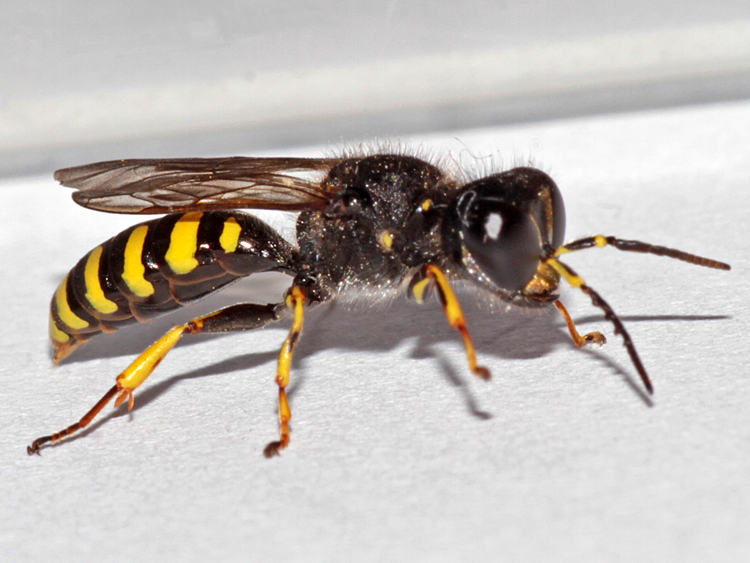
Another species I hadn't identified before was this striking digger wasp, Ectemnius cephalotes.

Ectemnius cephalotes, North Elmham Cathedral Meadows, 13th June


There were some nice wildflowers on show too, like these Common Spotted Orchids and Herb Bennet.


Common Spotted Orchids, North Elmham Cathedral Meadows, 13th June


Herb Bennet, North Elmham Cathedral Meadows, 13th June


It looks like this Grass Vetchling is relatively unusual, and is certainly easily overlooked.


Grass Vetchling, North Elmham Cathedral Meadows, 13th June


This Maidenhair Spleenwort is an attractive plant growing profusely on the chapel ruins.

Maidenhair Spleenwort, North Elmham Cathedral Meadows, 13th June