Description


A diary of my mothing activity covering highlights and photos from my moth trapping activities. Mainly Norfolk (UK), occasionally beyond. I may mention other wildlife sightings here, especially insects, but for birds see my birding diary.
Showing posts with label Blair's Shoulder-knot. Show all posts

Thursday, 8 April 2021

Review of 2019 and 2020 - Moths: Noctuids (Noctuidae) part 8: Chestnuts and allies, Pale Pinion and Shoulder-knots

NOCTUIDS (NOCTUIDAE) (continued)


Beaded Chestnut Agrochola lychnidis - Totals of 37 caught here between 20th September and 5th November 2019 and 24 between 18th September and 19th October 2020, my worst years yet (although the 2020 total was reduced by me being away for a few nights in early October).  Plotting my annual totals here gives me a smooth downward curve from the 84 here in 2014.  Elsewhere 79 over 7 nights in Cornwall in early October 2020 and 2 at the meadows on 8th November 2020.

Beaded Chestnut, North Elmham, 18th September 2020


Beaded Chestnuts, North Elmham Cathedral Meadows, 8th November 2020


Brown-spot Pinion Agrochola litura - Singles in the garden on 3 consecutive nights 2nd to 4th October 2019.  I caught 30 of these in 2014 but in the 5 years since then I've only caught 19 in total; 2020 was my first year without catching any at all.

Brown-spot Pinion, North Elmham, 2nd October 2019


Flounced Chestnut Agrochola helvola - None.  I first saw this species in 2017 and that remains the only one I've caught here.


Red-line Quaker Agrochola lota - Totals of 10 in the garden between 2nd October and 2nd November 2019 and 24 between 22nd September (my earliest ever) and 7th November 2020.  I've averaged about 11 a year here and 2020's total was my highest ever, and included my best count of 4 on 20th October.

Red-line Quaker, North Elmham, 2nd October 2019


Yellow-line Quaker Agrochola macilenta - Totals of 22 in the garden between 14th October and 27th November 2019, the last being my latest ever, and 17 between 17th October and 15th November 2020.  These totals were a fair bit below the average annual total of over 35.  Singles seen at the meadows on 5 dates from 4th October 2019.

Yellow-line Quaker, North Elmham Cathedral Meadows, 4th October 2019


Brick Agrochola circellaris - None here in 2019 but 5 between 2nd and 13th November 2020.  I've had poor years before (e.g. just one in 2016) but 2019 was my first complete blank.  I've caught up to 12 here in a year, averaging at 5.  Elsewhere 9 at the meadows on 4 dates (mostly on Ivy) including 5 on 4th October 2019. 


Bricks, North Elmham Cathedral Meadows, 4th October 2019


Brick, North Elmham Cathedral Meadows, 28th September 2020


Brick, North Elmham Cathedral Meadows, 30th October 2020


Lunar Underwing Omphaloscelis lunosa - Totals of 360 caught in my garden between 10th September and 14th October 2019 and 348 between 8th September and 20th October 2020, both over my average annual tally of 282.  Elsewhere 316 in Cornwall in the first week of October (including 92 at our Tresidder cottage on 8th October).  Incredibly, I haven't managed to find this species at the meadows yet.

Lunar Underwing, Tresidder (Cornwall), 7th October 2020


Chestnut Conistra vaccinii - My best years for this species at home with 58 up to 27th March  2019 and then 17 from 1st October to the year end, 27 up to 10th April 2020 and then 66 from 29th September to the year end (including a record 8 on 16th October).  The totals of 75 and 93 compare with an average annual total of less than 60.  At the meadows recorded on 12 nights with a total of 24.  The record at home on 29th September 2020 and 4 at the meadows the same night were my earliest autumn records ever.  So far 2021 is shaping up to be another excellent year for this species.

Chestnut, North Elmham Cathedral Meadows, 22nd March 2019


Chestnut, North Elmham Cathedral Meadows, 22nd April 2019


Chestnut, North Elmham Cathedral Meadows, 4th October 2019


Chestnut, North Elmham Cathedral Meadows, 8th March 2020


Chestnuts, North Elmham Cathedral Meadows, 29th September 2020 (the second being a confirmed male)


Dark Chestnut Conistra ligula - 5 caught in the garden in the first winter period of 2019, up to 23rd February, then 4 in the autumn between 21st October and 24th November followed by one on 13th February 2020.  5 between 2nd October (my earliest ever) and 21st December 2020.  I average just under 7 a year here.  Elsewhere one at the meadows on 4th October 2019 and one in Cornwall in October 2020.  I find some Conistra quite difficult to be certain about and so dissect a few of the trickier individuals to confirm - the results suggest I'm being over-cautious as my suspected ID nearly always proves right, but I do occasionally get it wrong and sometimes think these are over-simplified, especially with worn examples.

Dark Chestnut, North Elmham, 22nd February 2019


Dark Chestnut, North Elmham Cathedral Meadows, 4th October 2019


female Dark Chestnut, North Elmham, 13th February 2020


female Dark Chestnut, North Elmham, 2nd October 2020


male Dark Chestnut, North Elmham, 16th October 2020


male Dark Chestnut, North Elmham, 21st December 2020


Dotted Chestnut Conistra rubiginea - None at home in either year.  This species has very recently colonised Norfolk and is still spreading - I caught my first here in 2016 and a second in 2018.  Elsewhere one at Cranwich Heath on 14th March 2020.


Dotted Chestnut, Cranwich Heath, 14th March 2020


Tawny Pinion Lithophane semibrunnea - None.  This is a scarce species and I've never seen one, but it's pretty widespread so I remain optimistic that one will land in my trap sometime.


Pale Pinion Lithophane socia - Singles in my garden on 26th March 2019 (my earliest ever record) and 1st April 2020.  The 2019 individual had one wing very much shorter than the other.  This species isn't quite annual here though I average one a year.

Pale Pinion, North Elmham, 26th March 2019


Pale Pinion, North Elmham, 1st April 2020


Grey Shoulder-knot Lithophane ornitopus - singles caught in my garden on 17th October and 4th November 2019 and 18th October 2020.  1-2 a year is normal though numbers have varied from 0 to 4.

Grey Shoulder-knot, North Elmham, 17th October 2019


Grey Shoulder-knot, North Elmham, 4th November 2019


Grey Shoulder-knot, North Elmham, 18th October 2020


Blair's Shoulder-knot Lithophane leautieri - One trapped in the garden on 28th October 2019.  This recent colonist seemed to be going from strength to strength at the time I moved here and I caught 22 in my first autumn (2014).  Since then it slumped - I caught 4 in each of the next 2 years, 3 in 2017 and none in 2018 or 2020.  A temporary dip, as in the usual peak-and-trough cycle of insect populations, or a long-term trend signalling the end of a temporary colonisation?  Time will tell, but I suspect the former.

Blair's Shoulder-knot, North Elmham, 28th October 2019


Next page: more Noctuidae

Sunday, 14 January 2018

Flounced Chestnut

A good night on 19th October with 51 moths of 22 species.  I didn't immediately recognise the best one but when Dave suggested the ID it was obvious (well, fairly).  Indeed I'd been keeping an eye out for one as I'd never seen one before but they're usually a bit more strongly marked and I'd not appreciated how plain they could be.  It was a Flounced Chestnut, a very welcome macro lifer for so late in the season.  They're a little on the scarce side so it's not entirely surprising that I'd not seen one before but there are a few records in Norfolk every year.

Flounced Chestnut, North Elmham, 19th October


The other moths were Long-horned Flat-body Carcina quercana, 6 Light Brown Apple Moths Epiphyas postvittana, 2 Ashy Buttons Acleris sparsana, 2 Narrow-winged Greys Eudonia angustea, Pale November Moth, Feathered Thorn, 2 Shuttle-shaped Darts, Large Yellow Underwing, Broad-bordered Yellow Underwing, 2 Setaceous Hebrew Characters, 7 Black Rustics, 4 Green-brindled Crescents, Merveille du Jour, Brick, Red-line Quaker, 10 Yellow-line Quakers, 2 Beaded Chestnuts, Angle Shades, Large Wainscot, Burnished Brass and 2 Straw Dots.

Other insects included 5 Chrysoperla carnea (green lacewing), Limnephilus auricula, Limnephilus flavicornis, 15 Limnephilus lunatus, Limnephilus marmoratus, Halesus radiatus (caddisflies), Pinalitus cervinus (bug) and a leafhopper that was probably Empoasca decipiens (would be new for the house but I wasn't entirely convinced by the externals and couldn't make the genitalia quite fit either, though I couldn't find anything else that fitted better).

I think this ugly little beast in my study the next day was Amaurobius similis.  I still dislike spiders but I'll try to identify them so long as I don't have to touch them or get too close.  Maybe one day I'll grow to like them, but for now, ugh.


Amaurobius similis, North Elmham, 20th October


Slightly fewer moths that night: 2 Garden Midgets Phyllonorycter messaniella, 2 Light Brown Apple Moths Epiphyas postvittana, Ashy Button Acleris sparsana, Narrow-winged Grey Eudonia angustea, Double-striped Tabby Hypsopygia glaucinalis, 2 Common Marbled Carpets, 2 November Moths, Pale November Moth, 2 Feathered Thorns, 3 Shuttle-shaped Darts, 2 Black Rustics, 3 Green-brindled Crescents, 2 Merveille du Jours, 2 Bricks, 5 Yellow-line Quakers, Beaded Chestnut, Straw Dot and Snout.

Ashy Button Acleris sparsana, North Elmham, 20th October


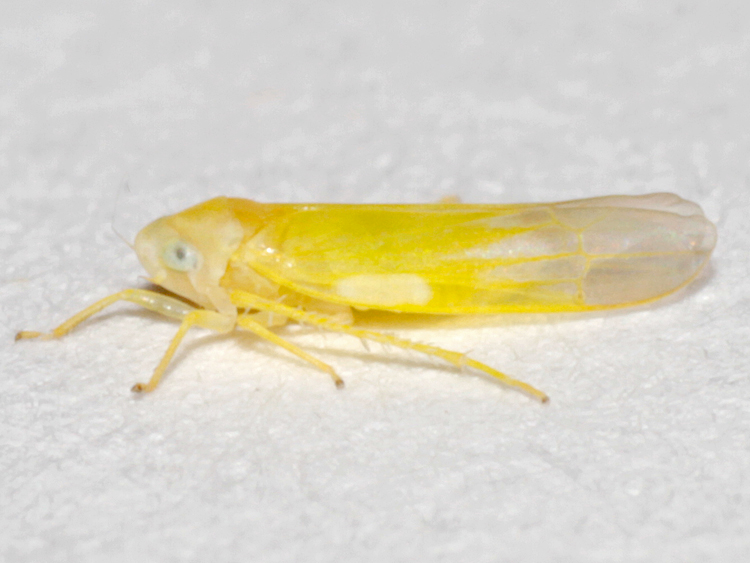
The only lacewings and caddisflies were Chrysoperla carnea, Limnephilus affinis and 7 Limnephilus lunatus but hot on the heals of my first identified ones a few days earlier there were 5 Fagocyba cruenta (yellow leafhoppers).

There was a big drop in moth numbers the following night: Light Brown Apple Moth Epiphyas postvittana, November Moth, Pale November Moth, Black Rustic, Yellow-line Quaker and Beaded Chestnut.  But it was worth putting the trap on for the leafhoppers - two more yellow leafhoppers, one another Fagocyba cruenta but the other a new one for me, Alnetoidea alneti.  The joy of being fairly new to identifyting a group like this is that you can still pick up new species from among the common ones - and this one is supposed to be "extremely common".

Alnetoidea aneti, North Elmham, 21st October


Fagocyba cruenta, North Elmham, 21st October


A Froghopper hopped away before I could ID it and the only other insects I noted were caddisflies: 3 Limnephilus lunatus and Halesus radiatus.

Things quietened down the following night with just Pale November Moth, Feathered Thorn, Green-brindled Crescent, Merveille du Jour, 5 Yellow-line Quakers and 2 Beaded Chestnuts making up the moths and Chrysoperla carnea agg., Limnephilus flavicornis and Limnephilus lunatus the lacewings and caddisflies.

If 22nd was quiet 23rd made up for it.  The highlights among 58 moths of 28 species were my first Sprawler of the year and my first Mottled Umber of the autumn but a much bigger surprise was an Orange Pine Tortrix Lozotaeniodes formosana.  Not because it's rare (though it is unusual here - I've only seen one here before, this July) or because it's stunning (though it certainly is) but because of the late date.  They normally finish flying in August and I think this might be the latest ever in Norfolk.

Orange Pine Tortrix Lozotaeniodes formosana, North Elmham, 23rd October


Blair's Shoulder-knot (left) and Sprawler (right), North Elmham, 23rd October


Mottled Umber, North Elmham, 23rd October


Other moths were 2 Garden Midgets Phyllonorycter messaniella, Long-horned Flat-body Carcina quercana, 4 Light Brown Apple Moths Epiphyas postvittana, Ashy Button Acleris sparsana, Red-green Carpet, 2 Pine Carpets, 9 November Moths, Feathered Thorn, 2 Large Yellow Underwings, 4 Setaceous Hebrew Characters, White-point, 2 Common Wainscots, 2 Black Rustics, Blair's Shoulder-knot, 2 Green-brindled Crescents, Merveille du Jour, Satellite, Red-line Quaker, 2 Yellow-line Quakers, 5 Beaded Chestnuts, Rosy Rustic, 2 Large Wainscots, 2 Burnished Brasses, 3 Straw Dots and Snout.

November Moth (male), North Elmham, 23rd October - not every pale November Moth is a Pale November Moth...


It wasn't just moths in the trap - there were lots of leafhoppers.  Having had several in recent days I imagined all the bright yellow leafhoppers would be Fagocyba cruenta so didn't retain them all for checking.  Of those I did keep 2 were indeed cruenta but one turned out to be Edwardsiana flavescens, a new one for here.  Other leafhoppers included Alebra albostriella, 5 Empoasca vitis and probably 2 Kybos betulicola (the male confirmed, the female either this or smaragdula).

Edwardsiana flavescens, North Elmham, 23rd October


Alebra albostriella, North Elmham, 23rd October


There were also 2 mirid bugs (Birch Catkin Bug Kleidocerys resedae and Pinalitus cervinus), 2 barkflies Valenzuela flavidus, the green lacewing Chrysoperla carnea and the caddisflies Limnephilus affinis, Limnephilus auricula, Limnephilus flavicornis and 9 Limnephilus lunatus.

Someone once pointed out a spider to me which they identified as Nuctenea umbratica on the basis of two white marks on the underside of its abdomen.  This spider in my shed had similar markings, but whether that's diagnostic or not I'm not sure.  I didn't get a good look at the top side of it.

Spider (possibly Nuctenea umbratica?), North Elmham, 24th October

Monday, 21 November 2016

Convolvulus Hawkmoth!

The biggest surprise on 1st October was Mottled Umber - a very early date for this species, 3.5 weeks earlier than my previous earliest.

Mottled Umber, North Elmham, 1st October


Also new for the year was this Yellow-line Quaker.

Yellow-line Quaker, North Elmham, 1st October


Not much else - the season really is coming to a close - just Garden Rose Tortrix Acleris variegana, 3 Mallows, Common Marbled Carpet, Beaded Chestnut, 6 Lunar Underwings, Pink-barred Sallow and 2 Rosy Rustics.

I haven't been doing caddisflies lately as I've had such a big backlog with moths, but I retained one from this catch as it was obviously different from any I'd caught here this year.  It proved to be Halesus radiatus, actually one of the few distinctive caddisflies I'd identified from photos prior to owning the caddisfly key (not from here though, so this was new for the house).

Halesus radiatus, North Elmham, 1st October


Next day we wre down to 11 moths of 7 species, but these included one of my favourites, Green-brindled Crescent new for the year.

Green-brindled Crescent, North Elmham, 2nd October


The others were Mallow, Common Marbled Carpet, Black Rustic, Beaded Chestnut, 5 Lunar Underwings and Rosy Rustic.

A lunchtime stroll round Thornham produced Common Nettle-tap Anthophila fabriciana on 3rd, along with Southern Hawker and Common Darters.  That night's moths were Light Brown Apple Moth Epiphyas postvittana, Garden Rose Tortrix Acleris variegana, Grey Pine Carpet, Large Yellow Underwing, 2 Black Rustics, Green-brindled Crescent, 6 Beaded Chestnuts, 5 Lunar Underwings, Rosy Rustic and Snout.

There was a bit more on 4th: 2 Diamond-back Moths Plutella xylostella, Narrow-winged Grey Eudonia angustea, Small Fan-footed Wave, 3 Common Marbled Carpets, 2 Large Yellow Underwings, 4 Black Rustics, Yellow-line Quaker, 4 Beaded Chestnuts, 11 Lunar Underwings, 3 Barred Sallows, Pink-barred Sallow, 2 Sallows, 2 Rosy Rustics and Snout.

Sallow, North Elmham, 4th October


Plenty of Red Admirals around when I was out and about around this time...


Red Admirals, Stiffkey, 5th October


That night's moths included the first Chestnut of the autumn and 2 Diamond-back Moths Plutella xylostella, Light Brown Apple Moth Epiphyas postvittana, 3 Garden Rose Tortrixes Acleris variegana, Narrow-winged Grey Eudonia angustea, Mallow, Common Marbled Carpet, 2 Large Yellow Underwings, Lesser Yellow Underwing, 5 Black Rustics, Green-brindled Crescent, Brown-spot Pinion, 2 Beaded Chestnuts, 3 Lunar Underwings, 3 Pink-barred Sallows, Sallow and Angle Shades.

It's been a good autumn for Convolvulus Hawkmoth and I've been bombarded with messages and photos of these amazing beasts that people have been seeing.  Some people haven't just had one or two, they've had loads of them.  But I have not.  I have not seen one.  Not one.  Indeed, I have never seen one.  Right up to 6th October.

Then the next morning as I was going through the moth trap I looked in and saw this big grey head peering out from beneath one of the eggboxes...


Surely... gotta be... hasn't it?  I carefully lifted the eggbox out and turned it over... YES!!  At last!  A Convolvulus Hawkmoth!  And not only that but a fresh one!


Convolvulus Hawkmoth, North Elmham, 6th October


I know they're not all that rare - certainly not as rare as a lot of other moths I've recorded this year, but I reckon this was probably my most exciting moth moment this year - such a badly wanted and long-awaited moth and an absolute BEAST.

Nothing else mattered much but Red-line Quaker was new for the year and Beautiful Hook-tip was an unusual second-generation record.   Also 3 Diamond-back Moths Plutella xylostella, 3 Garden Rose Tortrixes Acleris variegana, 7 Narrow-winged Greys Eudonia angustea, Common Marbled Carpet, Yellow-barred Brindle, 2 Large Yellow Underwings, Lesser Yellow Underwing, Setaceous Hebrew Character, 2 Black Rustics, 2 Green-brindled Crescents, Chestnut, 4 Beaded Chestnuts, 2 Lunar Underwings, Pink-barred Sallow, Sallow and Snout.

Red-line Quaker, North Elmham, 6th October


Also 5 Wasps, of which at least 2 were Common Wasps.

Feathered Thorn and Blair's Shoulder-knot were new for the year on 7th.  Other moths were Diamond-back Moth Plutella xylostella, 2 Garden Rose Tortrixes Acleris variegana, 6 Narrow-winged Greys Eudonia angustea, Common Plume Emmelina monodactyla, Mallow, Common Marbled Carpet, Grey Pine Carpet, Large Yellow Underwing, 3 Black Rustics, 2 Merveille du Jours, Chestnut, 7 Beaded Chestnuts, 4 Lunar Underwings, 2 Barred Sallows, Pink-barred Sallow, 3 Sallows and Snout.

Feathered Thorn, North Elmham, 7th October


Blair's Shoulder-knot, North Elmham, 7th October


Merveille du Jour, North Elmham, 7th October


The following night produced 3 Garden Rose Tortrixes Acleris variegana, 4 Narrow-winged Greys Eudonia angustea, Mallow, Feathered Thorn, Black Rustic, Blair's Shoulder-knot, Green-brindled Crescent, Chestnut, 5 Beaded Chestnuts, 7 Lunar Underwings, Pink-barred Sallow and Sallow.

Not so many moths the next night: 2 Black Rustics, Blair's Shoulder-knot, Green-brindled Crescent, Merveille du Jour and Lunar Underwing. Even fewer on 10th - Green-brindled Crescent, Satellite and Beaded Chestnut.  The 11th wasn't much better with Garden Rose Tortrix Acleris variegana, 2 Narrow-winged Greys Eudonia angustea, 2 Green-brindled Crescents and Lunar Underwing.  Another Narrow-winged Grey Eudonia angustea was at Burnham Overy Dunes on 12th and that night at home produced just 2 Narrow-winged Greys Eudonia angustea, Lunar Underwing and Barred Sallow.

Things improved a bit on 13th with 2 Garden Rose Tortrixes Acleris variegana, Narrow-winged Grey Eudonia angustea, Rush Veneer Nomophila noctuella, Red-green Carpet, Feathered Thorn, Large Yellow Underwing, 2 Black Rustics, Red-line Quaker, Lunar Underwing, Pink-barred Sallow, Sallow and Angle Shades.

Epirrita season kicked off on 14th with the first new moth for the year in a week: 4 November Moths.  Also Light Brown Apple Moth Epiphyas postvittana, Ashy Button Acleris sparsana, Garden Rose Tortrix Acleris variegana, Narrow-winged Grey Eudonia angustea, Rush Veneer Nomophila noctuella, Feathered Thorn, 2 Large Yellow Underwings, Black Rustic, 6 Green-brindled Crescents, Satellite, 2 Beaded Chestnuts, Lunar Underwing and Sallow.

November Moth (male, 8th sternite checked), North Elmham, 14th October


No more Epirrita for a few days though,  15th produced 2 Light Brown Apple Moths Epiphyas postvittana, Garden Rose Tortrix Acleris variegana, Narrow-winged Grey Eudonia angustea, Feathered Thorn, Large Yellow Underwing, Black Rustic, 3 Green-brindled Crescents, Lunar Underwing and 2 Barred Sallows. On 16th 3 Light Brown Apple Moths Epiphyas postvittana, 2 Narrow-winged Greys Eudonia angustea, Red-green Carpet, 3 Green-brindled Crescents, Red-line Quaker, Yellow-line Quaker, Lunar Underwing and Barred Sallow. Just 4 moths on 17th: Green-brindled Crescent, 2 Yellow-line Quakers and Lunar Underwing; and only slightly better on 18th: Black Rustic, 3 Green-brindled Crescents, Chestnut and Lunar Underwing. 

Things picked up again on 19th with a return of Epirritas - 6 November Moths.  Also Light Brown Apple Moth Epiphyas postvittana, Dark-triangle Button Acleris laterana, Garden Rose Tortrix Acleris variegana, 2 Green-brindled Crescents and Pink-barred Sallow. Also 2 Pinalitus cervinus, the first time I recorded this mirid bug this year.