Description


A diary of my mothing activity covering highlights and photos from my moth trapping activities. Mainly Norfolk (UK), occasionally beyond. I may mention other wildlife sightings here, especially insects, but for birds see my birding diary.
Showing posts with label Chrysoperla carnea. Show all posts

Monday, 12 April 2021

Review of 2019 and 2020 - Green Lacewings (Chrysopidae) part 1: Chrysopa to Nineta

GREEN LACEWINGS (CHRYSOPIDAE)


Chrysopa commata - 8 in my garden moth trap between 29th May and 4th August 2019 but just one here in 2020, 14th August.  The species has been annual over the last 5 years and I recorded 8 in 2018 too.  Also one at the meadows on 3rd June 2020.

Chrysopa commata, North Elmham, 29th May 2019


Chrysopa commata, North Elmham Cathedral Meadows, 3rd June 2020


Chrysopa pallens - None.  I've not yet encountered this species but although its not commonly recorded there are enough records in Norfolk to think it feasible that one might turn up here.


Chrysopa perla - Found at the meadows on 27th May and 3rd and 20th June 2020.  None in 2019 and none in the garden where I have only recorded one before, in 2018.  I'd had 2 at the meadows in 2018 too - this species seems to avoid gardens, or possibly it's just that it doesn't come to light (and that's the main way I find things in my garden) - I don't think any of these 3 records were coming to light.

Chrysopa perla, North Elmham Cathedral Meadows, 27th May 2020


Chrysopa perla, North Elmham Cathedral Meadows, 3rd June 2020


Chrysopa perla, North Elmham Cathedral Meadows, 27th June 2020


Chrysoperla carnea - I check every male for Chrysoperla pallida, a very similar species that has not yet been recorded in Norfolk, but females of the two species cannot be separated.  The following records include both confirmed males and aggregate females on the basis that in the absence of any male pallida (here or anywhere in Norfolk), the number of any female pallida that might have crept in must be so small as to not skew the data.  I recorded a total of 74 here in 2019 and 98 in 2020, the vast majority of which were in my garden moth trap, with records in every month apart from January in 2019, but only April and June to November in 2020.  Peak counts of 7 on 25th July 2019 and 11 on 4th July 2020.  These compare to totals of 112 in 2018 with a peak count of 28 (in October) and 84 in 2017 (peak 13).  Elsewhere I recorded 17 at the meadows and one at Swanton Great Wood.

male Chrysoperla carnea, North Elmham Cathedral Meadows, 21st April 2019


male Chrysoperla carnea, North Elmham Cathedral Meadows, 21st May 2019


female Chrysoperla carnea agg. larva, North Elmham Cathedral Meadows, 20th June 2020 (bred through)


male Chrysoperla carnea, North Elmham Cathedral Meadows, 23rd June 2020


2 male Chrysoperla carnea, North Elmham, 24th June 2020


The following chart shows the distribution of my records of this species here in North Elmham between 2016 and 2020:


Chrysoperla lucasina - One in the garden moth trap on 23rd May 2020, my first since 2017 when I caught 3 here.  I sometimes worry that I might be overlooking this species among carnea as it's meant to be pretty common, but I do look out for them.  I have a few times picked out examples that appeared to be candidates for this species and then decided that they weren't in the end, which also made me wonder whether I'd identified the 2017 records correctly but looking back at my photos I think they're clear enough - clearer in fact than this one from 2020.

Chrysoperla lucasina, North Elmham, 23rd May 2020


Chrysopidia ciliata - None at home in 2019 or 2020 despite having had one in the garden trap in each of the previous 3 years (and 1-2 elsewhere each year).  Elsewhere one at the meadows on 26th June 2020 and one at Bintree Wood on 24th July 2020.


Chrysopidia ciliata, North Elmham Cathedral Meadows, 26th June 2020


Chrysopidia ciliata, Bintree Wood, 24th July 2020


Cunctochrysa albolineata - A fantastic year followed by a rubbish year!  A stark difference between my totals of 110 caught in my garden moth trap between 23rd June and 22nd August 2019 (making it my commonest lacewing in 2019) and just 7 here between 26th June and 22nd September 2020 (the last being the latest date I've recorded this species).  Peak counts in 2019 were 31 on 23rd July and 34 on 25th July but the species was recorded on 23 nights.  2019 was exceptional, with 21 being my previous best total (in 2017) but 2020 was worse than usual.  Elsewhere one next door and 5 at the meadows (plus a possible larva, see below).

Cunctochrysa albolineata, North Elmham Cathedral Meadows, 23rd June 2019


Cunctochrysa albolineata, North Elmham, 22nd September 2020


The following chart shows the distribution of my records of this species to date:


It's hard to find decent references to lacewing larvae and the ones I've seen are quite limited.  I think this larva found at the meadows on 3rd September 2019 is probably this species but I am not 100% certain.

possible Cunctochrysa albolineata, North Elmham Cathedral Meadows, 3rd September 2019


Dichochrysa flavifros - A total of 55 caught in my garden moth trap between 23rd June and 23rd October 2019 making it my best year so far (though only just ahead of 54 in 2017).  As with the last species 2020 wasn't nearly so good with just 10 between 5th July and 22nd August.  Peak counts in 2019 were 10 on 23rd July and 16 on 25th July.  None recorded elsewhere in 2019 but one at the meadows on 18th June 2020.

Dichochrysa flavifrons, North Elmham, 23rd Ocotber 2019


Dichochrysa flavifrons, North Elmham Cathedral Meadows, 18th June 2020


The following chart shows the distribution of my records of this species to date, a similar shape to the previous species:


Dichochrysa prasina - Totals of 10 caught in my garden moth trap between 29th June and 9th August 2019 and 6 between 3rd July and 10th August 2020.  The peak count of 3 on the 25th July 2019 was on the same day as the peak count of the previous two species but although 2019 was my best year to date for this species the difference between 2019 and other years wasn't so great.

Dichochrysa prasina, North Elmham, 19th July 2019


Dichochrysa prasina, North Elmham, 3rd July 2020


Dichochrysa ventralis - Singles caught in my garden moth trap on 19th and 25th July 2019 and 26th June and 31st July 2020.  I've recorded this species here in each year since 2016 but never more than twice.  Also one at Bintree Wood on 26th June 2020.


Dichochrysa ventralis, North Elmham, 19th July 2019 (the second photo taken through a glass pot in order to show its distinctive underside)


Dichochrysa ventralis, North Elmham, 26th June 2020


Dichochrysa ventralis, North Elmham, 31st July 2020


Nineta flava - None.  I think this must be one of the commonest lacewings that I'm yet to find.


Nineta vittata - Singles caught in my garden moth trap on 23rd July 2019 and 21st August 2020.  I've recorded this relatively large species here in each year since 2016 but with a total of only 8.  I'm yet to find any anywhere else.

Nineta vittata, North Elmham, 23rd July 2019


Nineta vittata, North Elmham, 21st August 2020 (with Chrysoperla carnea on the right in the second photo to show size comparison)


Next page: more Chrysopidae (the best ones!)

Wednesday, 9 November 2016

3 lifers in 3 nights and frogs after my moths

My last post covered 5th September, a good night by September standards for numbers, variety and scarcity.  Well 6th September was a similar story, except instead of two 'seconds' there were two 'firsts' - new moths for me.  The first was immediately recognised as Barred Smudge Ypsolopha alpella, one I'd been keeping an eye out for.  Not hugely scarce, though having said that there is only one record showing on Norfolk Moths for 2014-2016 so far.  The second resembled certain Epinotia species and it took slightly longer for the penny to drop that it was in fact Brindled Shoot Gypsonoma minutana.  There are only 10 Norfolk records, mostly recent and half from one individual, so a decent one to find at home.


Brindled Shoot Gypsonoma minutana (female), North Elmham, 6th September


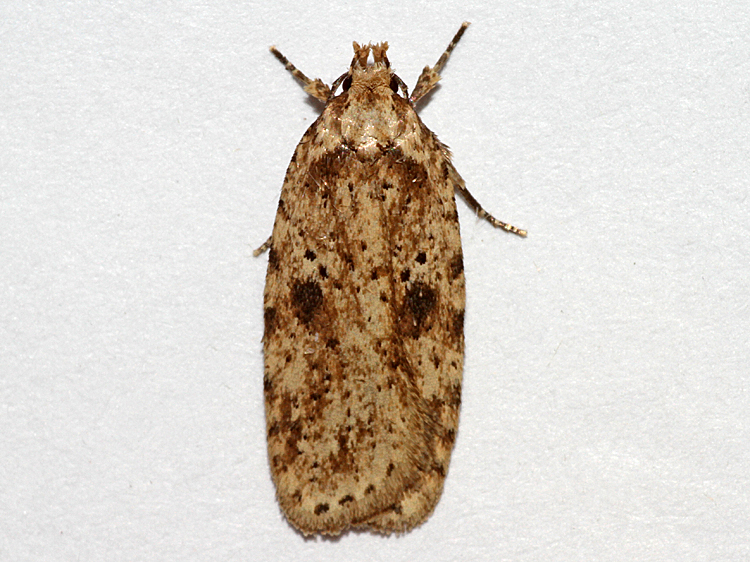
Barred Smudge Ypsolopha alpella, North Elmham, 6th September


Common Alder Midget Phyllonorycter rajella was new for the year and a species I don't see all that often.

Common Alder Midget Phyllonrycter rajella, North Elmham, 6th September


Other micros were New Oak Slender Caloptilia robustella, Garden Midget Phyllonorycter messaniella, Horse Chestnut Leaf-miner Cameraria ohridella, Orchard/Apple/Spindle Ermine Yponomeuta sp., 4 Diamond-back Moths Plutella xylostella, Brindled Flat-body Agonopterix arenella, House Groundling Bryotropha domestica, 10 Light Brown Apple Moths Epiphyas postvittana, 6 Garden Rose Tortrixes Acleris variegana, 5 Common Marbles Celypha lacunana, Elbow-stripe Grass-veneer Agriphila geniculea, Water Veneer Acentria ephemerella, 2 Marsh Greys Eudonia pallida, 9 Narrow-winged Greys Eudonia angustea, Rusty-dot Pearl Udea ferrugalis, Mother of Pearl Pleuroptya ruralis and Common Plume Emmelina monodactyla.

Brindled Flat-body Agonopterix arenella, North Elmham, 6th September


The macros included 2 Pinion-streaked Snouts, bringing my total for the year to 7 (5 at home) - suggesting they've had a good year given that I'd only seen 2 in Norfolk previously.

Other macros were Chinese Character, Small Blood-vein, Single-dotted Wave, 2 Garden Carpets, Common Marbled Carpet, 2 Grey Pine Carpets, 22 Green Carpets, Double-striped Pug, 23 Brimstone Moths, 7 Dusky Thorns, 14 Light Emeralds, Ruby Tiger, 3 Flame Shoulders, 14 Large Yellow Underwings, 6 Lesser Yellow Underwings, 6 Setaceous Hebrew Characters, 9 Square-spot Rustics, Cabbage Moth, 7 Common Wainscots, Centre-barred Sallow, Copper Underwing agg., Mouse Moth, Flounced Rustic, 3 Frosted Oranges, 2 Burnished Brasses, 7 Straw Dots and 16 Snouts.

Common Marbled Carpet, North Elmham, 6th September


There were 4 species of Lacewing again - 4 Chrysoperla carnea (1 male and 3 presumed females), Cunctochrysa albolineata, 2 Dichochrysa flavifrons and Hemerobius lutescens.  Interestingly one of the Chrysoperla had atypical wing venation.  The genus is normally identified by the position of vein RMCV in relation to cell IMC, but this individual didn't have a cell IMC!  It was the same on both wings.

Chrysoperla carnea agg. (female), North Elmham, 6th September


Bugs consisted of 7 Birch Shieldbugs and 4 Forest Bugs.

Next day the highlight was another Butterbur, amazingly my third this autumn.

Butterbur, North Elmham, 7th September


Otherwise it was quieter than the previous two nights: New Oak Slender Caloptilia robustella, 2 Diamond-back Moths Plutella xylostella, Brown House Moth Hofmannophila pseudospretella, 9 Light Brown Apple Moths Epiphyas postvittana, 3 Garden Rose Tortrixes Acleris variegana, 2 Elbow-stripe Grass-veneers Agriphila geniculea, Marsh Grey Eudonia pallida, 8 Narrow-winged Greys Eudonia angustea, Rusty-dot Pearl Udea ferrugalis, Gold Triangle Hypsopygia costalis, Common Plume Emmelina monodactyla, Chinese Character, Common Marbled Carpet, 13 Green Carpets, Double-striped Pug, 8 Brimstone Moths, 7 Dusky Thorns, 4 Light Emeralds, Ruby Tiger, 2 Flame Shoulders, 9 Large Yellow Underwings, 5 Lesser Yellow Underwings, Small Square-spot, 5 Setaceous Hebrew Characters, 5 Square-spot Rustics, 2 Common Wainscots, 2 Mouse Moths, 2 Flounced Rustics, Frosted Orange, 2 Vine's Rustics, 6 Straw Dots and 17 Snouts.

Found this hoverfly in the garden on 8th, Helophilus hybridus.

Helophilus hybridus, North Elmham, 8th September


The best moth that night was inside the house, not in the moth trap: a Common Clothes Moths Tineola bisselliella.  In the days before central heating and when we wore mainly natural-fibre clothes this species was considered a pest.  Now it has declined to such an extent that there was only one record in the Norfolk Moths database prior to 2014.  A mini-spate of recent records is surprising but this still appears to be only the 5th record for the county.

 Common Clothes Moth Tineola bisselliella (male, gen det), North Elmham, 8th September


Nothing so exciting in the trap... Large Fruit-tree Tortrix Archips podana, 3 Light Brown Apple Moths Epiphyas postvittana, 3 Garden Rose Tortrixes Acleris variegana, 2 Common Marbles Celypha lacunana, Elbow-stripe Grass-veneer Agriphila geniculea, 8 Narrow-winged Greys Eudonia angustea, 3 Rusty-dot Pearls Udea ferrugalis, White Plume Pterophorus pentadactyla, Common Plume Emmelina monodactyla, Blood-vein, Garden Carpet, Common Carpet, 2 Common Marbled Carpets, Grey Pine Carpet, 5 Green Carpets, Double-striped Pug, 14 Brimstone Moths, 5 Dusky Thorns, 7 Light Emeralds, Ruby Tiger, 5 Flame Shoulders, 6 Large Yellow Underwings, 2 Lesser Yellow Underwings, Small Square-spot, 4 Setaceous Hebrew Characters, Square-spotted Clay, 8 Square-spot Rustics, Cabbage Moth, 4 Common Wainscots, Centre-barred Sallow, 6 Flounced Rustics, Rosy Rustic, Frosted Orange, 2 Vine's Rustics, 3 Straw Dots and 28 Snouts.

Square-spotted Clay, North Elmham, 8th September


Rosy Rustic, North Elmham, 8th September


There were 2 Common Frogs on the sheet by the moth trap when I inspected it on the evening of 9th September.  I didn't see them eating any moths but got the distinct impression they were there to catch moths and not just passing.  Hope they didn't eat anything rare.


Common Frogs, North Elmham, 9th September


The best moth in the trap was this new-for-the-garden Red Birch Midget Phyllonorycter ulmifoliella.

Red Birch Midget Phyllonorycter ulmifoliella (male, gen det), North Elmham, 9th September


 Yet another Marsh Dwarf Elachista alpinella was notable too.

Marsh Dwarf Elachista alpinella (male, gen det), North Elmham, 9th September


Other moths were Common Nettle-tap Anthophila fabriciana, 4 Diamond-back Moths Plutella xylostella, Dingy Dowd Blastobasis adustella, 5 Light Brown Apple Moths Epiphyas postvittana, 3 Garden Rose Tortrixes Acleris variegana, 3 Common Marbles Celypha lacunana, 2 Elbow-stripe Grass-veneers Agriphila geniculea, 7 Narrow-winged Greys Eudonia angustea, 3 Rusty-dot Pearls Udea ferrugalis, Mother of Pearl Pleuroptya ruralis, Orange Swift, 2 Blood-veins, Dark-barred Twin-spot Carpet, 2 Garden Carpets, Common Carpet, 5 Common Marbled Carpets, Grey Pine Carpet, Green Carpet, 10 Brimstone Moths, Canary-shouldered Thorn, 2 Dusky Thorns, 5 Light Emeralds, Ruby Tiger, 2 Flame Shoulders, 16 Large Yellow Underwings, 7 Lesser Yellow Underwings, 2 Small Square-spots, 11 Setaceous Hebrew Characters, 6 Square-spot Rustics, 5 Common Wainscots, 4 Flounced Rustics, 2 Rosy Rustics, 2 Burnished Brasses, Straw Dot and 37 Snouts.

Here are the Rosy Rustics alongside the Butterbur from a couple of nights previous.

 Butterbur from 7th September flanked by 2 Rosy Rustics, North Elmham, 9th September


Bugs consisted of 2 Birch Shieldbugs, 2 Forest Bugs and a new one for me: Pantilius tunicatus.

Pantilius tunicatus, North Elmham, 9th September