A good night on 19th October with 51 moths of 22 species. I didn't immediately recognise the best one but when Dave suggested the ID it was obvious (well, fairly). Indeed I'd been keeping an eye out for one as I'd never seen one before
but they're usually a bit more strongly marked and I'd not appreciated
how plain they could be. It was a
Flounced Chestnut, a very welcome macro lifer for so late in the season. They're a little on the scarce side so it's not entirely surprising that I'd not seen one before but there are a few records in Norfolk every year.
Flounced Chestnut, North Elmham, 19th October
The other moths were Long-horned Flat-body
Carcina quercana, 6 Light Brown Apple Moths
Epiphyas postvittana, 2 Ashy Buttons
Acleris sparsana, 2 Narrow-winged Greys
Eudonia angustea,
Pale November Moth, Feathered Thorn, 2 Shuttle-shaped Darts, Large Yellow Underwing,
Broad-bordered Yellow Underwing, 2 Setaceous Hebrew Characters,
7 Black Rustics,
4 Green-brindled Crescents,
Merveille du Jour,
Brick,
Red-line Quaker,
10 Yellow-line Quakers, 2 Beaded Chestnuts,
Angle Shades,
Large Wainscot,
Burnished Brass and 2 Straw Dots.
Other insects included 5
Chrysoperla carnea (green lacewing),
Limnephilus auricula,
Limnephilus flavicornis, 15
Limnephilus lunatus,
Limnephilus marmoratus,
Halesus radiatus (caddisflies),
Pinalitus cervinus (bug) and a leafhopper that was probably
Empoasca decipiens (would be new for the house but I wasn't entirely convinced by the externals and couldn't make the genitalia quite fit either, though I couldn't find anything else that fitted better).
I think this ugly little beast in my study the next day was
Amaurobius similis. I still dislike spiders but I'll try to identify them so long as I don't have to touch them or get too close. Maybe one day I'll grow to like them, but for now, ugh.
Amaurobius similis, North Elmham, 20th October
Slightly fewer moths that night: 2 Garden Midgets
Phyllonorycter messaniella, 2 Light Brown Apple Moths
Epiphyas postvittana, Ashy Button
Acleris sparsana, Narrow-winged Grey
Eudonia angustea, Double-striped Tabby
Hypsopygia glaucinalis, 2 Common Marbled Carpets, 2 November Moths,
Pale November Moth, 2 Feathered Thorns, 3 Shuttle-shaped Darts, 2 Black Rustics,
3 Green-brindled Crescents,
2 Merveille du Jours,
2 Bricks, 5 Yellow-line Quakers, Beaded Chestnut, Straw Dot and Snout.
Ashy Button Acleris sparsana, North Elmham, 20th October
The only lacewings and caddisflies were
Chrysoperla carnea,
Limnephilus affinis and 7
Limnephilus lunatus but hot on the heals of my first identified ones a few days earlier there were
5 Fagocyba cruenta (yellow leafhoppers).
There was a big drop in moth numbers the following night: Light Brown Apple Moth
Epiphyas postvittana, November Moth,
Pale November Moth, Black Rustic, Yellow-line Quaker and Beaded Chestnut. But it was worth putting the trap on for the leafhoppers - two more yellow leafhoppers, one another
Fagocyba cruenta but the other a new one for me,
Alnetoidea alneti. The joy of being fairly new to identifyting a group like this is that you can still pick up new species from among the common ones - and this one is supposed to be "extremely common".
Alnetoidea aneti, North Elmham, 21st October
Fagocyba cruenta, North Elmham, 21st October
A Froghopper hopped away before I could ID it and the only other insects I noted were caddisflies: 3
Limnephilus lunatus and
Halesus radiatus.
Things quietened down the following night with just
Pale November Moth, Feathered Thorn, Green-brindled Crescent,
Merveille du Jour, 5 Yellow-line Quakers and 2 Beaded Chestnuts making up the moths and
Chrysoperla carnea agg.,
Limnephilus flavicornis and
Limnephilus lunatus the lacewings and caddisflies.
If 22nd was quiet 23rd made up for it. The highlights among 58 moths of 28 species were my first
Sprawler of the year and my first
Mottled Umber of the autumn but a much bigger surprise was an Orange Pine Tortrix
Lozotaeniodes formosana. Not because it's rare (though it is unusual here - I've only seen one here before, this July) or because it's stunning (though it certainly is) but because of the late date. They normally finish flying in August and I think this might be the latest ever in Norfolk.
Orange Pine Tortrix Lozotaeniodes formosana, North Elmham, 23rd October
Blair's Shoulder-knot (left) and Sprawler (right), North Elmham, 23rd October
Mottled Umber, North Elmham, 23rd October
Other moths were 2 Garden Midgets
Phyllonorycter messaniella, Long-horned Flat-body
Carcina quercana, 4 Light Brown Apple Moths
Epiphyas postvittana, Ashy Button
Acleris sparsana,
Red-green Carpet,
2 Pine Carpets, 9 November Moths, Feathered Thorn, 2 Large Yellow Underwings, 4 Setaceous Hebrew Characters,
White-point, 2 Common Wainscots, 2 Black Rustics,
Blair's Shoulder-knot,
2 Green-brindled Crescents,
Merveille du Jour,
Satellite, Red-line Quaker, 2 Yellow-line Quakers, 5 Beaded Chestnuts,
Rosy Rustic,
2 Large Wainscots,
2 Burnished Brasses, 3 Straw Dots and Snout.
November Moth (male), North Elmham, 23rd October - not every pale November Moth is a Pale November Moth...
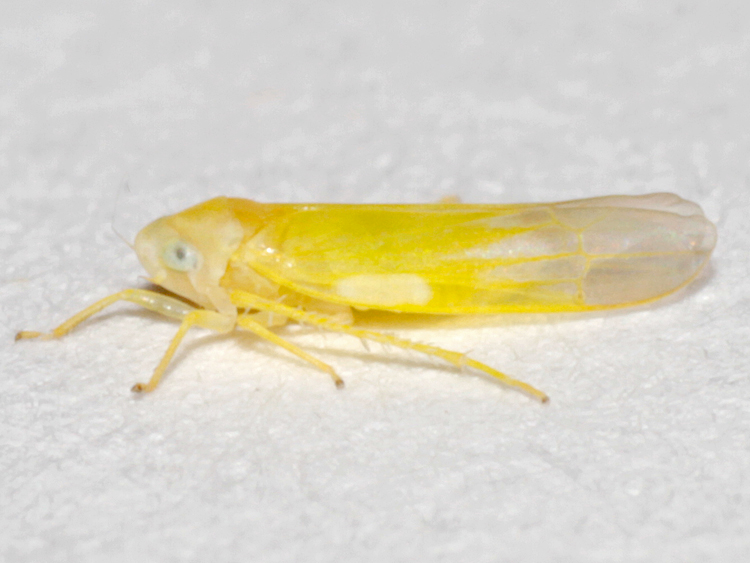
It wasn't just moths in the trap - there were lots of leafhoppers. Having had several in recent days I imagined all the bright yellow leafhoppers would be
Fagocyba cruenta so didn't retain them all for checking. Of those I did keep 2 were indeed
cruenta but one turned out to be
Edwardsiana flavescens, a new one for here. Other leafhoppers included
Alebra albostriella, 5
Empoasca vitis and probably 2
Kybos betulicola (the male confirmed, the female either this or
smaragdula).
Edwardsiana flavescens, North Elmham, 23rd October
Alebra albostriella, North Elmham, 23rd October
There were also 2 mirid bugs (Birch Catkin Bug
Kleidocerys resedae and
Pinalitus cervinus), 2 barkflies
Valenzuela flavidus, the green lacewing
Chrysoperla carnea and the caddisflies
Limnephilus affinis,
Limnephilus auricula,
Limnephilus flavicornis and 9
Limnephilus lunatus.
Someone once pointed out a spider to me which they identified as
Nuctenea umbratica on the basis of two white marks on the underside of its abdomen. This spider in my shed had similar markings, but whether that's diagnostic or not I'm not sure. I didn't get a good look at the top side of it.
Spider (possibly Nuctenea umbratica?), North Elmham, 24th October