Description


A diary of my mothing activity covering highlights and photos from my moth trapping activities. Mainly Norfolk (UK), occasionally beyond. I may mention other wildlife sightings here, especially insects, but for birds see my birding diary.
Showing posts with label Epagoge grotiana. Show all posts

Thursday, 4 March 2021

Review of 2019 and 2020 - Moths: Tortrix Moths (Tortricidae) (Part 1: Fruit-tree Tortrixes and others (Olinida to Zelotherses))

TORTRIX MOTHS (TORTRICIDAE)


White-barred Tortrix Olindia schumacherana - Singles in the garden trap on 24th June and 28th September 2019 and 17th July 2020.  I have had an average of one per year here.  Elsewhere one at the meadows on 21st June 2019 and one at Whitwell Street on 3rd September 2020.


White-barred Tortrix Olindia schumacherana, North Elmham Cathedral Meadows, 21st June 2019


White-barred Tortrix Olindia schumacherana, North Elmham, 24th June 2019


White-barred Tortrix Olindia schumacherana, North Elmham, 17th July 2020


Hedge Tortrix Isotrias rectifasciana - Singles in the garden trap on 5th and 26th June 2019 and then 5 between 17th May and 22nd June 2020.  I have recorded this species here every year with an average of 3 per year - 5 in a year is the best yet.

Hedge Tortrix Isotrias rectifasciana, North Elmham, 5th June 2019


Hedge Tortrix Isotrias rectifasciana, North Elmham, 17th May 2020


Red-barred Tortrix Ditula angustiorana - 7 at home between 19th June and 22nd July 2019 and 12 between 18th June and 10th August 2020.  In the 5 years I've been here I've had 25-29 in 2 years (2015 and 2018) but only 5-12 in the other 4 years.  Elsewhere 3 at the meadows and 3 at Weybourne.

Red-barred Tortrix Ditula angustiorana, North Elmham, 18th June 2020


Red-barred Tortrix Ditula angustiorana, North Elmham Cathedral Meadows, 18th July 2020


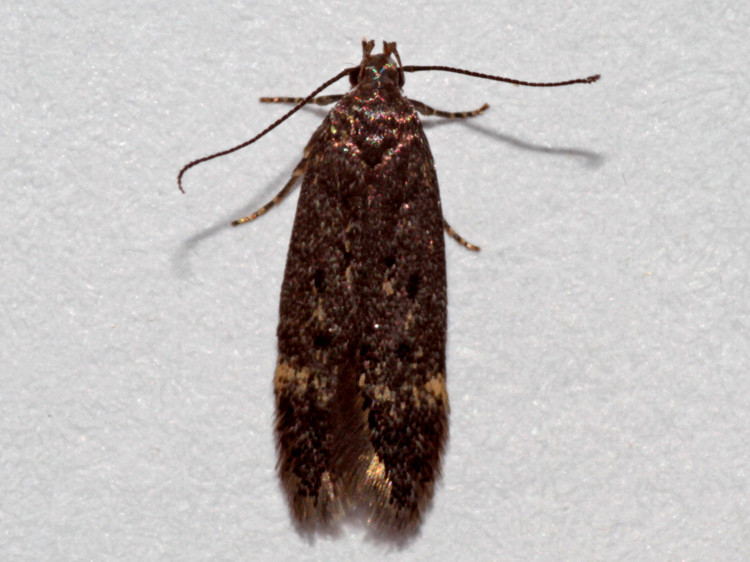
Brown-barred Tortrix Epagoge grotiana - 3 here between 24th and 29th June 2019 and 4 between 24th June and 26th July 2020.  I record this species here most years but have never had more than 3 in a year before.  Elsewhere just one at Weybourne and one at Bintree Wood.

Brown-barred Tortrix Epagoge grotiana, North Elmham, 24th June 2020


Common Tortrix Capua vulgana - None.  Despite its name this species appears to be far from common in Norfolk and I've only recorded it a couple of times, neither of which were near here.


Pine Tortrix Archips oporana - None.  I've only recorded this species once, in the Brecks, but it seems to be locally at one or two other sites as Dave N has had loads of them in his pine-free garden in Toftwood.  Maybe not too big an ask for one to turn up here...?


Large Fruit-tree Tortrix Archips podana - At least 63 here (but not counted on a couple of nights) between 16th June and 31st July 2019 and 60 between 12th June and 5th September 2020 (including 12 on 24th June).  That's a fairly average year, perhaps a little below average.  Elsewhere recorded at the meadows on 4 dates and at Bintree Wood.  Roughly 95% of those caught here are males.

Large Fruit-tree Tortrix Archips podana, North Elmham, 14th June 2020


Large Fruit-tree Tortrix Archips podana, North Elmham Cathedral Meadows, 23rd June 2020


Large Fruit-tree Tortrix Archips podana, North Elmham, 24th June 2020


Brown Oak Tortrix Archips crataegana - None.  I've only recorded this species at home once (2018).


Variegated Golden Tortrix Archips xylosteana - 4 here between 24th June and 4th July 2019 and 4 between 16th June and 18th July, slightly above average.  Also 3 at the meadows.

Variegated Golden Tortrix Archips xylosteana, North Elmham Cathedral Meadows, 30th June 2019


Variegated Golden Tortrix Archips xylosteana, North Elmham, 30th June 2020


Rose Tortrix Archips rosana - None.  I've caught 5 here in 6 years but all of them in just 2 years (2016 and 2018).  I recorded a dozen at Bawdeswell in my last 3 years there but it's only very recently that they've started being recorded from lots of different sites in Norfolk.


Heather Tortrix Argyrotaenia ljungiana - Singles here on 26th July 2019 and 10th August 2020, and one next door on 8th August 2019.  Although I had 7 here in 2016, 1-2 a year is normal.  It is one of a handful of species that I used to see more often at my old house in Bawdeswell.


Yellow Larch Tortrix Ptycholomoides aeriferana - None.  I've only recorded this species at home on one occasion (2016).


Brindled Tortrix Ptycholomoides lecheana - None.  I've had these here 3 times (2017 and 2018).


White-faced Tortrix Pandemis cinnamomeana - One at Swanton Great Wood on 27th August 2019 and 2 at Row Heath (West Runton) on 31st August.  None in 2020.  This species is conspicuously absent from my current garden list.


Chequered Fruit-tree Tortrix Pandemis corlyana - An average year here in 2019 with 4 between 30th July and 30th August and a good year here in 2020 with 8 between 5th and 16th August.  Also one next door and 2 at Swanton Great Wood in 2019 and one at Whitwell Street on 3rd September 2020.  A caterpillar at Foxley Wood was possibly this species but I'm not sure enough to record it as such.  Although photographed on a Hazel leaf it was hanging from a different tree (probably Oak) when found.

possible Chequerered Fruit-tree Tortrix caterpillar Pandemis corylana, Foxley Wood, 17th August 2019


Barred Fruit-tree Tortrix Pandemis cerasana - A total of 20 here between 15th June and 7th July 2019, above average.  6 on 24th June was my equal-highest count here and was more than the total number I saw in 2020, 5 between 20th June and 24th July (my worst year here).  Just one elsewhere, at Weybourne.

Barred Fruit-tree Tortrix Pandemis cerasana, North Elmham, 15th June 2019


Dark Fruit-tree Tortrix Pandemis heparana - Recorded on 9 nights here between 5th July and 8th August 2019 (not counted every night but involving at least 15 individuals).  My worst year here so far.  20 between 24th June and 19th August 2020.  Elsewhere 5 caught at the meadows.


Dark-barred Tortrix Syndemis musculana - 4 recorded here between 25th May and 5th July 2019 which is my equal-best year (I had none here in 2018) and one on 23rd May 2020.  Also one at the meadows.

Dark-barred Tortrix Syndemis musculana, North Elmham, 25th May 2019


Large Ivy Tortrix Lozotaenia forsterana - Totals of 22 between 14th June and 12th July 2019 and 26 between 14th June and 16th July 2020.  These were my worst showings in the 6 years I've lived here.  Apart from one in next door's garden and a small number at my previous house in Bawdeswell I've never recorded this species anywhere else.


Carnation Tortrix Cacoecimorpha pronubana - Recorded at home on 20th and 23rd June 2019 and 3 between 20th August and 22nd September 2020.  Neither of the 2019 records were in my trap - the first was found indoors and the second netted during the morning.  The latter is not surprising given how many I've seen flying in day-time at Burnham Overy over the years, but I think all my previous records here (and those in 2020) have been in the moth trap (not quite annual but 1-3 most years).


Carnation Tortrix Cacoecimorpha pronubana, North Elmham, 20th June 2019


Timothy Tortrix Zelotherses paleana - One at Weybourne on 5th July 2019 was my only record that year.  I average 3 a year at home and this was my first blank year here.  I didn't have any at home again in 2020 but did find singles at the meadows on 3 dates between 9th June and 13th July and one at Foxley Wood.

Timothy Tortrix Zelotherses paleana, North Elmham Cathedral Meadows, 13th July 2020


Next page: more Tortricidae

Saturday, 8 December 2018

47 species of Coleophora and 638 individuals before I find the commonest of them all

Among 59 species of moth on 28th June were 3 new for the year: Dark Neb Bryotropha affinis, Brown-barred Tortrix Epagoge grotiana and Small Emerald.

Dark Neb Bryotropha affinis, North Elmham, 28th June


Brown-barred Tortrix Epagoge grotiana, North Elmham, 28th June


Small Emerald, North Elmham, 28th June


The other 56 were Little Dwarf Elachista canapennella, 4 Brown House Moths Hofmannophila pseudospretella, 3 Common Yellow Conches Agapeta hamana, Large Fruit-tree Tortrix Archips podana, 3 Large Ivy Tortrixes Lozotaenia forsterana, Grey Tortrix Cnephasia stephensiana, Flax Tortrix Cnephasia asseclana, Yellow Oak Button Aleimma loeflingiana, 6 Barred Marbles Celypha striana, 10 Common Marbles Celypha lacunana, Marbled Orchard Tortrix Hedya nubiferana, Red Piercer Lathronympha strigana, 12 Garden Grass-veneers Chrysoteuchia culmella, Inlaid Grass-veneer Crambus pascuella, Satin Grass-veneer Crambus perlella, Common Grey Scoparia ambigualis, Little Grey Eudonia lacustrata, Small Grey Eudonia mercurella, Rosy Tabby Endotricha flammealis, Bee Moth Aphomia sociella, White Plume Pterophorus pentadactyla, Ghost Moth, Buff Arches, 2 Small Fan-footed Waves, 4 Dwarf Cream Waves, 9 Single-dotted Waves, Treble Brown Spot, 7 Riband Waves, Large Twin-spot Carpet, Garden Carpet, Shaded Broad-bar, 2 Barred Straws, Foxglove Pug, Clouded Border, Brimstone Moth, 2 Willow Beauties, 3 Engraileds, Common White Wave, 4 Common Footmen, 11 Buff Ermines, 3 Ingrailed Clays, 4 Double Square-spots, Bright-line Brown-eye, Clay, Smoky Wainscot, 2 Common Wainscots, Brown Rustic, Dark Arches, 11 Uncertains, Rustic, Burnished Brass, Spectacle, 2 Beautiful Hook-tips, 2 Straw Dots, 2 Snouts and Fan-foot.

Next day I had two clearwing pheremone lures out - both attracted things that were new for the garden year list but neither were clearwings, or indeed moths.  The Yellow-legged Clearwing lure attracted the mirid bug Phylus coryli and the Currant Clearwing lure attracted the hoverfly Eupeodes corollae.

Phylus coryli, North Elmham, 29th June


Eupeodes corollae, North Elmham, 29th June


That night brought nearly 250 moths of 85 species including several new for the year.  One of these was completely new for me, but very much overdue.  For the last few years I have attempted to identify nearly every Coleophora I've caught, which for the majority of species requires microscopic examination (a few species are distinctive enough to identify in the field, but not many).  I had already identified 638 individual Coleophora and these have covered 47 different species, but there was one big glaring gap in the list - the one species that is said to be the commonest of them all!  How could I get through all those Coleophora of all those species and still not find the one I'm theoretically most likely to find?  Well on 29th June it finally appeared in my trap, the Common Case-bearer Coleophora serratella.  It's describes as the commonest British Coleophora, so how come I hadn't had one before?  Well I don't know the answer to that, but here are some ideas. 
  1. It's a species that doesn't come to light very often compared to many other species - most Coleophora records relate to their larval cases as relatively few moth-recorders both identifying adults, so the species' relative abundance is mainly determined by larval records whereas my personal records are mainly of adults that have come to light;
  2. They just happen to not be common in my immediate vicinity, but are common elsewhere - this may be partly true but unlikely to be the only explanation as I do a fair bit of trapping at a variety of other sites too;
  3. They've had a recent run of poor years so I've missed them in the relatively short time that I've been doing microscopy - some evidence to support the idea that this has been a relatively good year in that I went on to trap two more this summer, one more at home and another in the Waveney Valley;
  4. They were the commonest species when status descriptions were written but have declined (relatively at least) so that they are not any longer the commonest.  
My guess is that the reality is a combination of some or all of these ideas and probably others I haven't thought of, but this is a good example of how delving into the world of microscopy throws up some interesting questions.


Common Case-bearer Coleophora serratella (female, gen det), North Elmham, 29th June


Other new moths for the year were White-legged Case-bearer Coleophora albitarsella (only my second here and third anywhere), Red-barred Tortrix Ditula angustiorana, Mother of Pearl Pleuroptya ruralis, Gold Triangle Hypsopygia costalis, Peach Blossom, Blue-bordered Carpet, Cloaked Minor and Common Rustic.

White-legged Case-bearer Coleophora albitarsella (male, gen det), North Elmham, 29th June


Gold Triangle Hypsopygia costalis, North Elmham, 29th June


Peach Blossom, North Elmham, 29th June


Blue-bordered Carpet, North Elmham, 29th June


Cloaked Minor, North Elmham, 29th June


Common Rustic (male, gen det), North Elmham, 29th June


The rest of the moths were Diamond-back Plutella xylostella, Brown House Moth Hofmannophila pseudospretella, Burdock Neb Metzneria lappella, 2 London Dowds Blastobasis lacticolella, 3 Common Yellow Conches Agapeta hamana, 3 Large Ivy Tortrixes Lozotaenia forsterana, Flax Tortrix Cnephasia asseclana, Light Grey Tortrix Cnephasia incertana, 2 Green Oak Tortrixes Tortrix viridana, 2 Barred Marbles Celypha striana, 5 Common Marbles Celypha lacunana, 2 Plum Tortrixes Hedya pruniana, 6 Marbled Orchard Tortrixes Hedya nubiferana, 2 Triangle-marked Rollers Ancylis achatana, Crescent Bell Epinotia bilunana, Bramble Shoot Notocelia uddmanniana, Hoary Bell Eucosma cana, Many-plume Moth Alucit hexadactyla, 32 Garden Grass-veneers Chrysoteuchia culmella, Inlaid Grass-veneer Crambus pascuella, 2 Satin Grass-veneers Crambus perlella, Meadow Grey Scoparia pyralella, 6 Common Greys Scoparia ambigualis, 5 Little Greys Eudonia lacustrata, Small Grey Eudonia mercurella, 7 Small Magpies Anania hortulata, Elder Pearl Anania coronata, Rosy Tabby Endotricha flammealis, Bee Moth Aphomia sociella, 2 White Plumes Pterophorus pentadactyla, 2 Common Plumes Emmelina monodactyla, Ghost Moth, 2 Common Emeralds, 8 Small Fan-footed Waves, 3 Dwarf Cream Waves, Small Dusty Wave, 8 Single-dotted Waves, 2 Treble Brown Spots, 9 Riband Waves, Large Twin-spot Carpet, 3 Barred Straws, Barred Yellow, Sandy Carpet, 2 V-Pugs, 2 Green Pugs, Double-striped Pug, 3 Brimstone Moths, Early Thorn, Swallow-tailed Moth, 2 Mottled Beauties, 2 Engraileds, Common White Wave, 2 Clouded Silvers, Elephant Hawk-moth, 4 Rosy Footmen, Dingy Footman, 7 Common Footmen, 2 Buff Ermines, Short-cloaked Moth, Heart and Club, 3 Flames, Flame Shoulder, 2 Double Square-spots, 2 Bright-line Brown-eyes, 4 Smoky Wainscots, 3 Brown Rustics, 4 Dark Arches, Middle-barred Minor, 17 Uncertains, Rustic, Mottled Rustic, 6 Burnished Brasses, 4 Beautiful Hook-tips, 2 Straw Dots, 15 Snouts and 2 Fan-foots.

Other insects included two new species for me, the mirid bug Phoenicocoris obscurellus and the barkfly Mesopsocus immunis.  There was also a Common Earwig, the caddisflies Limnephilus auricula and Limnephilus lunatus and a Common Frog.

Phoenicocoris obscurellus, North Elmham, 29th June


Mesopsocus immunis (male, gen det), North Elmham, 29th June


Sunday, 30 July 2017

Orange-tailed Clearwing and Hornet Moth in the garden

On the morning of Sunday 18th June I put the Hornet Moth lure out in the garden.  I think Hornet Moth is the only Clearwing species that has been recorded in my 10k square prior to this year and it's also the only Clearwing I'd seen before this year, but the nearest poplars are a fair way off so I was by no means expectant that the lure would be productive in my garden.  I checked the trap before going out at around 10ish more in hope than expectation but was pleased to find it already contained a Hornet Moth!

Hornet Moth, North Elmham, 18th June


With that success I switched the lure over to the Yellow-legged Clearwing lure - one of the commonest species I'd not yet encountered - and went out.

In the afternoon I was in Norwich and had a look round Thorpe Marshes - my first visit to this excellent newish reserve.  I only gave it a quick circuit as my wife was waiting for me in a hot car and I realised before I started that my real target (the Mallard x Pintail hybrid) wasn't actually at this site but down the road a little.  I will return here - the site looked great - but in my brief visit the highlight was seeing at least 10 Norfolk Hawkers.

Norfolk Hawker, Thorpe Marshes, 18th June


I returned home and made the mistake of not checking the pheromone lure trap straight away.  The first time I used the Yellow-legged Clearwing lure I'd opened the canister which you're not supposed to do and since then I'd had absolutely no success with it despite trying it in some really good habitat.  I thought I'd probably spoilt it and it wouldn't work, so I wasn't really expecting anything in the trap.  But I was wrong - I hadn't spoilt it - it works perfectly fine, I now know.

I learnt an unfortunate lesson today, which is not to leave the trap in direct sunlight on a hot day without checking it regularly.  When I did eventually check it, the clearwing in the trap was deceased.  This was especially sad because it wasn't the Yellow-legged Clearwing I was expecting but the other much rarer species that also comes to the same lure... Orange-tailed Clearwing!  Prior to this year there had been just two records of Orange-tailed Clearwing in Norfolk, both from the Brecks.  Mick Kerr had had one a few days earlier at Sporle near Swaffham, so a bit closer but still pretty much the Brecks.  Getting one here in North Elmham was a real surprise.

dead Orange-tailed Clearwing, North Elmham, 18th June


It's turned out to be a good year for the species (or maybe it's just that lots of people are trying the lures now?) - there have been another two records in the Brecks and one in the Fens.  I wonder how widespread they really are?  I'm not far from the VC27 border - the first for VC27 must be on the cards.

That night there were quite a few moths new for the year here: Eastern Case-bearer Coleophora vestianella, Brown-barred Tortrix Epagoge grotiana, Mottled Marble Bactra furfurana, 3 Common Cloaked Shoots Gypsonoma dealbana, White-foot Bell Epiblema foenella, Marbled Bell Eucosma campoliliana (only my second ever following one here around this time last year), Two-coloured Bell Eucosma obumbratana, Grass-veneer Crambus pascuella, Mother of Pearl Pleuroptya ruralis, 2 Brown Powdered Knot-horns Delplanqueia inscriptella, Ermine Knot-horn Phycitodes binaevella, 2 Foxglove Pugs, 2 V-Pugs, Scorched Carpet, 2 Engraileds and Privet Hawk-moth.

Eastern Case-bearer Coleophora vestianella (male, gen det), North Elmham, 18th June


Brown-barred Tortrix Epagoge grotiana, North Elmham, 18th June


Mottled Marble Bactra furfurana (male, gen det), North Elmham, 18th June


Common Cloaked Shoot Gypsonoma dealbana, North Elmham, 18th June


White-foot Bell Epiblema foenella, North Elmham, 18th June


Marbled Bell Eucosma campoliliana, North Elmham, 18th June


Two-coloured Bell Eucosma obumbratana, North Elmham, 18th June


Grass-veneer Crambus pascuella, North Elmham, 18th June


Brown Powdered Knot-horns Delplanqueia inscriptella (males, gen det), North Elmham, 18th June


Ermine Knot-horn Phycitodes binaevella, North Elmham, 18th June


Foxglove Pug, North Elmham, 18th June


Other moths were Cork Moth Nemapogon cloacella, 2 Bird-cherry Ermines Yponomeuta evonymella, Tipped Oak Case-bearer Coleophora flavipennella, Clover Case-bearer Coleophora alcyonipennella, 2 Meadow Case-bearers Coleophora mayrella, 3 Brown House Moths Hofmannophila pseudospretella, 14 Hook-marked Straw Moths Agapeta hamana, 14 Large Fruit-tree Tortrixes Archips podana, 7 Privet Tortrixes Clepsis consimilana, 2 Large Ivy Tortrixes Lozotaenia forsterana, Yellow-spot Tortrix Pseudargyrotoza conwagana, Hedge Shade Isotrias rectifasciana, 2 Light Grey Tortrixes Cnephasia incertana, 2 Barred Marbles Celypha striana, 12 Common Marbles Celypha lacunana, Plum Tortrix Hedya pruniana, Marbled Orchard Tortrix Hedya nubiferana, 2 Rush Marbles Bactra lancealana, Bramble Shoot Moth Notocelia uddmanniana, 4 Triple-blotched Bells Notocelia trimaculana, 2 Hoary Bells Eucosma cana, Codling Moth Cydia pomonella, 18 Garden Grass-veneers Chrysoteuchia culmella, 7 Hook-streaked Grass-Veneers Crambus lathoniellus, Yellow Satin Veneer Crambus perlella, 4 Common Greys Scoparia ambigualis, 3 Marsh Greys Eudonia pallida, 5 Little Greys Eudonia lacustrata, 5 Small Magpies Anania hortulata, Elder Pearl Anania coronata, Fenland Pearl Anania perlucidalis, 2 Bee Moths Aphomia sociella, Twin-barred Knot-horn Homoeosoma sinuella, Common Plume Emmelina monodactyla, Ghost Moth, Small Fan-footed Wave, Small Dusty Wave, 4 Single-dotted Waves, 2 Treble Brown Spots, 8 Riband Waves, Large Twin-spot Carpet, Silver-ground Carpet, Common Carpet, 5 Barred Straws, Sharp-angled Carpet, Sandy Carpet, Currant Pug, Green Pug, Small Yellow Wave, Clouded Border, Brimstone Moth, 2 Lilac Beauties, 2 Swallow-tailed Moths, 3 Willow Beauties, Common Wave, 3 Clouded Silvers, 5 Rosy Footmen, 4 Common Footmen, White Ermine, 6 Buff Ermines, 2 Cinnabars, Short-cloaked Moth, Heart and Dart, Ingrailed Clay, 3 Double Square-spots, Bright-line Brown-eye, 2 Smoky Wainscots, 2 Common Wainscots, 3 Brown Rustics, Dark Arches, Small Clouded Brindle, Marbled Minor, 6 Middle-barred Minors, 5 Uncertains, 5 Mottled Rustics, 2 Marbled White Spots, 2 Burnished Brasses, 4 Beautiful Hook-tips, 23 Straw Dots, 3 Fan-foots and 2 Small Fan-foots.

Ghost Moth, North Elmham, 18th June


I often see frogs around the moth trap at this time of year - there were 3 Common Frogs on this occasion.  I've never seen one eat a moth but I suspect that's why they're there.  One thing I did see eating a moth, a Common Marble Celypha lacunana, was one of 2 Fly Bugs Reduvius personatus.

Fly Bug Reduvius personatus eating Common Marble Celypha lacunana, North Elmham, 18th June


Other bugs consisted of a mating pair of Birch Shieldbugs.  Other insects in the trap included 2 Green Drakes Ephemera danica (mayflies) and a new beetle for me, Strawberry Seed Beetle Harpalus rufipes - at least I'm pretty sure that's what it was: it was a bit on the small side and there were slightly more setae on the head than the key implies there should be for this genus, but everything else checked out perfectly and it's supposed to be relatively distinctive with its golden-haired elytra.  Hopefully I'll manage a better photo when I see another one...

Strawberry Seed Beetle

Among the caddisflies 2 Polycentropus flavomaculatus and Oecetis lacustris were new for the year. There were also 2 Hydropsyche siltalai, 3 Hydropsyche pellucidula and Limnephilus lunatus.

Polycentropus flavomaculatus, North Elmham, 18th June