Description


A diary of my mothing activity covering highlights and photos from my moth trapping activities. Mainly Norfolk (UK), occasionally beyond. I may mention other wildlife sightings here, especially insects, but for birds see my birding diary.
Showing posts with label Coleophora albitarsella. Show all posts

Monday, 1 March 2021

Review of 2019 and 2020 - Moths: Case-bearers (Coleophoridae) (Part 2)

 CASE-BEARERS (COLEOPHORIDAE)


Grey Alder Case-bearer Coleophora binderella - One in the garden moth trap on 16th July 2020.  I've recorded this species here twice before, in 2016 and 2018.

female Grey Alder Case-bearer Coleophora binderella, North Elmham, 16th July 2020


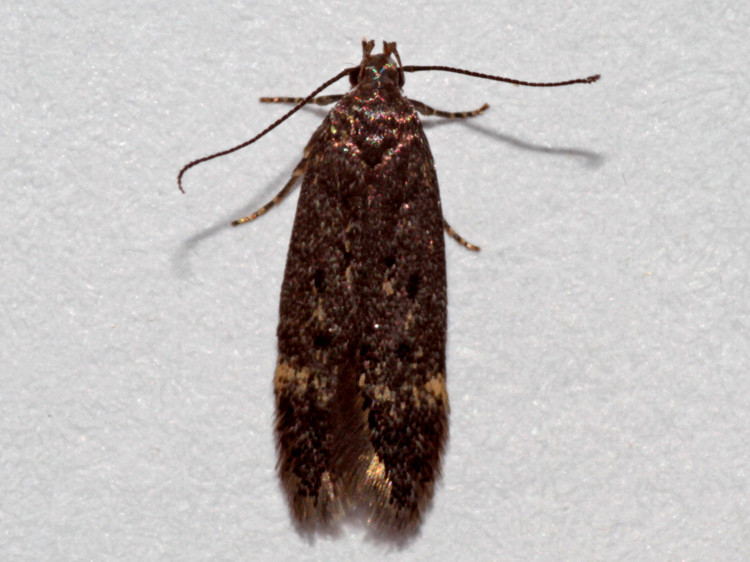
White-legged Case-bearer Coleophora albitarsella - One in the garden trap on 8th August 2019.  This was my fourth, all since 2016.  Although the tarsi have sometimes been detectably paler than the rest of the legs I don't think I've caught one that has really obvious white tarsi yet.  They're quite overlookable when a bit worn and I resort to gen detting in the absence of clear white scales on the tarsi.  Also an occupied larval case on Ground Ivy at the meadows on 25th October 2020 and feeding signs where one had been on another date.

female White-legged Case-bearer Coleophora albitarsella, North Elmham, 8th August 2019


feeding signs and larval case of White-legged Case-bearer Coleophora albitarsella, North Elmham Cathedral Meadows, 25th October 2020


Large Clover Case-bearer Coleophora trifolii - None.  I've only ever found one of these, which I caught in my next-door neighbour's garden in 2016.  At least I know they're nearby - surely one will turn up in my own garden before too long?


Clover Case-bearer Coleophora alcyonipennella - One trapped here on 25th May 2019 followed by another 8 between 17th July and 30th August, then in 2020 15 between 31st July and 15th August.  I've had worse years but sometimes this species is sometimes much commoner (e.g. 39 trapped here in 2018).  Also trapped next door, at the meadows and at Whitwell Street (the latter being my latest in these years, 3rd September 2020).  This species is now listed as grade 2, i.e. it can be recorded without gen detting, and in theory antennal structure should give away deauratella, however the deauratella I caught (confirmed by gen det) didn't show this feature very obviously, and if you want to prove the presence of frischella in Norfolk I'm not sure you'll have much chance if you simply record alcyonipennella-like moths as that without dissecting them to check.  I also think it would be quite possible to mix these up with some of the other dark Coleophora that aren't usually listed as confusion species, like Dark Thistle Case-bearer Coleophora paripennella for example.  Nevertheless, when I have a big backlog of moths requiring gen detting it's going to be tempting now to let some go without confirming, and indeed some of the later ones I recorded in 2019 were not checked.

male Clover Case-bearer Coleophora alcyonipennella, North Elmham Cathedral Meadows, 25th May 2019


male Clover Case-bearer Coleophora alcyonipennella, North Elmham, 17th July 2019


male Clover Case-bearer Coleophora alcyonipennella, North Elmham, 6th August 2019


male Clover Case-bearer Coleophora alcyonipennella, North Elmham, 1st August 2020


female Clover Case-bearer Coleophora alcyonipennella, Whitwell Street, 3rd September 2020


Spikenard Case-bearer Coleophora conyzae - One trapped at Weybourne on 5th July 2019.  Although there are only a dozen records of this species in Norfolk I've trapped a couple at Weybourne before (need to look into why those records aren't showing - I thought someone else had submitted them) and also a couple here in North Elmham (2016 and 2018).

female Spikenard Case-bearer Coleophora conyzae, Weybourne, 5th July 2019


Woundwort Case-bearer Coleophora lineolea - A total of 28 trapped here between 16th June and 30th August 2019 and 13 between 12th July and 18th August 2020.  2019 was my best ever year for this species, which was previously averaging at about 15 per year.  Despite being one of my commonest Coleophora here, since moving here in 2014 I've hadn't recorded it anywhere else, even at the meadows where 2 of its foodplants grow, but in 2020 I had one at Bintree Wood too (where I'd also caught it back in 2012).

male Woundwort Case-bearer Coleophora lineolea, North Elmham, 17th June 2019


female Woundwort Case-bearer Coleophora lineolea, Bintree Wood, 24th July 2020


Black-stigma Case-bearer Coleophora hemerobiella - My first and second records of this species fell in 2020, in my garden trap on 21st and 30th July.  It's meant to be readily identifiable on the strength of the dark spot on its forewings but some caution is required as other species can show dark spots in a similar position due to wear, and clypeiferella seems to show this most of the time.  However in reality hemerobiella really is quite distinctive, more so than I had expected, not so much because of the dark spot but the overall appearance being quite whitish on the background (so not really confusable with clypeiferella) and with a generous dusting of dark speckling covering the wings.  


male Black-stigma Case-bearer Coleophora hemerobiella, North Elmham, 21st July 2020


Black-stigma Case-bearer Coleophora hemerobiella, North Elmham, 30th July 2020


Lotus Case-bearer Coleophora discordella - None.  A frequently-recorded Coleophora that I haven't found yet.


Red-clover Case-bearer Coleophora deauratella - None.  I've not recorded this species locally yet but with plenty of Red Clover growing at the meadows I'd have throught I must be in with a chance.


Meadow Case-bearer Coleophora mayrella - 3 in the garden between 28th June and 5th July 2019 and 6 between 15th June and 6th August 2020.  3 here in a year is below average (6-7 is average) but it wasn't quite the worst year (one in 2016).  Elsewhere 2 at the meadows, one at Hellsedon and 2 at Weybourne, all between 25th May and 14th July 2019.  With its white-ringed antennae this species is readily separated from other bronzy-green Coleophora.

Meadow Case-bearer Coleophora mayrella, North Elmham Cathedral Meadows, 25th May 2019


Meadow Case-bearer Coleophora mayrella, North Elmham, 19th June 2020


Next page: more Coleophora

Saturday, 8 December 2018

47 species of Coleophora and 638 individuals before I find the commonest of them all

Among 59 species of moth on 28th June were 3 new for the year: Dark Neb Bryotropha affinis, Brown-barred Tortrix Epagoge grotiana and Small Emerald.

Dark Neb Bryotropha affinis, North Elmham, 28th June


Brown-barred Tortrix Epagoge grotiana, North Elmham, 28th June


Small Emerald, North Elmham, 28th June


The other 56 were Little Dwarf Elachista canapennella, 4 Brown House Moths Hofmannophila pseudospretella, 3 Common Yellow Conches Agapeta hamana, Large Fruit-tree Tortrix Archips podana, 3 Large Ivy Tortrixes Lozotaenia forsterana, Grey Tortrix Cnephasia stephensiana, Flax Tortrix Cnephasia asseclana, Yellow Oak Button Aleimma loeflingiana, 6 Barred Marbles Celypha striana, 10 Common Marbles Celypha lacunana, Marbled Orchard Tortrix Hedya nubiferana, Red Piercer Lathronympha strigana, 12 Garden Grass-veneers Chrysoteuchia culmella, Inlaid Grass-veneer Crambus pascuella, Satin Grass-veneer Crambus perlella, Common Grey Scoparia ambigualis, Little Grey Eudonia lacustrata, Small Grey Eudonia mercurella, Rosy Tabby Endotricha flammealis, Bee Moth Aphomia sociella, White Plume Pterophorus pentadactyla, Ghost Moth, Buff Arches, 2 Small Fan-footed Waves, 4 Dwarf Cream Waves, 9 Single-dotted Waves, Treble Brown Spot, 7 Riband Waves, Large Twin-spot Carpet, Garden Carpet, Shaded Broad-bar, 2 Barred Straws, Foxglove Pug, Clouded Border, Brimstone Moth, 2 Willow Beauties, 3 Engraileds, Common White Wave, 4 Common Footmen, 11 Buff Ermines, 3 Ingrailed Clays, 4 Double Square-spots, Bright-line Brown-eye, Clay, Smoky Wainscot, 2 Common Wainscots, Brown Rustic, Dark Arches, 11 Uncertains, Rustic, Burnished Brass, Spectacle, 2 Beautiful Hook-tips, 2 Straw Dots, 2 Snouts and Fan-foot.

Next day I had two clearwing pheremone lures out - both attracted things that were new for the garden year list but neither were clearwings, or indeed moths.  The Yellow-legged Clearwing lure attracted the mirid bug Phylus coryli and the Currant Clearwing lure attracted the hoverfly Eupeodes corollae.

Phylus coryli, North Elmham, 29th June


Eupeodes corollae, North Elmham, 29th June


That night brought nearly 250 moths of 85 species including several new for the year.  One of these was completely new for me, but very much overdue.  For the last few years I have attempted to identify nearly every Coleophora I've caught, which for the majority of species requires microscopic examination (a few species are distinctive enough to identify in the field, but not many).  I had already identified 638 individual Coleophora and these have covered 47 different species, but there was one big glaring gap in the list - the one species that is said to be the commonest of them all!  How could I get through all those Coleophora of all those species and still not find the one I'm theoretically most likely to find?  Well on 29th June it finally appeared in my trap, the Common Case-bearer Coleophora serratella.  It's describes as the commonest British Coleophora, so how come I hadn't had one before?  Well I don't know the answer to that, but here are some ideas. 
  1. It's a species that doesn't come to light very often compared to many other species - most Coleophora records relate to their larval cases as relatively few moth-recorders both identifying adults, so the species' relative abundance is mainly determined by larval records whereas my personal records are mainly of adults that have come to light;
  2. They just happen to not be common in my immediate vicinity, but are common elsewhere - this may be partly true but unlikely to be the only explanation as I do a fair bit of trapping at a variety of other sites too;
  3. They've had a recent run of poor years so I've missed them in the relatively short time that I've been doing microscopy - some evidence to support the idea that this has been a relatively good year in that I went on to trap two more this summer, one more at home and another in the Waveney Valley;
  4. They were the commonest species when status descriptions were written but have declined (relatively at least) so that they are not any longer the commonest.  
My guess is that the reality is a combination of some or all of these ideas and probably others I haven't thought of, but this is a good example of how delving into the world of microscopy throws up some interesting questions.


Common Case-bearer Coleophora serratella (female, gen det), North Elmham, 29th June


Other new moths for the year were White-legged Case-bearer Coleophora albitarsella (only my second here and third anywhere), Red-barred Tortrix Ditula angustiorana, Mother of Pearl Pleuroptya ruralis, Gold Triangle Hypsopygia costalis, Peach Blossom, Blue-bordered Carpet, Cloaked Minor and Common Rustic.

White-legged Case-bearer Coleophora albitarsella (male, gen det), North Elmham, 29th June


Gold Triangle Hypsopygia costalis, North Elmham, 29th June


Peach Blossom, North Elmham, 29th June


Blue-bordered Carpet, North Elmham, 29th June


Cloaked Minor, North Elmham, 29th June


Common Rustic (male, gen det), North Elmham, 29th June


The rest of the moths were Diamond-back Plutella xylostella, Brown House Moth Hofmannophila pseudospretella, Burdock Neb Metzneria lappella, 2 London Dowds Blastobasis lacticolella, 3 Common Yellow Conches Agapeta hamana, 3 Large Ivy Tortrixes Lozotaenia forsterana, Flax Tortrix Cnephasia asseclana, Light Grey Tortrix Cnephasia incertana, 2 Green Oak Tortrixes Tortrix viridana, 2 Barred Marbles Celypha striana, 5 Common Marbles Celypha lacunana, 2 Plum Tortrixes Hedya pruniana, 6 Marbled Orchard Tortrixes Hedya nubiferana, 2 Triangle-marked Rollers Ancylis achatana, Crescent Bell Epinotia bilunana, Bramble Shoot Notocelia uddmanniana, Hoary Bell Eucosma cana, Many-plume Moth Alucit hexadactyla, 32 Garden Grass-veneers Chrysoteuchia culmella, Inlaid Grass-veneer Crambus pascuella, 2 Satin Grass-veneers Crambus perlella, Meadow Grey Scoparia pyralella, 6 Common Greys Scoparia ambigualis, 5 Little Greys Eudonia lacustrata, Small Grey Eudonia mercurella, 7 Small Magpies Anania hortulata, Elder Pearl Anania coronata, Rosy Tabby Endotricha flammealis, Bee Moth Aphomia sociella, 2 White Plumes Pterophorus pentadactyla, 2 Common Plumes Emmelina monodactyla, Ghost Moth, 2 Common Emeralds, 8 Small Fan-footed Waves, 3 Dwarf Cream Waves, Small Dusty Wave, 8 Single-dotted Waves, 2 Treble Brown Spots, 9 Riband Waves, Large Twin-spot Carpet, 3 Barred Straws, Barred Yellow, Sandy Carpet, 2 V-Pugs, 2 Green Pugs, Double-striped Pug, 3 Brimstone Moths, Early Thorn, Swallow-tailed Moth, 2 Mottled Beauties, 2 Engraileds, Common White Wave, 2 Clouded Silvers, Elephant Hawk-moth, 4 Rosy Footmen, Dingy Footman, 7 Common Footmen, 2 Buff Ermines, Short-cloaked Moth, Heart and Club, 3 Flames, Flame Shoulder, 2 Double Square-spots, 2 Bright-line Brown-eyes, 4 Smoky Wainscots, 3 Brown Rustics, 4 Dark Arches, Middle-barred Minor, 17 Uncertains, Rustic, Mottled Rustic, 6 Burnished Brasses, 4 Beautiful Hook-tips, 2 Straw Dots, 15 Snouts and 2 Fan-foots.

Other insects included two new species for me, the mirid bug Phoenicocoris obscurellus and the barkfly Mesopsocus immunis.  There was also a Common Earwig, the caddisflies Limnephilus auricula and Limnephilus lunatus and a Common Frog.

Phoenicocoris obscurellus, North Elmham, 29th June


Mesopsocus immunis (male, gen det), North Elmham, 29th June


Wednesday, 24 August 2016

albitarsella but the tarsi weren't very albi

White-legged Case-bearer Coleophora albitarsella is supposed to be one of the few Coleophora that can be identified without recourse to dissection.  Well I didn't notice the white legs on this one on 21st July so dissected it.  There was some white on the legs but it wasn't very obvious - it certainly didn't have white tarsi on every leg as it's supposed to.  But a new moth for me, so I'm not complaining.

White-legged Case-bearer Coleophora albitarsella (male, gen det), North Elmham, 21st July


Earlier in the day I'd had another Small Tortoiseshell come in the house but you don't expect butterflies in the moth trap, with them being diurnal.  Occasionally it happens though, and it was a Green-veined White this time.

Two nights earlier I reported a ring of Water Veneers round the trap in the evening.  Hardly any the next night but the same thing happened this night, only even more: 200 Water Veneers Acentria ephemerella in a squirming heaving circle in the grass round the trap.  Once again most of them had disappeared before dawn.

Long-winged Pearl Anania lancealis was new for the garden and Scarce Obscure Oegoconia deauratella, Ash-bark Knot-horn Euzophera pinguis, Least Carpet, Lesser Broad-bordered Yellow Underwing and Ear Moth were new for the year.

Ear Moth (male, gen det), North Elmham, 21st July


Lesser Broad-bordered Yellow Underwing, North Elmham, 21st July


Ash-bark Knot-horn Euzophera pinguis, North Elmham, 21st July


Scarce Obscure Oegoconia deauratella (male, gen det), North Elmham, 21st July


A total of 564 moths but less variety with the species count only just breaking triple figures (101).  Other macros were 4 Chinese Characters, Buff Arches, Large Emerald, Small Blood-vein, Lesser Cream Wave, 10 Small Fan-footed Waves, Single-dotted Wave, 20 Riband Waves, Red Twin-spot Carpet, 3 Shaded Broad-bars, Common Carpet, Small Rivulet, Green Pug, Small Yellow Wave, 2 Clouded Borders, 2 Early Thorns, 2 Scalloped Oaks, 2 Swallow-tailed Moths, Peppered Moth, Willow Beauty, Mottled Beauty, Engrailed, Common White Wave, Clouded Silver, Poplar Hawkmoth, 2 Buff-tips, 3 Yellow-tails, 3 Round-winged Muslins, 25 Rosy Footmen, 31 Dingy Footmen, 2 Scarce Footmen, 63 Common Footmen, 6 Buff Ermines, Shuttle-shaped Dart, Large Yellow Underwing, Double Square-spot, 5 Clays, 4 Smoky Wainscots, Dun-bar, 3 Dark Arches, Clouded Brindle, 2 Double Lobeds, 4 Common Rustics, 4 Lesser Common Rustics, Ear Moth, 30 Uncertains, 4 Rustics, Mottled Rustic, Burnished Brass, 2 Spectacles, Beautiful Hook-tip, 3 Straw Dots and 3 Fan-foots.

Other micros were Ribwort Slender Aspilapteryx tringipennella, Hawthorn Slender Parornix anglicella, 6 Bird-cherry Ermines Yponomeuta evonymella, Little Ermel Swammerdamia pyrella, Hawthorn Ermel Paraswammerdamia nebulella, 7 Diamond-back Moths Plutella xylostella, Little Dwarf Elachista canapennella, 2 Golden-brown Tubics Crassa unitella, 2 Long-horned Flat-bodies Carcina quercana, Common Flat-body Agonopterix heracliana, Dark Groundling Bryotropha affinis, Cinereous Groundling Bryotropha terrella, 4 Gorse Crests Brachmia blandella, 2 Orange Crests Helcystogramma rufescens, Dark Fruit-tree Tortrix Pandemis heparana, 2 Large Fruit-tree Tortrixes Archips podana, Privet Tortrix Clepsis consimilana, Light Brown Apple Moth Epiphyas postvittana, 4 Grey Tortrixes Cnephasia stephensiana, Garden Rose Tortrix Acleris variegana, 2 Barred Marbles Celypha striana, 4 Common Marbles Celypha lacunana, Plum Tortrix Hedya pruniana, 2 Marbled Orchard Tortrixes Hedya nubiferana, 2 Triangle-marked Rollers Ancylis achatana, Bramble Shoot Moth Notocelia uddmanniana, Summer Rose Bell Notocelia roborana, 2 Hoary Bells Eucosma cana, Marbled Piercer Cydia splendana, 6 Garden Grass-veneers Chrysoteuchia culmella, 4 Pearl Veneers Agriphila straminella, 5 Chequered Grass-veneers Catoptria falsella, Little Grey Eudonia lacustrata, Chequered Straw Evergestis pallidata, 7 Mother of Pearls Pleuroptya ruralis, 2 Rosy Tabbies Endotricha flammealis, Bee Moth Aphomia sociella, Grey Knot-horn Acrobasis advenella, Dotted Oak Knot-horn Phycita roborella, Brown Powdered Knot-horn Delplanqueia inscriptella and Common Plume Emmelina monodactyla.

Brown Powdered Knot-horn Delplanqueia inscriptella (male, gen det), North Elmham, 21st July


Not much non-avian interest - the Orthotrichia costalis I mentioned in the previous days' post and the only other caddis recorded was Mystacides longicornis.  It's so busy on the moth front now I'm having to be a bit selective with the caddisflies, not recording all of them.  Wasps are starting to appear in bigger numbers, this one being a German Wasp.

German Wasp, North Elmham, 21st July


Next day a lunchtime stroll at Houghton produced a surprise Clouded Magpie.  Also Common Marble Celypha lacunana and the Brown Lacewing Hemerobius humulinus.

The moth trap that night delivered only 85 species (309 moths).  New for the house was Brown-barred Tortrix Epagoge grotiana but rarer (and new for the year here) was Dotted Ermel Ethmia dodecea.

Brown-barred Tortrix Epagoge grotiana, North Elmham, 22nd July


Dotted Ermel Ethmia dodecea, North Elmham, 22nd July


A Pine Hawkmoth was also new for the year.

Pine Hawkmoth, North Elmham, 22nd July


Other macros were 2 Chinese Characters, 6 Small Fan-footed Waves, 5 Single-dotted Waves, 24 Riband Waves, Red Twin-spot Carpet, 2 Dark-barred Twin-spot Carpets, Shaded Broad-bar, Common Carpet, Phoenix, July Highflyer, 4 Clouded Borders, 3 Early Thorns, 4 Scalloped Oaks, Willow Beauty, 2 Engraileds, Common White Wave, Poplar Hawkmoth, Elephant Hawkmoth, Coxcomb Prominent, 3 Yellow-tails, Round-winged Muslin, 11 Rosy Footmen, 25 Dingy Footmen, Buff Footman, 61 Common Footmen, 11 Buff Ermines, 2 Ruby Tigers, Large Yellow Underwing, 7 Double Square-spots, Dot Moth, 4 Clays, Smoky Wainscot, Dark Arches, Slender Brindle, 3 Common Rustics, 21 Uncertains, 3 Rustics, Nut-tree Tussock, 2 Snouts and Fan-foot.

Slender Brindle, North Elmham, 22nd July


Best of the other micros was another Plum Fruit Moth Grapholita funebrana.

Plum Fruit Moth Grapholita funebrana, North Elmham, 22nd July


The other micros were 2 Bird-cherry Ermines Yponomeuta evonymella, Little Ermel Swammerdamia pyrella, 2 Diamond-back Moths Plutella xylostella, Grey Rush Case-bearer Coleophora glaucicolella, Little Dwarf Elachista canapennella, Golden-brown Tubic Crassa unitella, Long-horned Flat-body Carcina quercana, Common Groundling Teleiodes vulgella, Gorse Crest Brachmia blandella, 2 Orange Crests Helcystogramma rufescens, Hawthorn Cosmet Blastodacna hellerella, Barred Fruit-tree Tortrix Pandemis cerasana, 2 Dark Fruit-tree Tortrixes Pandemis heparana, Large Fruit-tree Tortrix Archips podana, Privet Tortrix Clepsis consimilana, 2 Grey Tortrixes Cnephasia stephensiana, Flax Tortrix Cnephasia asseclana, 2 Dover Shades Cnephasia genitalana, Garden Rose Tortrix Acleris variegana, 3 Barred Marbles Celypha striana, Marbled Orchard Tortrix Hedya nubiferana, Triangle-marked Roller Ancylis achatana, Holly Tortrix Rhopobota naevana, 2 Bramble Shoot Moths Notocelia uddmanniana, Summer Rose Bell Notocelia roborana, 2 Hoary Bells Eucosma cana, Two-coloured Bell Eucosma obumbratana, Bud Moth Spilonota ocellana, 2 Garden Grass-veneers Chrysoteuchia culmella, Grass-veneer Crambus pascuella, 4 Pearl Veneers Agriphila straminella, Pearl Grass-veneer Catoptria pinella, 4 Chequered Grass-veneers Catoptria falsella, Pale Water-veneer Donacaula forficella, 20 Water Veneers Acentria ephemerella, 3 Little Greys Eudonia lacustrata, Beautiful China-mark Nymphula nitidulata, Elder Pearl Anania coronata, 2 Mother of Pearls Pleuroptya ruralis, 2 Bee Moths Aphomia sociella and White Plume Pterophorus pentadactyla.

Other insects included a new leafhopper for me: Edwardsiana geometrica.

 Edwardsiana geometrica, North Elmham, 22nd July