Description


A diary of my mothing activity covering highlights and photos from my moth trapping activities. Mainly Norfolk (UK), occasionally beyond. I may mention other wildlife sightings here, especially insects, but for birds see my birding diary.
Showing posts with label Four-spotted Chaser. Show all posts

Wednesday, 3 February 2021

Review of 2019 and 2020 - Dragonflies: Hawkers, Goldenrings and Darters

HAWKERS and EMPERORS (family AESHNIDAE)


Migrant Hawker Aeshna mixta - Recorded at the meadows on 3rd August and 30th September 2019.  In between, recorded at a few other sites including my garden on 25th August.  Another in my garden on 21st August was, surprisingly, my only record in 2020.


Migrant Hawkers, North Elmham Cathedral Meadows, 3rd August 2019


Southern Migrant Hawker Aeshna affinis - Having identified Britain's second ever record of this species (from a photo taken by someone else in Sussex and posted on Flickr) I thought it was high time I actually saw one myself, so took the opportunity to pop down to Thompson Common on 7th August 2020.  It was a little difficult to be sure about numbers as individuals did sometimes move between pools but I'm pretty sure there were 6 males, and one was in tandem with a female.


Southern Migrant Hawkers, Thompson Common, 7th August 2020


Norfolk Hawker Aeshna isoceles - 2 at Winteron on 19th August 2019 including one that appeared to be stuck in water when we found it.

Norfolk Hawker, Winterton, 19th August 2019


Brown Hawker Aeshna grandis - 1-2 recorded at the meadows on 29th July and 3rd August 2019 and on 3rd and 12th August 2020.  Also one at Foxley Wood on 11th July 2020 and 2 at Thompson Common on 7th August 2020.  One of the individuals at the meadows was at dusk, flying up and down the track right by where I was standing, but it was so dark I could barely see it let alone identify it.  I was carrying my net by my side (I was looking for moths) and couldn't believe it when the hawker flew straight into it without me even taking a swipe at it.


Brown Hawker, North Elmham Cathedral Meadows, 3rd August 2020


Southern Hawker Aeshna juncea - Just one at the meadows, on 29th July 2019.  Singles at Foxley Wood on 17th August 2019 and 10th July 2020; also one in the garden on 4th September 2020.


Emperor Anax imperator - A relatively good crop of records at the meadows in 2019 with 6 on 21st June and recorded up to 5th July.  In contrast just one in 2020, on 20th June.  Also recorded at Winterton on 19th August 2019 and Whitwell Street on 12th August 2020.  Lesser Emperor (and Vagrant Emperor) still elude me in Norfolk, not that I've put a great deal of effort into finding them.

Emperor Dragonfly, Winterton, 19th August 2019


-----------------------------------


GOLDENRINGS (family CORDULEGASTRIDAE)


Golden-ringed Dragonfly Cordulegaster boltonii - This was the Odonata highlight of my trip to Mull, a species I've only seen once or twice before.

Golden-ringed Dragonfly, west of Tioran (Mull), 10th June 2019


-----------------------------------


CHASERS, SKIMMERS and DARTERS (family LIBELLULIDAE)


Four-spotted Chaser Libellula quadrimaculata - One on Mull and 3 at Winterton were my only records in 2019 but if that was bad I drew a complete blank in 2020.

Four-spotted Chaser, Winterton, 19th August 2019


Broad-bodied Chaser Libellula depressa - None.  I've yet to find this species at the meadows and didn't record any at all in 2019 or 2020.


Black-tailed Skimmer Orthetrum cancellatum - One at the meadows on 21st June was welcome after I failed to find this species there in 2018.  However there was no repeat in 2020 and I didn't see the species anywhere else either.

Black-tailed Skimmer, North Elmham Cathedral Meadows, 21st June 2019


Ruddy Darter Sympetrum sanguineum - At least 30 at Winterton on 19th August 2019 and a similar number at Thompson Common on 7th August 2020.  After 3 at the meadows in 2018 it was a shame I couldn't find this species there in either 2019 or 2020.

Ruddy Darter, Winterton, 19th August 2019


Ruddy Darter, Thompson Common, 7th August 2020


Common Darter Sympetrum striolatum - Small numbers at the meadows between 29th July and 9th October 2019 and between 12th August and 11th September 2020.  Also recorded at Foxley Wood and Winterton in 2019, and in my garden on 29th August 2019 and 5th and 11th September 2020.

Common Darter, North Elmham Cathedral Meadows, 15th August 2019


That's it for the dragonflies - you can return to the Dragonfly index

Sunday, 2 December 2018

Another Wood Carpet

After a couple of poor nights it was back to form on 11th June with the following new moths for the year (for the garden): Light Grey Tortrix Cnephasia incertana, Small Grey Eudonia mercurella, False Cacao Moth Ephestia woodiella, Ghost Moth, Dwarf Cream Wave, Riband Wave, Heart and Club, Large Nutmeg (not annual here) and Small Fan-foot.

Ghost Moth, North Elmham, 11th June


Heart and Club, North Elmham, 11th June


Large Nutmeg, North Elmham, 11th June


Small Fan-foot, North Elmham, 11th June


In addition to these was a new moth for the garden, or at least one that I have not put down before (and some might argue should still not put down).  I've been a but dubious of claims of Wood Carpet and have probably thrown away "Common Carpets" that were a bit bigger than normal with clearer white bands in the wings before.  But buoyed by the really obvious one at Derby Fen I couldn't help wondering about another such individual trapped at home two nights later.  It wasn't nearly such an obvious candidate as the Derby Fen example as it had a weak grey line through the white band, more-or-less throughout its length, and the band itself wasn't as completely pure white, but it was big and it looked better in life than it does in the photos!  Now if it is the case that these cannot be done on genitalia then it probably isn't wise to claim such a non 'classic' individual as Wood Carpet, and I have heard it said that this is the case - there is no difference in genitalia.  It certainly is, as far as I can tell, impossible to separate these two on male genitalia, but the images of female genitalia on the Dissection Group website show very obviously different female genitalia for Common Carpet and Wood Carpet, as well as a comparison plate, the inclusion of which implies that this is a real difference rather than just variation between individuals.  Well, my moth was a female, and her genitalia were exactly like the image in the Dissection Group for Wood Carpet.  So on that basis, for the time being at least, I'm calling it a Wood Carpet, but I should point out that at least one expert considers that these are not separable and may not even be valid species.

 
apparent Wood Carpet (female), North Elmham, 11th June


Other species were Hedge Case-bearer Coleophora striatipennella, 5 Buff Rush Case-bearers Coleophora caespititiella, 3 Brown House Moths Hofmannophila pseudospretella, 2 Light Brown Apple-moths Epiphyas postvittana, Barred Marble Celypha striana, 14 Common Marbles Celypha lacunana, Plum Tortrix Hedya pruniana, Yellow-faced Bell Notocelia cynosbatella, 3 Garden Grass-veneers Chrysoteuchia culmella, 4 Hook-streak Grass-veneers Crambus lathoniellus, 2 Common Greys Scoparia ambigualis, 3 Narrow-winged Greys Eudonia angustea, 2 Small Magpies Anania hortulata, Elder Pearl Anania coronata, Common Plume Emmelina monodactyla, 2 Blood-veins, 4 Treble Brown Spots, Flame Carpet, Red Twin-spot Carpet, 4 Silver-ground Carpets, 2 Common Marbled Carpets, 3 Green Carpets, Sandy Carpet, Foxglove Pug, Mottled Pug, Freyer's Pug, Common Pug, 2 Grey Pugs, Clouded Border, Brown Silver-line, 2 Peppered Moths, Privet Hawk-moth, 2 Coxcomb Prominents, Marbled Brown, Buff-tip, 10 Orange Footmen, Common Footman, White Ermine, 8 Buff Ermines, 4 Cinnabars, 4 Heart and Darts, Ingrailed Clay, Bright-line Brown-eye, 3 Common Wainscots, 6 Brown Rustics, Small Angle Shades, 2 Marbled Minors, Middle-barred Minor, Treble Lines, Burnished Brass, 15 Straw Dots and Snout.

Foxglove Pug, North Elmham, 11th June


There were two mayflies in the trap, one of which was a Baetis sp., possibly a Large Dark Olive Baetis rhodani.  It's size may have helped resolve this one but unforunately I didn't get to measure it before it dried out and shrunk.  The other was one of the Anglers' Curse species and if I identified it correctly (some of the features are pretty subtle) it was a new one for me, Caenis luctuosa.

possible Large Dark Olive Baetis rhodani, North Elmham, 11th June


Caenis luctuosa, North Elmham, 11th June


Caddisflies consisted of Hydropsyche pellucidula, Phryganea grandis and Limnephilus flavicornis, the grandis being new for the year.  There was also the mirid bug Psallus perrisi.

Phryganea grandis, North Elmham, 11th June

 
The following night was atrocious again with just 19 species: Garden Grass-veneer Chrysoteuchia culmella, Hook-streak Grass-veneer Crambus lathoniellus, Narrow-winged Grey Eudonia angustea, Small Magpie Anania hortulata, Silver-ground Carpet, Buff-tip, White Ermine, 8 Buff Ermines, 2 Heart and Darts, Flame, 2 Flame Shoulders, 2 Ingrailed Clays, Common Wainscot, 4 Brown Rustics, Dark Arches (new for the year), 2 Treble Lines, 3 Mottled Rustics, Straw Dot and 2 Snouts.

A nice day on 13th June meant several new insects at the meadows.  My first Ringlet and Meadow Browns of the year as well as Common Blue and Painted Lady.

Ringlet, North Elmham Cathedral Meadows, 13th June


Meadow Brown, North Elmham Cathedral Meadows, 13th June


Common Blue, North Elmham Cathedral Meadows, 13th June


A Four-spotted Chaser in one of the meadows was the first one I've seen here.

Four-spotted Chaser, North Elmham Cathedral Meadows, 13th June


The green lacewing Chrysopa perla is one I don't get at home very often - apparently they don't favour gardens.

Chrysopa perla, North Elmham Cathedral Meadows, 13th June


An unremarkable selection of moths consisted of Common Marble Celypha lacunana, Silver-ground Carpet, Common Carpet, Yellow Shell, Cinnabar and Silver YGarden Chafer and Swollen-thighed Beetle represented the beetles and the hoverfly Melangyna umbellatarum was a new species for me.

Melangyna umbellatarum, North Elmham Cathedral Meadows, 13th June


 I think this leafmine on Creeping Buttercup belongs to the fly Phytomyza ranunculivora.

mine of Phytomyza ranunculivora, North Elmham Cathedral Meadows, 13th June


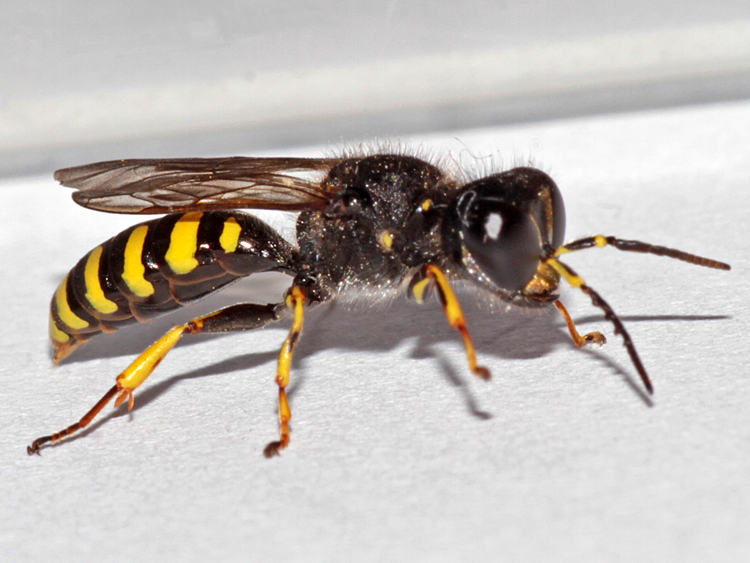
Another species I hadn't identified before was this striking digger wasp, Ectemnius cephalotes.

Ectemnius cephalotes, North Elmham Cathedral Meadows, 13th June


There were some nice wildflowers on show too, like these Common Spotted Orchids and Herb Bennet.


Common Spotted Orchids, North Elmham Cathedral Meadows, 13th June


Herb Bennet, North Elmham Cathedral Meadows, 13th June


It looks like this Grass Vetchling is relatively unusual, and is certainly easily overlooked.


Grass Vetchling, North Elmham Cathedral Meadows, 13th June


This Maidenhair Spleenwort is an attractive plant growing profusely on the chapel ruins.

Maidenhair Spleenwort, North Elmham Cathedral Meadows, 13th June

Tuesday, 31 May 2016

Lion and Tiger (of the Ant and Garden varieties)

On Saturday morning I went up to Burnham Overy in search of late spring migrant birds.  It was a total flop in that respect but there was plenty of interest on the non-avian fronts.  Mammals included a young Muntjac on the seawall and, more unusually for this site, a Roe Deer on the marsh.  Reptiles were represented by a Common Lizard.

There haven't been nearly so many Brown-tail nests here as I've seen in the past couple of years but in one of their best spots I did find another furry caterpillar.  I believe this one is a Garden Tiger.

Garden Tiger, Burnham Overy, 28th May


There were lots of small micros in the dunes, mostly the same species - I counted about 90 Plain Fanners Glyphipterix fuscoviridella.  There must have been thousands there.  Among them was this Beautiful Groundling Caryocolum marmorea.

Beautiful Groundling Caryocolum marmorea, Burnham Overy, 28th May


Also Hook-streaked Grass-Veneer Crambus lathoniellus and 5 Cinnabars, and some Swollen-thighed Beetles.  I think these are a male (with the swollen thighs) and a female (without).


Swollen-thighed Beetles Oedemera nobilis, Burnham Overy, 28th May


Another beetle found crawling across the dunes was this one.  When I first published this I put it down tentatively as Silpha tristis, but I now think the long head indicates that it's Silpha atrata - still a new one for me.

Silpha atrata, Burnham Overy, 28th May


Butterflies put on a good show too, with at least 6 Small Coppers, at least 6 Brown Arguses, Common Blues, Peacocks, Small Heaths and Wall Browns.

Brown Argus, Burnham Overy, 28th May


My first non-Damsel Dragonfly of the year (about time too) was this Four-spotted Chaser in the dunes.

Four-spotted Chaser, Burnham Overy, 28th May


There were a few Hoverflies too, a couple of which I retained for identification.  It seems that I can't get beyond genus for one of them even with the specimen, but Chryostoxum cautum was new for me.

Chrysotoxum cautum, Burnham Overy, 28th May


Sphaerophoria sp., Burnham Overy, 28th May


My attempts at Snail identification got me a new species, Wrinkled Snail Candidula intersecta.  Apparently it also goes by the name Wrinkled Dune Snail which seems an appropriate name here but presumably not across the whole of its range that includes, for example, central England.

Wrinkled Snail Candidula intersecta, Burnham Overy, 28th May


I see a lot of these snail shells in the dunes but hadn't identified them until now.  Now I just need to find one that's still got a snail inside it...

empty Striped Snail Cernuella virgata, Burnham Overy, 28th May


I bumped into Andy Bloomfield during the morning and he kindly showed me a few spiders.  He's a bit into spiders and was excited to find a rare one known only from 12 other sites on the saltmarsh this morning.  That was after we'd parted though, so I didn't see that, but here are the ones he showed me.  All of them were new species for me.

Pin-stripe Wolf Spider Pardosa monticola, Burnham Overy, 28th May


Alopecosa barbipes, Burnham Overy, 28th May


Dune Wolf Spider Xerolycosa miniata, Burnham Overy, 28th May


Arctosa perita, Burnham Overy, 28th May - a shame I didn't focus correctly on this one as it was the coolest of the lot!


Andy also showed me something I had wanted to see for ages.  I heard about Ant-lions turning up on the Suffolk coast a few years ago, the first time they'd been recorded in the UK.  Some time later I heard they were at Holkham too but I had never found out where.  Andy found some of their larval pits and explained how the larvae sit buried in the sand at the bottom of their pit with their pincers pointing up.  When an ant falls into the pit they can't get out easily and so they end up at the bottom and fall prey to the Ant-lion.  There were loads of the pits there - quite easy to find once you know what to look for - and we had a quick look at one of the larvae before returning it to the sand.  Check out those pincers!

Ant-lion Euroleon nostras larva, Burnham Overy, 28th May


Now I'm looking forward to finding the adult Ant-lions, if I can.  Apparently August afternoons are best.