
Description


A diary of my mothing activity covering highlights and photos from my moth trapping activities. Mainly Norfolk (UK), occasionally beyond. I may mention other wildlife sightings here, especially insects, but for birds see my birding diary.
Showing posts with label Early Tooth-striped. Show all posts

Monday, 22 March 2021

Review of 2019 and 2020 - Moths: Geometers (Geometridae) - part 8: Pugs III and Seraphims etc. (Eupithecia III to Trichopteryx)

GEOMETERS (GEOMETRIDAE) (continued)


Common Pug Eupithecia vulgata - Totals of 146 in my garden between 15th May and 4th July 2019 and 119 between 26th April and 29th June 2020.  146 is my highest total so far (average is 114).  Elsewhere 15 at the meadows and also recorded at Bintree Wood, Sculthorpe Moor, Hills and Holes, Weybourne, Keswick (Cumbria) and on Mull.  I'm always a bit paranoid about overlooking one of the scarce or rare pugs so tend to check more than I probably really need to, but this approach has got me a few interesting records in the past that I would have overlooked (including one or two of my Satyr Pugs for example).  Worn ones can be particularly confusing and it's not all that unusual for me to get mixed up between even familiar species like Grey Pug.  I've picked fresher examples to show below so these are among the more straightforward ones that I checked, although the third one had me quite puzzled, not that there were any clear candidates for an alternative ID.

male Common Pug, Sculthorpe Moor, 26th April 2019


male Common Pug, North Elmham, 29th May 2019


male Common Pug, North Elmham, 30th May 2019


male and female Common Pugs, North Elmham, 3rd June 2019


female Common Pug, North Elmham, 19th June 2019


male Common Pug, North Elmham, 20th June 2019


male Common Pug, North Elmham, 23rd May 2020


Mottled Pug Eupithecia exiguata - A total of 11 here 19th May and 2nd June 2019 making it just about my worse year here (average about 16) followed by an on-par 16 between 8th May and 1st June 2020.  Elsewhere one at the meadows and 2 at Hills and Holes.

Mottled Pug, North Elmham, 19th May 2019


Mottled Pug, North Elmham, 8th May 2020


Yarrow Pug Eupithecia millefoliata - One in the garden on 23rd July 2019 was a new moth for the garden and only my second adult anywhere.

female Yarrow Pug, North Elmham, 23rd July 2019


Tawny Speckled Pug Eupithecia icterata - Totals of 7 caught in the garden between 25th July and 25th August 2019 and 14 between 8th and 19th August 2020, either side of the average of around 10-11 per year.  Elsewhere one next door and one at Swanton Great Wood on 27th August 2019.


Bordered Pug Eupithecia succenturiata - 4 in the garden between 5th July and 8th August 2019 and 5 between 24th July and 11th August 2020 (the last being my latest ever).  5 was my best annual total but this species is quite erratic with 3-4 in 2016, 2018 and 2019 and none at all in 2015 or 2017.  Elsewhere one at the meadows on 7th July 2019 and one next door on 8th August 2019.

Bordered Pug, North Elmham Cathedral Meadows, 7th July 2019


Bordered Pug, North Elmham, 8th July 2019


Shaded Pug Eupithecia subumbrata - None.  This is quite scarce in Norfolk away from the Brecks and the coast but I caught one here in my garden in 2016 and 2 together in 2017.


Grey Pug Eupithecia subfuscata - Totals of 12 trapped here between 2nd June and 12th July 2019 and 10 between 21st May and 1st July, which are very average numbers.  Elsewhere 3 at the meadows, one at Hellesdon, one at Hills and Holes (on 21st May 2020, my earliest ever) and 5 on Mull.

male Grey Pug, North Elmham, 3rd June 2019


male Grey Pug, North Elmham, 7th June 2019


female Grey Pug, North Elmham, 10th June 2019


male Grey Pug, North Elmham, 11th June 2020


Treble-bar Aplocera plagiata - An average year in 2019 with 10 trapped here between 2nd June and 30th August then an exceptional 37 between 18th May and 26th August 2020 (my previous best annual total was 15).  Elsewhere one at Row Heath (West Runton) on 31st August 2019 and one at the meadows on 8th September 2020. 

Treble-bar, North Elmham, 18th May 2020


female Treble-bar, North Elmham Cathedral Meadows, 8th September 2020


Lesser Treble-bar Aplocera efformata - None.  I carefully check each and every Treble-bar I find for Lesser Treble-bar but so far have found absolutely no evidence that they exist.


Streak Chesias legatella - Singles caught in the garden on 17th October 2019, 17th October 2020 and  8th November 2020.  These were my 3rd to 5th records here following singles in November 2014 and November 2015.

Streak, North Elmham, 17th October 2019


Streak, North Elmham, 17th October 2020


Streak, North Elmham, 8th November 2020


Broom-tip Chesias rufata - None.  I've only seen this species in the Brecks which is where the vast majority of recent Norfolk records have been, but there are a couple of recent records from elsewhere in the county and a good spread of older records, and there are some good patches of Broom locally so I'm optimistic that it might be lurking round here somewhere.


Grey Carpet Lithostege griseata - None.  Like Broom-tip, Grey Carpet is mainly found in the Brecks and that's the only place I've seen it.  However unlike Broom-tip, there have been quite a few records of Grey Carpets in mid Norfolk (e.g. Dave Norgate had one in Toftwood in 2018 and David Knight has had one just down the road from here in Worthing) so I reckon I've got more than half a chance of getting one locally sometime.


Seraphim Lobophora halterata - I think this was one of the 2-3 commonest moths that I'd not seen until 2019 but that year it finally gave itself up with one to MV light at the meadows on 25th May, swiftly followed by another to LEDs at a different part of the meadows on 31st May.  Further afield one at Hills and Holes on 21st May 2020.

Seraphim, North Elmham Cathedral Meadows, 25th May 2019


Seraphim, North Elmham Cathedral Meadows, 31st May 2019


Seraphim, Hills and Holes, 21st May 2020


Small Seraphim Lobophora halterata - Singles trapped in the garden on 11th July 2019 and 24th June 2020.  I've now caught 5 here, until the last one all in odd years.

Small Seraphim, North Elmham, 11th July 2019


Small Seraphim, North Elmham, 24th June 2020


Yellow-barred Brindle Acasis viretata - Just one caught in the garden in 2019, on 8th August.  Numbers of this species fluctuate greatly but this was exceptionally bad - 5 was my previous worst year and in 2016 I caught 38.  2020 was only a bit better with 7 between 5th and 21st August.  Elsewhere one at the meadows on 4th August 2019.

Yellow-barred Brindle, North Elmham Cathedral Meadows, 4th August 2019


Early Tooth-striped Trichopteryx carpinata - None in 2019 but I added this species to my garden list in 2020 catching one on 22nd April and then a different one on 24th April.  There was only one previous record in this 10km square but having caught one at my last house in Bawdeswell and also one at Bawdeswell Heath, I knew they weren't very far away.

Early Tooth-striped, North Elmham, 22nd April 2020


Early Tooth-striped, North Elmham, 24th April 2020


Orange Underwing Archiearis parthenias - None.  I haven't found this species in North Elmham yet but I've had it not very far away in Bintree Wood (and at Sparham Pools).  I generally don't find many day-flying moths in my garden (although maybe there's a chance as there's a Birch in my front garden and another in the neighbour's garden behind mine) and I don't have much chance at the meadows either as the meadows are quite Birch-depleted.


Next page: more Geometridae

Monday, 20 March 2017

Thompson Water moths & inverts

On Saturday night the forecast looked interesting for moths - mild and cloudy but with the likelihood of a little light rain later on.  Dave and I headed down to Thompson Water, thinking that if the rain came to pass we would just use our headtorches, but if it remained dry the traps were in the car.  As it turned out the rain started before we'd left home, much more than the forecast had suggested, and it didn't let up when we arrived.  We decided to press on anyway, with headtorches of course, and quickly found a couple of Water Carpets, followed by 2 Hebrew Characters.  A wander through the woodland towards Thompson Common produced no less than 34 March Tubics Diurnea fagella and we eventually added 3 Engrailed and best of all, a Mottled Grey.  There were lots of Common Toads enjoying the puddles - I counted 33 but I'm sure I wouldn't have had to try very hard to reach a much higher number.
Mottled Grey, Thompson Water, 18th March


At home Early Thorn and, at long last, Common Quaker were added to the garden year list.

Early Thorn, North Elmham, 18th March


Common Quaker, North Elmham, 18th March


Other moths at home were Common Flat-body Agonopterix heracliana, Shoulder Stripe, Oak Beauty, 2 Dotted Borders, 3 Small Quakers, 3 Clouded Drabs and 4 Hebrew Characters.

On Sunday night the forecast was similar - mild and cloudy - except this time no rain was forecast.  We decided to try Thompson Water again, this time hopefully being able to put the traps out.  Ominously, and contrary to the forecast, it was raining as we headed there again and still raining when we arrived, albeit much lighter than yesterday - just a light drizzle really.  We put Dave's battery-operated trap up somewhere sheltered and then decided that the drizzle had become so light now that we would risk the others too.

We found another 7 Mottled Greys, some of which were quite worn and we pondered for a while whether they really were Mottled Greys or Early Tooth-striped.  Eventually we settled on the former but then I found one which I really wasn't convinced by - surely this one was an Early Tooth-striped?  I retained it to check and was later able to confirm that it was indeed a female Early Tooth-striped.

Early Tooth-striped, Thompson Water, 19th March


Other moths were about 20 March Tubics Diurnea fagella, 6 Winter Shades Tortricodes alternella, 4 March Moths, 4 Water Carpets, 4 Brindled Pugs, Early Thorn, 8 Oak Beauties, 4 Engraileds, Red Chestnut, 7 Common Quakers, 2 Clouded Drabs, 2 Hebrew Characters and 2 Chestnuts.

Red Chestnut, Thompson Water, 19th March


Three beetles all proved to be species I hadn't identified before: Mud-dweller Ilybius ater, Nebria brevicollis and Silpha atrata.  Actually I had seen the Silpha before but without access to decent reference material I had misidentified it as a different Silpha species.

Mud-dweller Ilybius ater, Thompson Water, 19th March


Nebria brevicollis, Thompson Water, 19th March


Silpha atrata, Thompson Water, 19th March


When I retained a smaller creature I thought it might be a rove beetle, having a long flexible abdomen apparently not covered by elytra.  But under the lens it didn't look like a beetle at all, lacking any elytra but being covered in long hairs.  A really strange thing that I couldn't even identify to order at first.  Springtails (Collembola) came to mind but I dismissed that thought as at about 4mm long it was several times bigger than springtails I'd seen before, but when I looked at it under the microscope and saw its furcula (tail-like appendages folded beneath the body that are used for jumping) I realised it was a springtail after all.  Turns out it was Orchesella villosa - sometimes called Hairy Springtail but I don't think that name is always reserved for this species as opposed to others in the family.  According to the maps at NBN Gateway there aren't any records in Norfolk, but I suspect that has more to do with the lack of Collembola records in their database than it being remotely unusual.

Orchesella villosa, Thompson Water, 19th March


Other things of note included Birch Catkin Bug Kleidocerys resedae, Common Shiny Woodlouse Oniscus asellus and some White-legged Snake Millipedes Tachypodoiulus niger.

Birch Catkin Bug Kleidocerys resedae, Thompson Water, 19th March


Common Toads were not in such evidence as on Saturday but a few could still be found in the puddles.


Common Toads, Thompson Water, 19th March


At home 2 Twin-spotted Quakers were new for the garden year list.  There were also March Tubic Diurnea fagella, Common Flat-body Agonopterix heracliana, Common Plume Emmelina monodactyla, Early Thorn, 2 Common Quakers, 2 Clouded Drabs, 5 Hebrew Characters, Early Grey and Chestnut.

Twin-spotted Quaker, North Elmham, 19th March

Thursday, 5 May 2016

Fantastic moths in the Brecks

The run of poor nights for moths last week finished with Muslin Moth and Hebrew Character on Friday night and Common Flat-body Agonopterix heracliana, 2 Hebrew Characters and Early Grey on Saturday night. On Saturday I'd failed to find any moths on the patch during the day, despite a handful of butterflies (Orange-tips, Brimstone and Peacocks) and other insects like Dark-edged Bee Fly and Buff-tailed Bumblebee (also a Stoat).

Buff-tailed Bumblebee, Bittering, 30th April


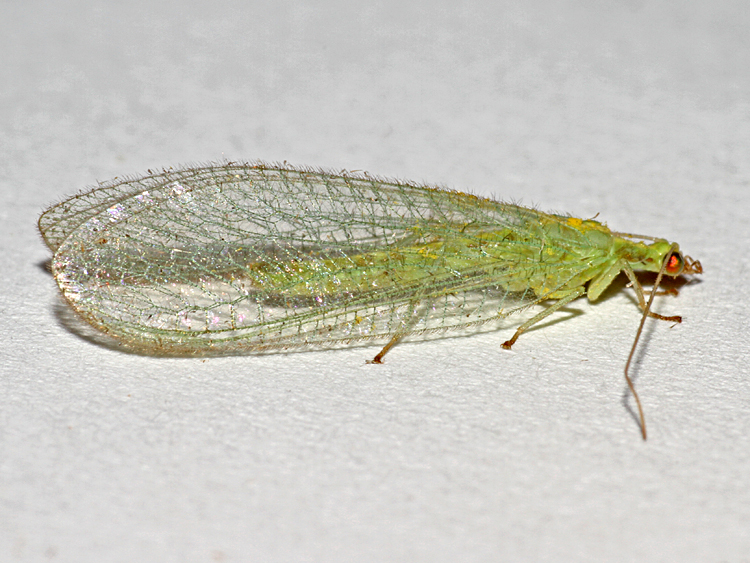
Sunday night looked better - not brilliant, but the best night for a while and the best for a few days to come.  So Dave and I took the opportunity to try out mothing at Cranberry Rough in the Brecks.  Turned out to be excellent!  We started off in the afternoon at Santon Street, an NWT site Dave's obtained permission to trap at.  This was largely a reckie as we didn't know the site at all.  I think it will be good, though we didn't manage to record any moths this afternoon (but my first caddisfly of the year which gave me a chance to use my new Handbook on Trichoptera (caddisflies) - it was Brachycentrus subnubilus - and also the green Lacewing Chrysoperla carnea).  In the car park opposite we found Common Green Shieldbug and Parent Bug - the latter a new species for me.

Parent Bug, Santon Downham, 1st May


Common Green Shieldbug, Santon Downham, 1st May


Our chosen location for trapping was Cranberry Rough.  I'd been there recently during the day and reckoned it could be good, and so it proved.  It wasn't perfect weather and it followed a run of cold nights, so we didn't expect huge amounts.  But our low expectations just contributed to how pleased we were when we found a good variety of moths coming to our lights including several species we don't see all that often.  And that was before the really exciting ones turned up.  We used 3 lights - my MV over a sheet, an Actinic and a UVB bulb powered by a car battery.

Among the first moths in was the first of 5 Lunar Marbled Browns, a species I'd only seen once before.

Lunar Marbled Brown, Cranberry Rough, 1st May


Also in early were the first few of 6 Water Carpets, a couple of Frosted Greens, 5 Pine Beauties and 3 Early Tooth-stripeds, another species I don't see every year. 

Frosted Green, Cranberry Rough, 1st May


Pine Beauty, Cranberry Rough, 1st May


Early Tooth-striped, Cranberry Rough, 1st May


Micros included a few Common Oak Purples Dyseriocrania subpurpurella and a Common Birch Bell Epinotia immundana

Common Oak Purple Dyseriocrania subpurpurella, Cranberry Rough, 1st May


Common Birch Bell Epinotia immundana, Cranberry Rough, 1st May


At Dave's actinic we found the first of 2 Dawn Flat-bodies Semioscopis steinkellneriana, Tufted Button Acleris cristana and what was very probably an Early Purple Eriocrania semipurpurella.  The latter keyed out to semipurpurella fine but is considered safest to gen det to confirm.  Unfortunately I had a bit of an accident with it which rendered that impossible.

Dawn Flat-body Semioscopis steinkellneriana, Cranberry Rough, 1st May


I think it was the actinic that produced another good moth, Red-letter Flat-body Agonopterix ocellana.  Though not particularly scarce this was a new moth for me, so I was very pleased to see one at long last.  Dave's actinic hardly gave off enough light to be able to see the moths with - we needed to use a torch too - but it proved worth having with us.

Red-letter Flat-body Agonopterix ocellana, Cranberry Rough, 1st May


Back at my MV we added Streamer, Spruce Carpet, an Oak-tree Pug among numerous Brindled Pugs, a Swallow Prominent, Great Prominent, a Red Chestnut, Angle Shades and Nut-tree Tussock

Spruce Carpet, Cranberry Rough, 1st May


Oak-tree Pug, Cranberry Rough, 1st May


Swallow Prominent, Cranberry Rough, 1st May


Great Prominent, Cranberry Rough, 1st May


Red Chestnut, Cranberry Rough, 1st May


Then in came something odd which neither of us recognised.  A distinctive moth - we knew it was something different right away, but what?  It had its wings held wide, almost Carpet-like, but I had a feeling it wasn't holding them the way it should, and that made me wonder if it was a moth we'd mentioned earlier on as we passed some Broom but which neither of us had seen before.  I checked my app and yep, that's exactly what it was, a Broom-tip

Broom-tip, Cranberry Rough, 1st May

And then it duly hitched its wings up like its supposed to and actually looked like they do in the books.  Fantastic!  Not a common moth by any means - indeed a Nationally Scarce species and a UK Biodiversity Action Plan (BAP) priority species, and not recorded in Norfolk every year.


Broom-tip, Cranberry Rough, 1st May


Finally we headed up to Dave's UVB light.  Only a few moths in here, including a second Red Chestnut, another Swallow Prominent and a Pebble Hook-tip

Pebble Hook-tip, Cranberry Rough, 1st May


Then as we turned over an eggtray from the bottom of the trap there staring us in our faces was an absolutely fantastic female Emperor Moth!  Male Emperor Moths fly during the day and can be attracted to pheremone lures (as we did last year) but females fly at night, and I have never seen one before.  In many ways this was more exciting than even the Broom-tip, such a fantastic beast it was!

Emperor, Cranberry Rough, 1st May


We realised it had laid some eggs which we tried to knock off into some Hawthorn.  They were stuck rigid on the cardboard so we tore off the cardboard round them and left the whole lot in the Hawthorn.

A peculiar looking spider or mite in one of the egg trays held our curiosity, until we realised it was a tick.  A quick Google search confirmed our fears - it was a Deer Tick.  I've always known that walking around in the Brecks carries a high risk of an encounter with a Deer Tick but never actually seen one before (so a tick in more ways than one).  At least we saw it in an eggtray and not attached to our legs, but it made us feel itchy and uncomfortable even so!  I checked myself and my clothing carefully when I got home, although  the reality is that we were no more (or less) at risk because we'd seen one than if we hadn't.  Apparently they look even uglier when they're feeding on you.


 Deer Tick, Cranberry Rough, 1st May


Common Earwig, Cranberry Rough, 1st May


Other moths not so far mentioned included Common Flat-body Agonopterix heracliana, Red Twin-spot Carpet, 2 Double-striped Pugs, 3 Common Quakers, Clouded Drab, 3 Hebrew Characters, 2 Early Greys and 3 Chestnuts.  Also another green Lacewing Chrysoperla carnea.

Chrysoperla carnea, Cranberry Rough, 1st May


Plenty of caddisflies too, allowing me a chance to practice their ID.  I'd recommend the handbook - based on the first few I've tried it makes their ID quite easy compared to a lot of groups - very well laid out and simple to follow.  You need a  microscope (maybe you could manage with a good lens, but it won't be so easy) but you don't need to do any complicated dissections or anything.  From tonight I identified 3 species: Grammotaulius nigropunctatus, Limnephilus auricula and Limnephilus griseus.

Grammotaulius nigropunctatus, Cranberry Rough, 1st May


Limnephilus auricula, Cranberry Rough, 1st May


Limnephilus griseus, Cranberry Rough, 1st May


Beetles were represented by Black Sexton Beetle, Orange Ladybird and two that I'd not identified before, though both looked familiar: Dalopius marginatus and Cantharis decipiens.

Dalopius marginatus, Cranberry Rough, 1st May


Cantharis decipiens, Cranberry Rough, 1st May


Black Sexton Beetle, Cranberry Rough, 1st May


Orange Ladybird, Cranberry Rough, 1st May


Given how well we managed in the Brecks I had hopes of a good range in the home moth trap too.  Well there were more than there have been lately, but not hordes.  If we hadn't had one already that night Red-letter Flat-body Agonopterix ocellana would have been a lifer - as it was just new for the house.  Amazing how often that's happened - seeing a moth for the first time when moth-trapping away from home and then coming back to find one at home too.  Not surprising in a way as the conditions for their emergence are the same at different sites, but as the glaring holes in my moth list get fewer it will surely stop happening soon.

Red-letter Flat-body Agonopterix ocellana, North Elmham, 1st May


A rarer moth was this Streaked Flat-body Depressaria chaerophylli.  It's only the 20th record for Norfolk so quite scarce.  New for the house of course, though I did have one in my final year at Bawdeswell.

Streaked Flat-body Depressaria chaerophylli (female, gen det), North Elmham, 1st May


First for the year for the garden were Powdered Quaker and Nut-tree Tussock.  Also Common Flat-body Agonopterix heracliana, Streamer, Common Quaker, 2 Hebrew Characters and Early Grey.

Powdered Quaker, North Elmham, 1st May


Also Black Sexton Beetle and two more Caddisflies, Glyphotaelius pellucidus and Limnephilus auricula.


Glyphotaelius pellucidus (male above, female below), North Elmham, 1st May - unusual among caddisflies in being sexually dimorphic