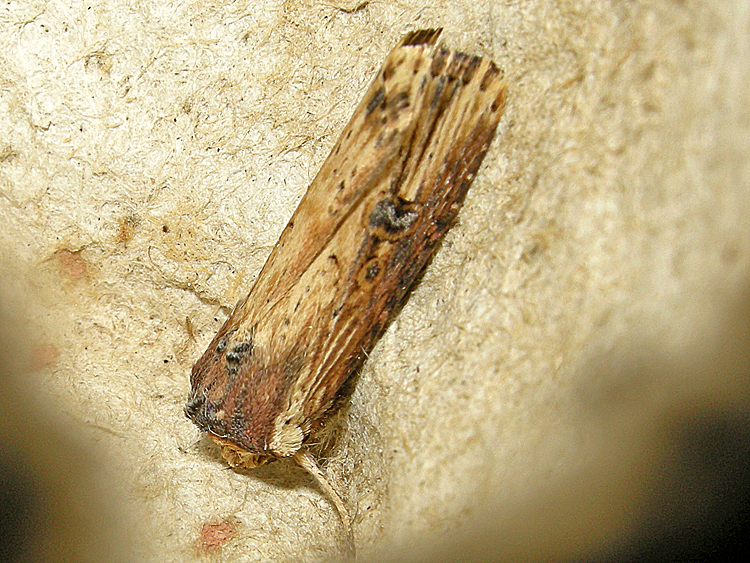
Purple-bordered Gold Idaea muricata - None. I hadn't really thought of this as being a likely candidate to turn up locally but I see there's been a recent record from just down the road at Hoe/Beetley so maybe I do have a chance.
Least Carpet Idaea rusticata - This species continues to increase and I recorded my best years yet at home with 41 between 4th July and 5th August 2019 and more than double that in 2020 with 94 between 26th June and 14th August. These included 10 on 31st July and 12 on 5th August. Elsewhere one next door, 4 at the meadows, 3 at Bintree Wood, one at Hellesdon and one at Weybourne.

Least Carpet, North Elmham, 7th July 2019

Least Carpet, North Elmham Cathedral Meadows, 26th July 2019

Least Carpet, Bintree Wood, 13th June 2020
Dwarf Cream Wave Idaea fuscovenosa - Two fantastic years for this species with totals of at least 158 in my garden between 19th June and 29th July 2019 (not counted on a couple of nights) and 170 between 6th June and 2nd August 2020 (including 18 on 22nd June). I had been averaging 43 a year previously. Elsewhere small numbers recorded at the meadows (6 dates), Hellesdon, Weybourne and Brancaster.

Dwarf Cream Wave, North Elmham Cathedral Meadows, 30th June 2019

Dwarf Cream Wave, North Elmham, 15th June 2020
Small Dusty Wave Idaea seriata - A couple of good years for this species too though quite not my best. I caught a total of 22 between 1st July and 4th October 2019 and 23 bewteen 17th June and 22nd September 2020 (I average 18 a year). Elsewhere singles at the meadows on 4 dates.

Small Dusty Wave, North Elmham, 24th June 2019

Small Dusty Wave, North Elmham Cathedral Meadows, 27th May 2020
Satin Wave Idaea subsericiata - None. There are no records of this species in my 10k square but a small number in surrounding squares so perhaps not impossible I might get one locally one day.
Single-dotted Wave Idaea dimidiata - Recorded on 70 nights here between 17th June and 11th September 2019. At least 226 indivdiuals involved but as I didn't count them on 15 nights during their peak flight time the true number would have been much higher. That being so it was probably a better than average year and the 26 I counted on 23rd July was my highest ever count. Another good year in 2020 with 303 between 13th June and 10th September. Elsewhere recorded next door, at the meadows (on 4 dates), Bintree Wood, Hellesdon and Brancaster.

Single-dotted Wave, North Elmham Cathedral Meadows, 23rd June 2020
Treble Brown Spot Idaea trigeminata - A total of 67 here between 1st June and 14th July 2019. Numbers had been relatively stable here from one year to the next but this was my highest total to date, if only by a small margin. By contrast 2020 was my poorest year so far here with just 30 between 21st May and 7th July. Elsewhere 2 at the meadows and one at Weybourne.

Treble Brown Spot, North Elmham Cathedral Meadows, 18th June 2020

Treble Brown Spot, North Elmham Cathedral Meadows, 10th July 2020
Small Fan-footed Wave Idaea biselata - At least 106 in the garden between 27th June and 4th August (not counted on 3 nights). I average around 140 a year here. Also one on 21st October, my 3rd and latest in the late September/October period, presumably representing a partial second generation. 2020 was my worst year so far here with 81 between 17th June and 12th September. Elsewhere 7 at the meadows, 3 at Bintree Wood and one at Hellesdon.

Small Fan-footed Wave, North Elmham Cathedral Meadows, 7th July 2019

Small Fan-footed Wave, North Elmham, 21st October 2019

Small Fan-footed Wave, North Elmham Cathedral Meadows, 18th July 2020
Small Scallop Idaea emarginata - A total of 7 caught here between 13th and 27th July 2019, one less than my best year here (2018). Just 3 in 2020 between 6th July and 8th August; also one at Brancaster on 2nd July.

Small Scallop, North Elmham, 7th July 2020
Riband Wave Idaea aversata - Recorded on 61 nights between 16th June and 5th October. I didn't count for 17 of those nights but on the other nights a total of 274 recorded. I'd average 380 a year over the previous 4 years so even allowing for the nights with no counts it was probably a bit below average. 251 between 11th June and 22nd September 2020 made for just about my worst year so far. Elsewhere recorded next door on 3 nights, at the meadows on 10 occasions, at Bintree Wood, Hellesdon, Weybourne and Row Heath (West Runton).

Riband Wave, North Elmham Cathedral Meadows, 23rd June 2020

Riband Wave, North Elmham Cathedral Meadows, 18th July 2020
Plain Wave Idaea straminata - None. I've never recorded this species locally but another moth-trapper in my road has recorded it and it looks like there have been a few less than a mile away.
Tawny Wave Scopula rubiginata - None. I've only found this species in the Brecks and in NW Norfolk but there is a good scattering of records elsewhere in Norfolk so there must be a small chance of finding locally.
Mullein Wave Scopula marginepunctata - None. I've never caught this species anywhere in the UK but there are a handful of recent records including some in central Norfolk so I reckon it's only a matter of time...
Small Blood-vein Scopula imitaria - Totals of 15 trapped in my garden between 24th June and 3rd September 2019 and 19 between 11th June and 7th September 2020. I don't seem to get much variation in numbers (15-20 in each of the 6 years here) but I used to catch significantly more when I lived in Bawdeswell. Elsewhere 7 at the meadows, 2 at Bintree Wood and one at Weybourne.

Small Blood-vein, North Elmham Cathedral Meadows, 30th June 2019

Small Blood-vein, North Elmham Cathedral Meadows, 19th June 2020
Lesser Cream Wave Scopula immutata - One in the garden trap on 23rd July was my only record here in 2019 despite averaging 6-7 a year here over the previous 4 years. A bit better in 2020 with 5 between 26th June and 21st July. Elsewhere 2 at the meadows on 7th July 2019 and 2 on 18th July 2020.

Lesser Cream Wave, North Elmham, 26th June 2020

Lesser Cream Wave, North Elmham Cathedral Meadows, 18th July 2020
Smoky Wave Scopula ternata - A total of 5 at 3 different sites on Mull on 13th June 2019, by torchlight and LEDs. This was a new moth for me, a northern/western species that is not found in Norfolk.

Smoky Wave, Pennyghael (Mull), 13th June 2019
Cream Wave Scopula floslactata - Singles caught here on 1st, 2nd and 3rd June 2019 and 23rd May 2020. I caught 6 here in 2018 but only one in total in the previous 3 years. Elsewhere one at the meadows on 31st May 2019 and one at Hills and Holes on 21st May 2020.

Cream Wave, North Elmham Cathedral Meadows, 31st May 2019

Cream Wave, North Elmham, 1st June 2019
Rosy Wave Scopula emutaria - 3 caught at Brancaster on 2nd July 2020. I've only ever seen this species along the western half of the north Norfolk coast where it seems to be reasonably common. It also occurs on the east coast but it's rare inland so fairly unlikely to turn up here.

Rosy Wave, Brancaster, 2nd July 2020
Blood-vein Timandra comae - A total of 22 trapped in the garden between 25th May and 7th October 2019. This is half my average year-total and my worst year here to date. 2020 was another poor year for these with 24 bewteen 18th May and 24th September. Elsewhere 3 at the meadows and one at Hellesdon.

Blood-vein, North Elmham, 29th May 2019

Blood-vein, North Elmham Cathedral Meadows, 7th July 2019

Blood-vein, North Elmham Cathedral Meadows, 26th July 2019
Next page: more Geometridae