
Description


A diary of my mothing activity covering highlights and photos from my moth trapping activities. Mainly Norfolk (UK), occasionally beyond. I may mention other wildlife sightings here, especially insects, but for birds see my birding diary.
Showing posts with label Barred Sallow. Show all posts

Thursday, 8 April 2021

Review of 2019 and 2020 - Moths: Noctuids (Noctuidae) part 7: Minors to Sallows

NOCTUIDS (NOCTUIDAE) (continued)


Rosy Minor Litoligia literosa - None.  I've only ever seen this species at the coast but there are quite a few records locally including some very nearby, so it must be high up on the "next most likely new moth for the garden" list.


Cloaked Minor Mesoligia furuncula - At least 13 in the garden between 7th July and 21st August 2019 (not counted on 2 nights but unlikely to have been many more than singles).  That was about average (then 15 a year) but in 2020 I caught a record 53 including a peak count of 12 on 31st July, 3 times my previous highest count.  Elsewhere recorded next door on 4 consecutive nights in 2019, one at the meadows in 2019 and 11 there in 2020 over 2 nights.

Cloaked Minor, North Elmham, 14th July 2019


Cloaked Minor, North Elmham Cathedral Meadows, 3rd August 2020


Cloaked Minor, North Elmham Cathedral Meadows, 7th August 2020


Marbled Minor Oligia strigilis - Totals of 10 confirmed in the garden between 26th May and 25th June 2019 and 12 between 20th May and 25th June 2020.  I'd been thinking that I wouldn't bother confirming all the Marbled Minor aggs. from 2019 to save time (and moths) but there were so few I only let one go unconfirmed in the end.  The average annual tally here is 17-18.  Also 4 at the meadows in 2019.


male Marbled Minors, North Elmham, 1st June 2019


male Marbled Minor, North Elmham, 5th June 2019


male Marbled Minor, North Elmham, 18th June 2019


female Marbled Minor, North Elmham, 30th May 2020


male Marbled Minor, North Elmham, 17th June 2020


Tawny Marbled Minor Oligia latruncula - 6 caught in the garden between 7th June and 18th July 2019 and 8 between 20th May and 27th June 2020.  2019 was my worst year to date for this species - I catch 14 a year on average.

male Tawny Marbled Minor, North Elmham, 27th June 2019


male Tawny Marbled Minor, North Elmham, 4th July 2019


male Tawny Marbled Minor, North Elmham, 14th July 2019


male Tawny Marbled Minor, North Elmham, 20th May 2020


male Tawny Marbled Minor, North Elmham, 3rd June 2020


male Tawny Marbled Minor, North Elmham, 27th June 2020


Rufous Minor Oligia versicolor - Singles trapped and confirmed at home on 15th and 21st July 2019 - my third consecutive year of recording 2 here (following 5 in 2015 and 10 in 2016).  Better in 2020 when 5 between 26th June and 13th July.  Also one at the meadows on 7th July 2019.

male Rufous Minor, North Elmham Cathedral Meadows, 7th July 2019


male Rufous Minor, North Elmham, 15th July 2019


male Rufous Minor, North Elmham, 21st July 2019


male Rufous Minor, North Elmham, 26th June 2020


female Rufous Minor, North Elmham, 9th July 2020


Marbled Minor agg. Oligia strigilis agg. - In addition to those detailed above, 3 at home, 4 at the meadows and 2 at Weybourne.  The following chart shows the relative flight times of the 3 species based on records here from 2015 to 2020.  Throughout this time I identified all individuals throughout their flight periods, with the exception of the a few random individuals that got away.


Middle-barred Minor Oligia fasciuncula - Totals of 28 trapped at home between 1st and 28th June 2018 and just 4 between 21st May and 23rd June 2020.  I started with 59 in 2015 and each year since has been worse than or the same as the year before, but the 4 in 2020 was especially lame.  Elsewhere 6 at the meadows on 4 dates (including a later one on 7th July 2019).

Middle-barred Minor, North Elmham Cathedral Meadows, 23rd June 2019

Middle-barred Minor, North Elmham Cathedral Meadows, 23rd June 2020


Orange Sallow Tiliacea citrago - One at the meadows on 15th September 2019; none in 2020.  I've caught 4 of these in the garden, in 2014, 2017 (2) and 2018.

Orange Sallow, North Elmham Cathedral Meadows, 15th September 2019


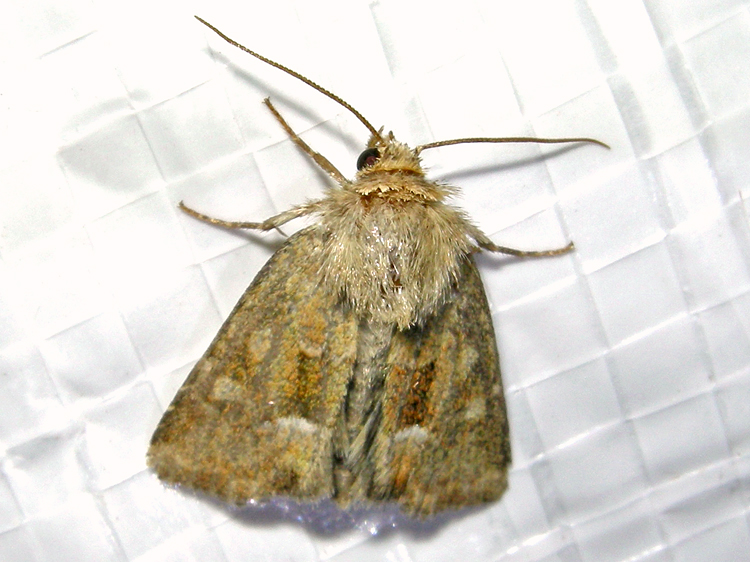
Barred Sallow Tiliacea aurago - 6 in the garden between 30th September and 11th October 2019 and just one in 2020, on 16th October.  I've had up to 21 in a year here and never less than 6 before (the poor total in 2020 may have been partly down to me being away in Cornwall for a few days during its peak flight period).  Also one on Ivy at the meadows on 4th October 2019.

Barred Sallow, North Elmham Cathedral Meadows, 4th October 2019


Pink-barred Sallow Xanthia togata - 12 caught in the garden between 28th September and 7th October 2019 and 7 between 22nd September and 14th October 2020.  Excluding 2020 when I was away for a few days during the peak flight period, the annual average here is 15-16.  Elsewhere 2 on Ivy at the meadows on 4th October 2019 and 4 in Cornwall in early October 2020.


Pink-barred Sallows, North Elmham Cathedral Meadows, 4th October 2019


Sallow Cirrhia icteritia - Totals of 18 trapped in the garden between 21st September and 15th October 2019 and 21 between 15th September and 16th October 2020 (during which flight period I was away for a few days).  The annual average here is about 22.  Elsewhere 2 on Ivy and blackberries at the meadows and one in Cornwall.

Sallow, North Elmham Cathedral Meadows, 4th October 2019


Sallow, North Elmham, 18th September 2020


Sallow, North Elmham Cathedral Meadows, 28th September 2020


Dusky-lemon Sallow Cirrhia gilvago - None.  I'm still missing this species here in North Elmham, despite having had 3 to light in my bedroom in Bawdeswell before moving here.


Pale-lemon Sallow Cirrhia gilvago - None.  I've only ever caught one of these, in my garden soon after moving here, in September 2014.


Next page: more Noctuidae

Saturday, 23 March 2019

A new Pigmy moth and some good bugs

92 moths of 30 species on 18th September was good for the time of year.  They included my first Barred Sallow of the year, my fifth Vetch Sober Aproaerema anthyllidella of the year (not a bad tally for a species I'd only ever seen three times before) and also by far my latest ever Clouded Silver.  The latter was worn, so unlikely a new second generation, but over a month past my previous latest (9th August).  I think it might be the latest ever in Norfolk too.

Barred Sallow, North Elmham, 18th September


Clouded Silver, North Elmham, 18th September


There were a few Neuroptera too: 3 Chrysoperla carnea (plus 2 female aggs.), Conwentzia psociformis and 5 Hemerobius lutescens.  Also no shortage of caddisflies with Oxyethira flavicornis, Hydropsyche pellucidula, 2 Mottled Sedges Glyphotaelius pellucidus, Limnephilus affinis, 6 Limnephilus auricula, 2 Limnephilus flavicornis, 16 Limnephilus lunatus, 2 Limnephilus marmoratus, 2 Limnephilus sparsus and Limnephilus vittatus.

A new bug for me was Orthotylus marginalis.  Well, it keyed out to this, but the key recommends you check the male genitalia, and this was a female, so not sure if the ID of females is 100% safe or not.

Orthotylus marginalis, North Elmham, 18th September


Another good bug, new for the garden, was the psyllid Psyllopsis fraxinicola.

Psyllopsis fraxinicola, North Elmham, 18th September


A Birch Catkin Bug Kleidocerys resedae was new for the year.

Birch Catkin Bug Kleidocerys resedae, North Elmham, 18th September


Apparently it's normal for Hawthorn Shieldbug to get darker before hibernating, but I don't often see them like this.

Hawthorn Shieldbug, North Elmham, 18th September


Other bugs were Forest Bug, Psallus varians, 2 Empoasca vitis, 2 Kybos betulicola, 2 Kybos strigilifer, 2 other (female) Kybos sp. and a female Edwardsiana sp.  Other things included 2 Ectopsocus sp. (barflies), the beetle Aphodius rufipes and a Hornet.

I don't think Kybos betulicola and Kybos strigilifer can be reliably separated other than by their male genitalia but interesting that both betulicola differed from both strigilifer in their general colouration, the strigilifer being paler and more yellowy-green.

Kybos betulicola (male, gen det), North Elmham, 18th September


Kybos strigilifer (male, gen det), North Elmham, 18th September


The following night there weren't quite so many moths but among them was a Norway-maple Pigmy Ectoedemia sericopeza, a new species for me.  It's a relatively distinctive species among the Nepticulids but although the colour of the collar is a clue it's hard to tell apart from Maple-seed Pigmy Ectoedemia louisella.  The collar colour suggested sericopera but this species was new to Norfolk as recently as 2013 and I'm not sure where my nearest Norway Maple is, it seemed sensible to check its genitalia (well, ok, I would have done anyway even if it was common).  Fortunately there are a couple of very clear differences between the male genitalia of these two species, so the ID was confirmed.  I think it was the first time an adult has been recorded in Norfolk, except where bred out from a mine (but there's been another since).

Norway-maple Pigmy Ectoedemia sericopeza (male, gen det), North Elmham, 19th September


The other moths were 2 Garden Midgets Phyllonorycter messaniella, White-shouldered House Moth Endrosis sarcitrella, Large Fruit-tree Tortrix Archips podana, Privet Tortrix Clepsis consimilana, Light Brown Apple-moth Epiphyas postvittana, Rhomboid Tortrix Acleris rhombana, 3 Garden Rose Tortrixes Acleris variegana, 7 Narrow-winged Greys Eudonia angustea, Maiden's Blush, Blood-vein, Small Blood-vein, Single-dotted Wave, Riband Wave, 2 Common Marbled Carpets, 3 Brimstone Moths, 3 Dusky Thorns, Light Emerald, Large Yellow Underwing, 4 Lesser Yellow Underwings, Setaceous Hebrew Character, Square-spot Rustic, White-point, Common Wainscot, Beaded Chestnut, 10 Lunar Underwings, Straw Dot and 2 Snouts.

A Hemerobius lutescens was the only lacewing and there were fewer caddisflies: Grammotaulius nigropunctatus, 10 Limnephilus auricula, Limnephilus flavicornis, 11 Limnephilus lunatus, Limnephilus marmoratus, Limnephilus sparsus and Halesus radiatus.

There were a few leafhoppers though, including Edwardsiana lethierryi, a new species for the garden.

Edwardsiana lethierryi (male, gen det), North Elmham, 19th September


The other leafhoppers were 2 Empoasca vitis, Kybos sp. and 4 Fagocyba cruenta. Other bugs were Birch Catkin Bug Kleidocerys resedae and Lygus pratensis.  The barkfly Valenzuela flavidus was new for the year for the garden.


Valenzuela flavodus, North Elmham, 19th September


The only other things I recorded were 2 Hornets and 2 Common Frogs.

The following night was much quieter with just 17 moths: Large Fruit-tree Tortrix Archips podana, 3 Narrow-winged Greys Eudonia angustea, Dusky Thorn, Light Emerald, Large Yellow Underwing, 2 Lesser Yellow Underwings, 2 Beaded Chestnuts, 4 Lunar Underwings, Vine's Rustic and Snout.

Other things were 2 Chrysoperla carnea (green lacewings), Hemerobius lutescens (brown lacewing), Mottled Sedge Glyphotaelius pellucidus, 5 Limnephilus auricula and 3 Limnephilus lunatus (caddisflies), Birch Shieldbug, Forest Bug, Birch Catkin Bug Kleidocerys resedae, Ectopsocus petersi (barkfly) and 2 more Ectopscous sp.

Sunday, 29 October 2017

Harlequin invasion and Vapourer

A walk at Massingham Heath on 2nd October didn't produce much wildlife interest - a Common Nettle-tap Anthophila fabriciana was the only moth recorded.  A poor catch at home that night consisted of Narrow-winged Grey Eudonia angustea, Setaceous Hebrew Character, Black Rustic, Red-line Quaker, Lunar Underwing, Sallow and Rosy Rustic.

The following night Large Wainscot was new for the year.  Apart from that it was no better than the night before: Light Brown Apple Moth Epiphyas postvittana, Feathered Thorn, Setaceous Hebrew Character, Green-brindled Crescent and 2 Lunar Underwings.

Large Wainscot, North Elmham, 3rd October


The next few nights didn't get much better:
  • 4th: Setaceous Hebrew Character, Lunar Underwing, Pink-barred Sallow, 2 Large Wainscots and the caddisfly Limnephilus lunatus
  • 5th: just single Lunar Underwing and Pink-barred Sallow.
  • 6th: Garden Midget Phyllonorycter messaniella, Rhomboid Tortrix Acleris rhombana, Narrow-winged Grey Eudonia angustea, Lunar Underwing and Limnephilus lunatus.
  • 7th: Light Brown Apple Moth Epiphyas postvittana, 3 Narrow-winged Greys Eudonia angustea, Common Marbled Carpet, Feathered Thorn, Lunar Underwing, Snout and the beetles Nicrophorus investigator and 2 Leistus spinibarbis.

At Cley on 7th this caterpillar was on the boardwalk to the central hides.  I wasn't sure what it was, even if it is a moth or sawfly.  Turns out it wasn't either - thanks to James again for letting me know it's a soldier beetle larva -  I'd never have guessed that!

soldier beetle larva, Cley, 7th October


There was a slight upturn on the night of Sunday 8th with a Spruce Carpet and my latest ever (first in October) Treble Brown Spot.  Not much else though: 3 Light Brown Apple Moths Epiphyas postvittana, Garden Rose Tortrix Acleris variegana, 2 Narrow-winged Greys Eudonia angustea, 2 Mallows, Common Marbled Carpet, 3 Lunar Underwings, Pink-barred Sallow and Snout.

A Harbour Porpoise was about the only non-avian interest at Burnham Overy on 9th October.  That night at home I caught 3 Light Brown Apple Moths Epiphyas postvittana, 3 Garden Rose Tortrixes Acleris variegana, 2 Narrow-winged Greys Eudonia angustea, 2 Mallows, Common Marbled Carpet, Shuttle-shaped Dart, 2 Lunar Underwings, Pink-barred Sallow, Straw Dot, Chrysoperla carnea agg. (lacewing) and 3 Limnephilus lunatus (caddis).

The conditions around lunchtime on Tuesday 10th October must have been just right for ladybirds to be looking for somewhere to hibernate as between about 1 pm and 2 pm at least 36 Harlequin Ladybirds entered my study through the window which was only open a crack.  There were loads more outside that didn't find their way in too.  Among them all was a single 2-spot Ladybird, the first I've recorded here this year (though I'm pretty sure one that came in to hibernate towards the end of last year was still lurking in a corner into January at least).

That night there were 2 new moths for the year - one a lovely species I've only caught here once before and the other a very common and rather less attractive species - Vapourer and November Moth.


Vapourer, North Elmham, 10th October


November Moth (male, 8th sternite checked), North Elmham, 10th October


Other moths that night were 2 Light Brown Apple Moths Epiphyas postvittana, 6 Narrow-winged Greys Eudonia angustea, Mallow, Common Marbled Carpet, Feathered Thorn, Shuttle-shaped Dart, Large Yellow Underwing, 2 Setaceous Hebrew Characters, 2 Green-brindled Crescents, Lunar Underwing, Straw Dot and Snout.  Other insects included Chrysoperla carnea (lacewing), Limnephilus flavicornis, Limnephilus lunatus, 2 Limnephilus vittatus (caddisflies) and Lamprotettix nitidulus (leafhopper).

The following night there were 5 Narrow-winged Greys Eudonia angustea, Mallow, November Moth, Feathered Thorn, Beaded Chestnut, 2 Lunar Underwings and Barred Sallow, the last of which was new for the year.  No caddisflies, lacewings, bugs or beetles.

Barred Sallow, North Elmham, 11th October


It was just as quiet the next evening but still one new for the year - Yellow-line Quaker.  The others were 6 Narrow-winged Greys Eudonia angustea, Feathered Thorn, 2 Green-brindled Crescents, Lunar Underwing, Limnephilus lunatus, 2 Halesus radiatus (caddisflies) and Harpalus rufipes (beetle).

Yellow-line Quaker, North Elmham, 12th October


A Firethorn Leaf-miner Phyllonorycter leucographella was new for the year on 13th October.

Firethorn Leaf-miner Phyllonorycter leucographella, North Elmham, 13th October


This was one of a surprisingly good haul of micro moths which included several species I hadn't seen since the summer. Yellow-spot Tortrix Pseudargyrotoza conwagana is one I'd not seen anywhere near this late before and as it was fresh it must have been an unusual second-generation.  I had seen late Long-horned Flat-body Carcina quercana before but it's another one that the textbooks say should stop flying in August. Gold Triangle Hypsopygia costalis is another one that must be starting to have a second generation - this was my first in October while the Double-striped Tabby Hypsopygia glaucinalis is a bit more established at this time of year.  The other micros were more expected: 4 Garden Midgets Phyllonorycter messaniella, 2 Garden Rose Tortrixes Acleris variegana, 3 Narrow-winged Greys Eudonia angustea and Common Plume Emmelina monodactyla.

Yellow-spot Tortrix Pseudargyrotoza conwagana, North Elmham, 13th October


Long-horned Flat-body Carcina quercana, North Elmham, 13th October


Bizarrely given the nunber of micros, macros were few and far between and every one of them was a noctuid (at least in old taxonomy).  At least with just singles of each it felt like there was some variety among them: Shuttle-shaped Dart, Black Rustic, Brown-spot Pinion, Beaded Chestnut, Barred Sallow, Large Wainscot, Burnished Brass, Straw Dot and Snout.

Beaded Chestnut, North Elmham, 13th October


There was some interest among the other insects too.  Two lacewings were both Chrysoperla but unusually only one was carnea, the other being Chrysoperla lucasina - just my third.  There weren't many caddisflies but they included my first ever Brown Sedges Anabolia nervosa, a male and a female, along with more usual Mottled Sedge Glyphotaelius pellucidus and Limnephilus vittatus.

Chrysoperla lucasina, North Elmham, 13th October


Brown Sedge Anabolia nervosa (male), North Elmham, 13th October


Bugs and beetles consisted of Pinalitus cervinus, 2 Kybos sp. (probably betulicola), Edwardsiana sp., Aphodius rufipes and Orange Ladybird.


Orange Ladybird, North Elmham, 13th October